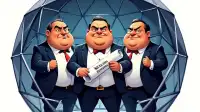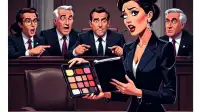
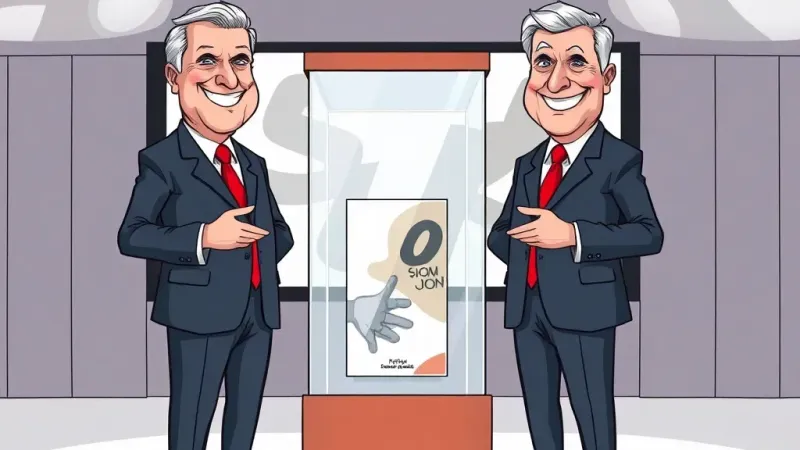
WASHINGTON D.C. — A landmark bipartisan commission, tasked with dissecting the mechanics of modern American governance, has released a 3,000-page report confirming what many observers have long suspected: the vast majority of political discourse is not about genuine policy debate but rather an intricate, high-budget branding exercise designed to reinforce tribal loyalties. The "National Truth in Rhetoric Initiative" found that actual legislative substance accounts for less than 7% of all public-facing political communication.
The report, titled "The Great American Narrative: More Show Than Substance," meticulously analyzed millions of hours of congressional proceedings, cable news appearances, and campaign rallies from 2000-2024. Researchers found a staggering 93.4% correlation between a politician’s stated position on any given issue and their party’s designated "talking points" for that week, regardless of underlying legislative text or economic data. The commission's lead researcher, Dr. Evelyn Reed of the Center for Advanced Post-Democratic Studies, noted, "It appears our elected officials are less like chess players strategizing complex moves and more like improv actors trying to hit their marks while vaguely adhering to a pre-approved character arc."
The commission interviewed hundreds of current and former congressional staffers, campaign managers, and media consultants, many of whom candidly admitted to the strategic deployment of emotionally charged, yet ultimately vacuous, language. "Look, nobody really cares about the intricacies of Section 301.7(b) of the Commerce Act," revealed Marcus Thorne, a veteran political PR consultant who spoke anonymously for the report. "What they care about is feeling like their team is winning, and the other team is fundamentally wrong and possibly evil. Our job is just to give them the verbal ammunition to feel that way. It's less about policy and more about 'narrative hygiene,' making sure the brand image stays shiny and unblemished by facts." The report even criticized media outlets for perpetuating the illusion, dedicating entire segments to "fierce debates" over issues where bipartisan consensus on a basic framework already existed behind the scenes.
Among the more surprising findings was the revelation that many highly contentious legislative battles—often portrayed as existential struggles for the soul of the nation—were internally categorized by party leadership as "Tier 2 brand differentiation opportunities." These opportunities allowed candidates to "sharpen their base appeal" without ever seriously jeopardizing essential government functions or 2 interests. One anonymous senator was quoted saying, "The key is to sound incredibly passionate about something that ultimately won't change much for the people who actually run things. It’s like arguing over the color of the curtains while the foundation of the house slowly crumbles. Very effective for fundraising."
The report concluded by recommending that political 2 departments begin offering advanced degrees in "applied narrative performance" and "tribal loyalty optimization," acknowledging that the current curriculum's emphasis on policy analysis is increasingly irrelevant to the realities of modern governance.