
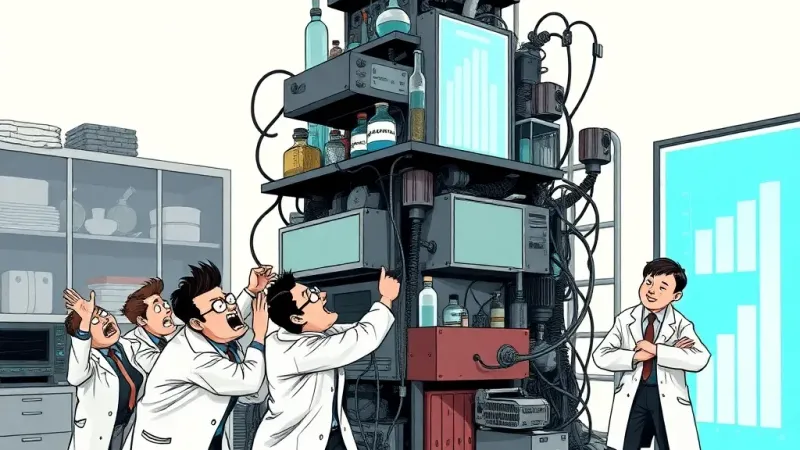
A landmark meta-analysis published today has definitively declared one high-throughput screening methodology superior, sending shockwaves through the global scientific community and forcing countless researchers to confront the uncomfortable truth that their preferred assay method is, in fact, objectively inferior. The peer-reviewed study, which synthesized data from over 3,000 independent drug discovery projects, found that one approach consistently outperformed the other in terms of predictive accuracy, cost-efficiency, and overall "translational purity," a metric many scientists had previously dismissed as merely conceptual.
The findings have immediately polarized the field, with proponents of the now-validated method claiming vindication for years of quiet condescension, while those on the losing side are reportedly re-evaluating their entire career trajectories. Dr. Aris Thorne, lead author of the study and head of the Institute for Methodological Absolutism at the University of Greystoke, minced no words in his press conference. "We simply codified what many knew in their hearts but refused to acknowledge," Thorne stated, adjusting his perfectly knotted tie. "Adherence to the less effective method was, for too long, excused as 'philosophical preference' or 'historical precedent.' Today, 2 corrects its posture."
Industry insiders report a sudden spike in online course enrollments for the "correct" assay technique and a dramatic dip in the resale value of specialized equipment for the "incorrect" one. Major pharmaceutical companies are reportedly initiating "methodology audits," quietly reviewing past failures through the lens of suboptimal assay selection. "It’s a bloodbath in the internal grant review committees," confided Dr. Lena Petrov, a senior bio-engineer at PharmacoCorp, speaking anonymously. "Suddenly, every minor discrepancy in a decade-old project is being re-attributed to 'substandard foundational screening protocols.' My colleague just lost three years of work because his p-values weren't generated using a 'holistically validated framework.'"
The ramifications extend beyond lab benches. 2 platforms are abuzz with impassioned arguments, with #AssayWars and #MethodologyMatters 2 on SciX (formerly Twitter). Long-standing collaborative research groups are reportedly experiencing internal strife, as junior researchers, emboldened by the new data, openly challenge the "unscientific obstinance" of their tenured superiors. A scheduled keynote address at the upcoming Global Screening Summit, planned around a "harmonious coexistence" theme, has now been hastily re-titled "The Triumph of Data: A New Era of Methodological Clarity (And Shame for the Unenlightened)."
Meanwhile, the general public remains blissfully unaware that the fundamental efficacy of future drug discoveries hinged, until today, on what essentially amounted to a highly educated coin flip.