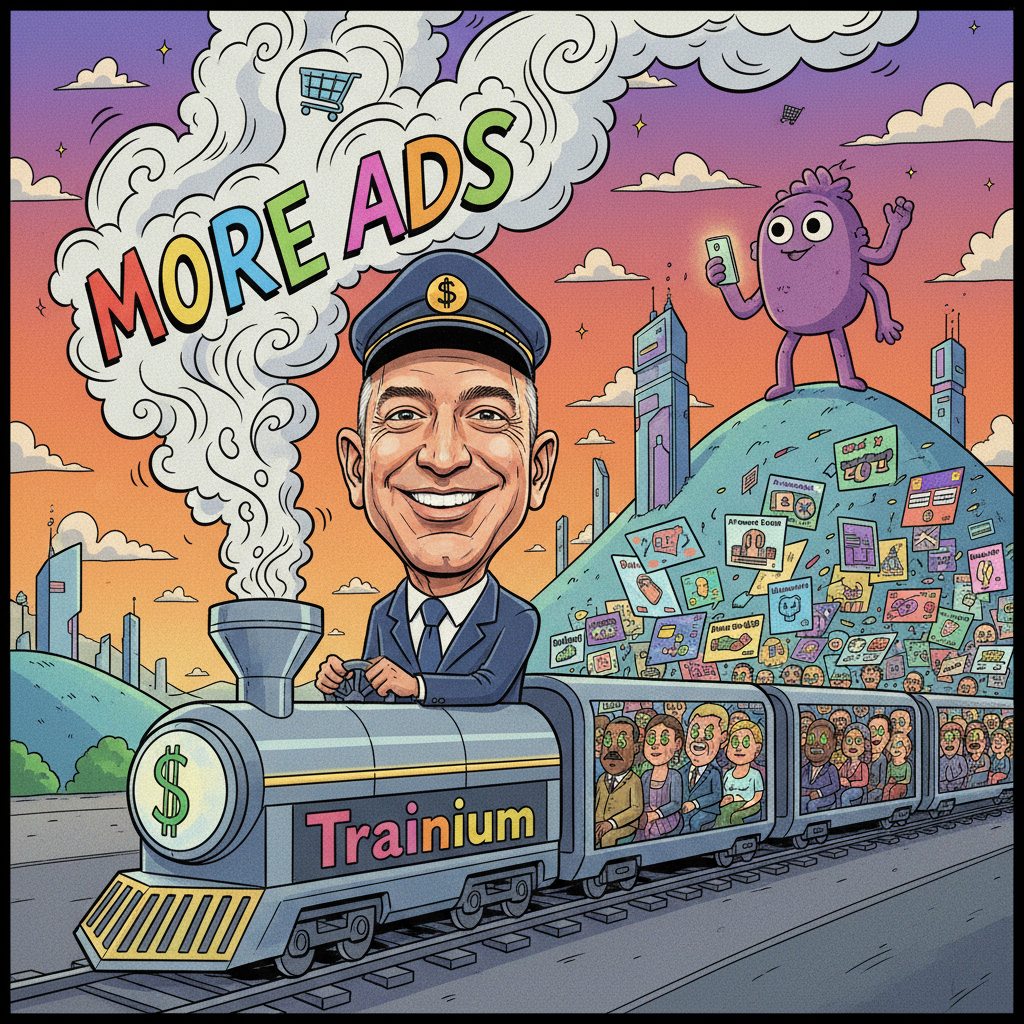
SEATTLE, WA – Amazon Web Services (AWS) today pulled back the curtain on its proprietary 'Trainium' AI chip, touting its groundbreaking capabilities that have reportedly captivated industry giants like OpenAI and Apple. While the official line emphasizes advancements in large language model training and inference, sources close to the project confirm the primary directive for Trainium is a far more ambitious, and frankly, more Amazonian goal: optimizing ad delivery.
“We’re not just talking about faster AI; we’re talking about AI that truly understands you,” stated Dr. Brenda Clicks, Head of Predictive Consumer Behavior at AWS, during a highly choreographed press event. “Imagine an ad for that obscure artisanal pickle you thought about for precisely 0.7 seconds last Tuesday. Trainium makes that a reality. It’s about anticipating your needs before you even formulate them, then monetizing that anticipation.”
Industry analysts, while impressed by the chip's raw processing power, expressed mild surprise at the explicit focus. “I suppose it makes sense,” remarked tech pundit Gary Data. “Why build a supercomputer if not to ensure every single one of your waking thoughts can be immediately correlated with a product SKU? It’s the logical next step in personalized capitalism.”
Amazon executives were quick to reassure the public that while Trainium will indeed power sophisticated AI applications for their partners, its core purpose remains firmly rooted in enhancing the customer journey – specifically, the journey from unconscious desire to one-click purchase. The company also hinted at future applications, including AI-powered drone delivery that anticipates your grocery needs and delivers them before you even realize you’re hungry.
Early tests indicate Trainium can process a user’s entire browsing history, purchase patterns, and whispered late-night anxieties in milliseconds, generating a perfectly tailored ad almost instantaneously. Critics worry about privacy implications, but Amazon maintains that the data is only used to 'enhance the user experience' by ensuring you never have to actively search for anything ever again.