NEW YORK — The higher education sector is celebrating a monumental leap forward in academic equity and efficiency, as artificial intelligence tools have dramatically reduced the cost and effort required for students to submit fraudulent college application essays. The groundbreaking technology, which rapidly generates bespoke personal narratives, has effectively "democratized" a service previously accessible only to students with sufficient disposable income to hire human ghostwriters, often from low-wage economies like Kenya.
"For years, only the most privileged students could afford to outsource their 'personal journey' to skilled wordsmiths," stated Dr. Evelyn Thorne, Director of Admissions Ethics at the newly formed Institute for Algorithmic Authenticity. "Now, with AI, every applicant, regardless of their family's seven-figure income, can present an essay perfectly tailored to showcase resilience, leadership, and a commitment to diversity, all without the cumbersome process of actually possessing those qualities or writing a single original thought. It truly levels the playing field."
The AI's emergence has, however, created an unexpected "disruption" in the global gig economy, rendering thousands of human essay ghostwriters obsolete. A former top-tier Kenyan essayist, who preferred to be identified only as "David," expressed bewilderment from Nairobi. "We spent years perfecting the art of fabricating empathy for American teenagers who majored in lacrosse. Now, a chatbot does it for 50 shillings. What’s next, AI taking over the job of convincing Silicon Valley bros they invented mindfulness?"
Tech industry leaders were quick to reframe the shift as an unalloyed good. "We're not eliminating jobs; we're elevating them," declared Chad 'Data Bro' McKenzie, CEO of EssayBot 3000, a leading AI essay generation platform. "Human writers can now focus on truly creative pursuits, like writing TikTok comments or explaining NFTs to their grandmothers, instead of crafting heartfelt tales about overcoming adversity from the comfort of a Hamptons summer home. This is about freeing the human spirit from the tyranny of originality."
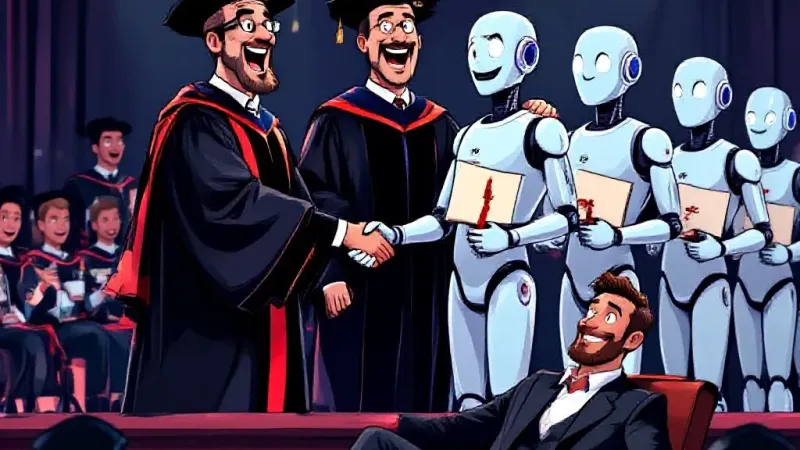
Colleges are reportedly bracing for a bumper crop of applications featuring flawless prose detailing identical "transformative experiences" during gap years spent "finding themselves" in Southeast Asia. Admissions officers are being trained to spot "subtle tells" of AI generation, such as essays that are grammatically perfect but devoid of human error, or those that subtly promote subscription services for premium AI features. The current solution involves deploying advanced AI detectors, setting up a technological arms race where only the most sophisticated AI will be able to mimic authentic human mediocrity well enough to pass.
The academic community views this as an exciting challenge, creating new roles for AI ethics professors and digital forensics experts. Ultimately, this brave new world ensures that while the content of a college essay may be entirely artificial, the student's ability to pay tuition remains entirely genuine.