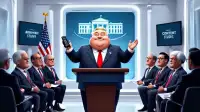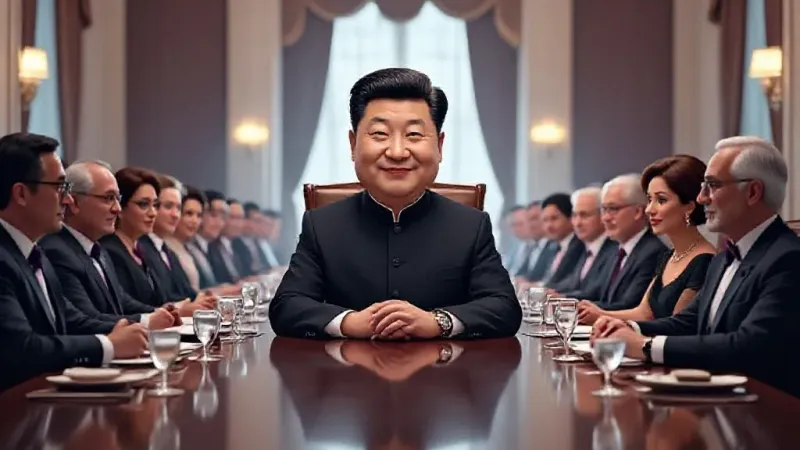
Washington D.C. — In a move that surprised only those still clinging to quaint notions of democratic representation, President Xi Jinping’s recent state dinner at the White House served as an impromptu, yet entirely transparent, convening of America’s actual decision-makers. The guest list, packed wall-to-wall with the nation’s most powerful CEOs and industry titans, offered a stark, unfiltered look at who truly sets the agenda for the United States. Observers noted the dinner functioned less as a diplomatic formality and more as a direct-to-source debrief, where the Chinese leader could get real answers from the people who actually run things.
Sources close to the administration, speaking anonymously because they are paid to maintain the illusion of electoral authority, confirmed that the presence of every notable CEO was "crucial for comprehensive, real-time feedback on Sino-American relations." One staffer, glimpsed shuffling notepads near the coat check, reportedly muttered, "Why waste time with elected officials when you can go straight to the source? These guys actually *do* things." The CEOs, representing sectors from technology to finance to manufacturing, reportedly provided detailed updates on their respective industries’ operational alignment with global market forces, bypassing the tedious filter of public policy.
"It’s about efficiency," explained Dr. Evelyn Thorne, director of the Institute for Aspirational Proximity Studies, whose research focuses on how economic power translates into de facto governance. "When you need to know where the supply chains are going, or how much carbon will really be offset, you don't ask a congressman. You ask the person who owns the supply chain. You ask the person who decided how much carbon was acceptable to begin with." She added that the dinner tables were strategically arranged to facilitate "direct cross-cultural knowledge transfer, unimpeded by the performative theatrics of traditional diplomacy."
The evening's menu, a subtle nod to global commerce, featured dishes like "Free Market Foie Gras" and "Supply Chain Salmon," further underscoring the true nature of the proceedings. While several minor cabinet members and a smattering of congressional leaders were also in attendance, their roles appeared largely ornamental, confined to polite applause and ensuring the correct silverware was used. The real work, it became clear, was happening at the tables where the future of global industry was being discussed, not debated.
As the evening concluded and the titans of industry departed in their motorcades, the message was unmistakable: if you want to understand the state of America, don't read congressional transcripts. Just check the guest list of the next major international gathering.