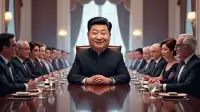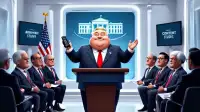
The White House announced today a landmark agreement with Beijing to significantly reduce tariffs on imported toys, a move hailed by industry executives as a “Christmas miracle” poised to save the holiday season. The deal, expected to trickle down to consumers in the form of marginally lower prices, is primarily seen as a critical lifeline for corporate profit margins that were apparently on the brink of merely satisfactory.
“This has been a harrowing year for our shareholders,” stated Chip Hasbro, CEO of Global Play Corp., wiping a single, performative tear from his eye while adjusting his custom-tailored suit. “Families everywhere can now look forward to paying perhaps 0.7% less for their child's favorite licensed plastic character, knowing that the real suffering — that of our quarterly earnings reports — has been alleviated. This isn't just about toys; it's about the very soul of capitalism thriving on the backs of parents desperate for five minutes of peace.”
Dr. Midas Touch, lead researcher at the Institute for Aspirational Profit Preservation, praised the deal as a masterclass in economic statecraft. “What many fail to understand,” Dr. Touch explained, “is the immense psychological toll a mere 2% drop in forecasted year-over-year growth takes on a C-suite executive. They lie awake at night, wondering if they'll have to settle for *only* two private islands instead of three. This tariff cut is more than just a fiscal adjustment; it's mental health policy for the hyper-rich.” He added that early projections suggest the average toy industry CEO's 2024 bonus will now comfortably exceed the GDP of a small developing nation.
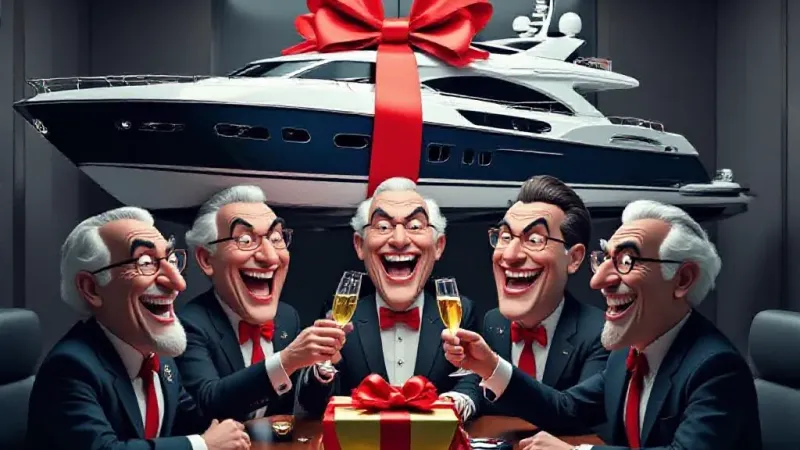
Analysts were quick to point out that any marginal savings passed on to consumers would likely be negligible, barely offsetting inflation on, say, a single plastic wheel for a child’s toy car, if that. Industry experts predict a maximum consumer price reduction of 0.2% on individual items, which, on a $25 action figure, amounts to five cents. "It's barely enough to make a difference at the checkout counter, but it's *just* enough for us to claim we're 'supporting families' during the holidays," admitted a marketing executive for a major toy manufacturer, speaking anonymously on condition of securing a larger Christmas bonus. Instead, the vast majority of the tariff relief is expected to bolster shareholder dividends and executive compensation packages, ensuring that the "miracle" truly blooms where the money already grows in abundance. "It’s about stability," noted Cassandra Pennyworth, a financial analyst with no soul. "The stability of our CEO’s annual yacht club membership and the inevitable stock buybacks designed to further enrich the already obscenely wealthy."
As parents rush to purchase slightly-less-overpriced plastic, the true spirit of Christmas, which is apparently the continued exponential growth of corporate wealth, has been joyfully restored.