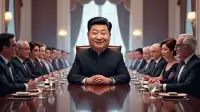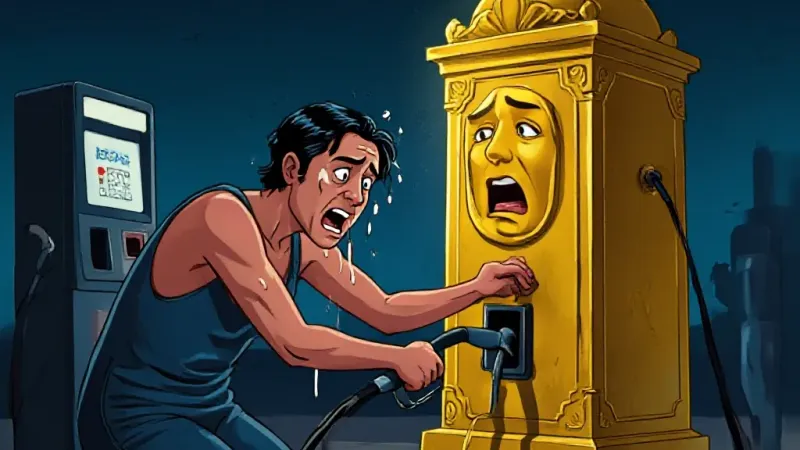
WASHINGTON D.C. — The Biden administration announced today a groundbreaking new strategy for managing the nation’s dwindling Strategic Petroleum Reserve (SPR), officially rebranding it the "Consumer Cost-Sharing Initiative." The shift comes as the SPR hovers at its lowest levels in decades, reportedly holding only enough oil for two weeks of national supply, yet the administration plans to continue its aggressive sell-off schedule.
"This isn't about depletion; it's about dynamic market recalibration," explained Dr. Evelyn Finch, Director of the newly formed Office of National Resource Optimality. "By strategically introducing existing reserves into the current supply chain, we’re empowering consumers to directly participate in market fluctuations. Think of it as a direct investment in the daily energy economy, where every tank filled is a vote for fiscal responsibility." Dr. Finch then reportedly adjusted her diamond-encrusted smart watch and let out a string of high-pitched giggles that echoed off the marble walls of the press briefing room, describing how the average American might interpret "fiscal responsibility" while checking her flight schedule for a weekend retreat to St. Barts.
Industry analysts were quick to praise the innovative approach. "It's pure genius," said Miles Corbin, lead strategist at "Equity for All, Eventually" Financial Group. "Why should emergency reserves sit dormant when they can be actively generating revenue and teaching citizens the true value of a barrel? This isn't just about gas prices; it's a pedagogical masterclass in supply-side economics. We’re teaching Americans how to feel the market in their wallets. And honestly, it’s far more efficient than waiting for some geopolitical crisis to justify tapping the reserve; we just create a fiscal one." Corbin suggested a national curriculum on "Advanced Fuel Inelasticity for the Modern Household" could follow.
Further details released by the Office of National Resource Optimality clarified that "cost-sharing" specifically refers to the consumer bearing the entirety of the cost, while the benefits of the revenue generated would be "distributed among various strategic budget lines, including but not limited to, executive travel budgets and commemorative coin programs for successful re-election campaigns." The initiative aims to foster a "shared sense of economic patriotism," where citizens show their loyalty by simply continuing to drive to work.
Meanwhile, drivers across the country are reportedly enthusiastic about the opportunity to "participate directly" in energy market dynamics, with many expressing gratitude for the chance to contribute $12-$15 per gallon for regular unleaded. "I always wanted to feel more connected to global oil markets," said one driver in rural Alabama, struggling to feed his family while trying to decide whether to fill up his truck or pay for his kid's school lunch. "Now, with every painful trip to the pump, I really feel like I'm doing my part. It's almost like a subscription service to crippling inflation, but without the option to cancel."
The administration confirmed that future sell-offs would continue "as needed," ensuring that every citizen has ample opportunity to share the costs, and the burdens, of a national strategic reserve that now primarily serves as an ATM for questionable fiscal policy.
The nation’s energy security is now an interactive experience, priced per gallon, for your convenience and our campaign coffers.