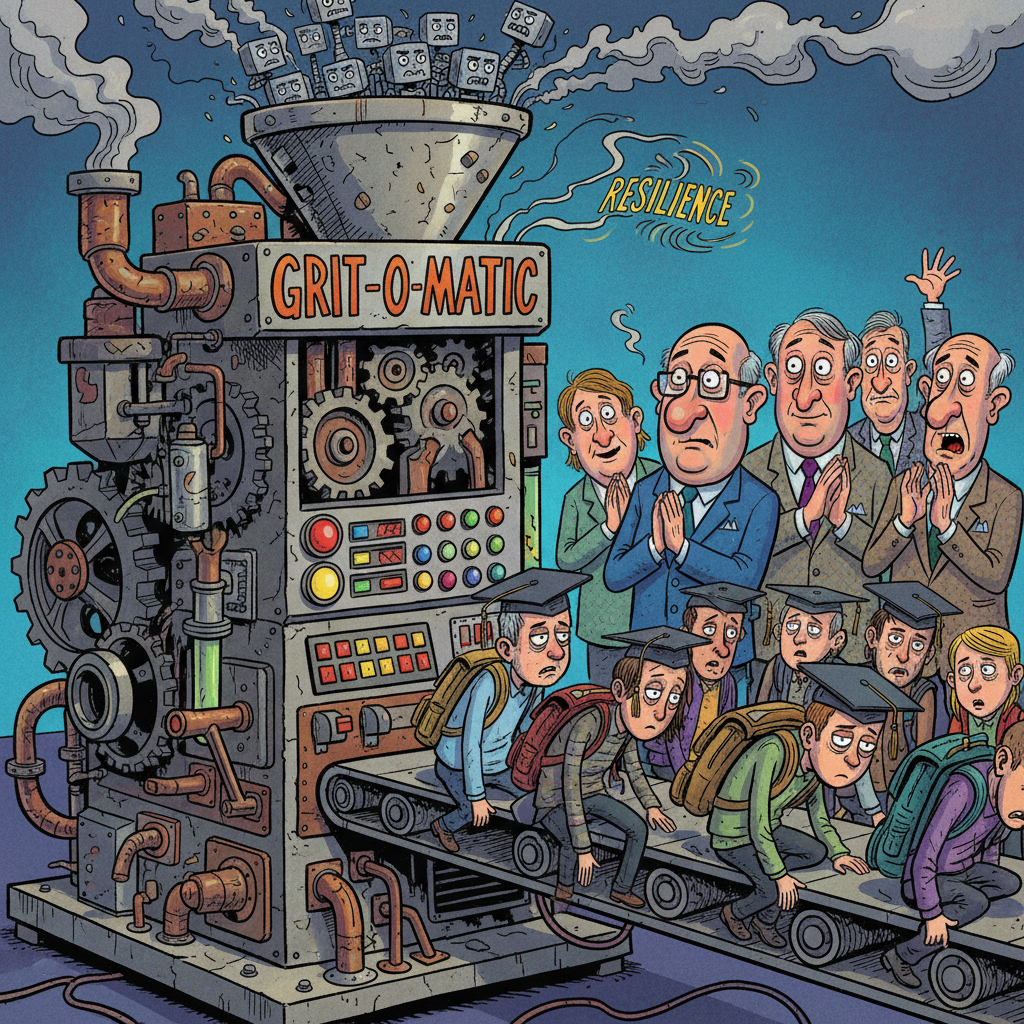
PALO ALTO, CA – In a groundbreaking move to streamline the academic process, Stanford University announced today the pilot program for its new 'Grit-O-Matic' system, designed to instill perseverance and problem-solving skills in PhD candidates without direct faculty intervention. The AI-powered platform will monitor student progress, identify 'stuck' individuals, and then deploy a series of automated motivational emails, cryptic philosophical prompts, and strategically timed coffee-machine outages.
“Frankly, teaching perseverance is a drain on valuable research time,” stated Dr. Evelyn Thorne, head of the university's newly formed Department of Algorithmic Resilience. “Our faculty are world-class experts in their fields, not life coaches. Grit-O-Matic ensures students develop essential character traits while professors can focus on securing grants and publishing in Nature.”
Early results indicate a significant reduction in direct student-supervisor contact hours, freeing up faculty for more pressing matters. Dr. Thorne highlighted one success story where a student, after receiving 37 automated emails about the 'journey of discovery' and having their lab access temporarily revoked, finally solved a complex differential equation. “It just goes to show, sometimes they just need a little… digital nudge.”
Critics, however, suggest the program might overlook the human element of mentorship. “It’s like they’re trying to automate empathy,” remarked Dr. Marcus Chen, a tenured professor who still occasionally speaks to his students. “But I suppose if it means fewer emails asking for 'guidance,' I can live with it.” The university plans to roll out Grit-O-Matic campus-wide by next semester, promising a new era of self-sufficient scholarship, or at least, fewer awkward office hours.