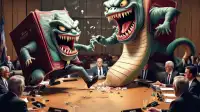
Washington D.C. and Tehran announced a breakthrough in de-escalation efforts Tuesday, confirming both nations will transition from fiery public declarations to a more refined, low-volume approach to international relations. The new "Tactical Quietude" doctrine mandates that all future acts of aggression, cyberwarfare, and proxy-fueled instability be conducted with minimal public outcry and absolutely no "big energy" social media posts or flag-burning videos. The move comes after intelligence suggested global audiences were "fatigued" by the theatricality of open threats, leading to a significant drop in engagement metrics for traditional geopolitical drama.
"The old way was just so messy," stated a senior State Department official, speaking on condition of anonymity while carefully removing a tiny, suspicious tracking device from his morning bagel. "All that shouting, the grandstanding for the cameras. It was inefficient. Now, we just focus on pinpoint cyberattacks, 'accidental' equipment failures, and the quiet funding of each other’s least favorite local strongmen. It’s far more effective, and frankly, much less likely to trigger a tweetstorm from a head of state. We're talking about precision drone strikes disguised as meteor showers, or crippling their national pigeon racing circuit just before the big race."
Across the Strait of Hormuz, a spokesperson for the Revolutionary Guard echoed the sentiment. "Our adversaries will still feel the full force of our resolve," he explained, polishing a miniature, untraceable drone that mysteriously emitted the faint scent of durian fruit. "They just won't hear us yelling about it on cable news beforehand. Think of it as a mutual commitment to passive-aggressive geopolitical maneuvering. It’s more mature, more sustainable, and frankly, much better for our collective blood pressure. We’ve even agreed to only use untraceable, artisanal poisons that leave no residue and smell faintly of lavender."
The new policy, reportedly brokered by a third-party nation specializing in "conflict avoidance semantics," aims to preserve the delicate balance of mutual distrust and simmering hostility without the awkwardness of public escalation. Both sides expressed optimism that this silent, yet deeply felt, antagonism will create a more stable, albeit perpetually tense, global environment. Analysts noted the agreement specifically allows for "strategically timed" power outages, the "unexplained disappearance" of minor infrastructure, and the sudden re-routing of civilian aircraft over unnecessary, shark-infested waters, provided no public statements are made within 72 hours of the incident.
A leaked internal memo from a newly formed "Global Inconvenience Council" outlined guidelines for acceptable levels of 'quiet sabotage,' including swapping critical paperwork for blank printer paper, subtly loosening lug nuts on official vehicles, and introducing non-native, highly annoying insects into government buildings. "The goal is maximum frustration with minimum deniability," the memo stated, emphasizing the importance of maintaining plausible incredulity. "We're not trying to start a war; we're just trying to ensure their coffee always tastes slightly burnt."
Citizens are advised to monitor local news for unusual electrical surges, sudden delays in supply chains, unexplained pigeon migrations, and any persistent, unshakeable feeling that someone, somewhere, is just really trying to annoy them.