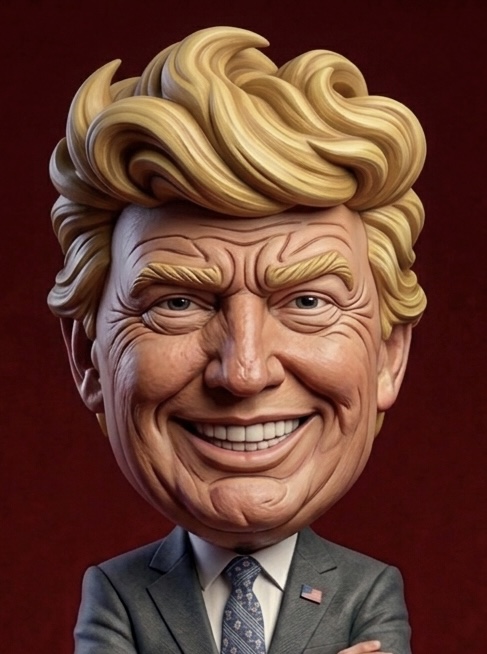
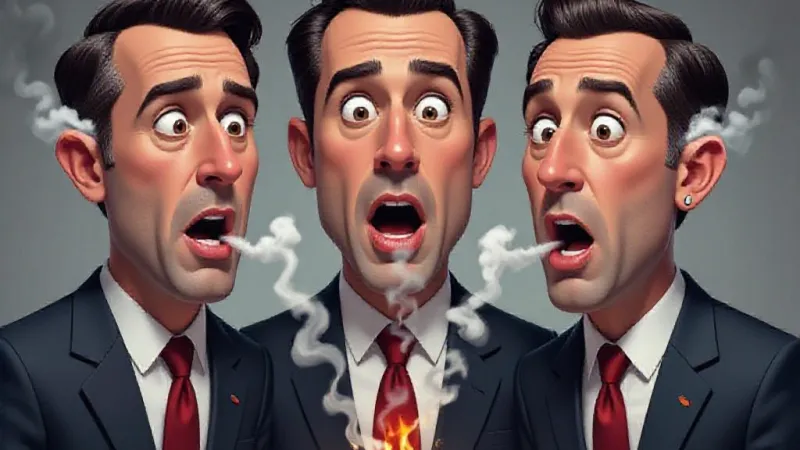
A collective gasp rippled through the Texas State Capitol on Wednesday as lawmakers, following a third alleged assassination attempt on former President Donald Trump, jointly announced their groundbreaking discovery: "heated political rhetoric" might, in fact, be detrimental to the democratic process.
The stunning revelation came after a bipartisan, closed-door emergency session where elected officials reportedly reviewed recent footage of their own public appearances. Sources indicate a deep sense of surprise permeated the room as clip after clip demonstrated the direct correlation between impassioned, often baseless, accusations and a general decline in public civility. Many legislators expressed genuine astonishment that their consistently inflammatory language could, hypothetically, contribute to a tense national atmosphere.
"It turns out that telling people the other side is literally trying to destroy America, or that voting for X candidate makes you a traitor, might not be conducive to national unity," admitted State Senator Marjorie Thorne (R-Cedar Creek), wiping a tear from her eye. "Honestly, we just thought it was good for the base. We never connected the dots between, say, dehumanizing political opponents and someone feeling dehumanized enough to actually do something stupid. It’s a real head-scratcher."
Dr. Evelyn Reed, a political communications expert at the University of Austin who has spent 30 years documenting this precise phenomenon, was unavailable for comment, reportedly due to her head being embedded firmly in her desk. An aide stated she was "re-evaluating her life choices and the fundamental intelligence of the species."
In response to their earth-shattering insight, Texas lawmakers have proposed a new "Post-Incident Civility Task Force," which will be tasked with identifying the *exact* point at which political speech becomes too heated, as well as exploring innovative ways to sound outraged without actually saying anything. The task force is expected to deliver its findings sometime after the next election cycle, provided the rhetoric hasn't escalated past the point of audible communication.
Funding for the initiative will be drawn from the state's existing "Campaign Ad Production and Vilification Incentive" budget, promising to shift focus from merely generating outrage to carefully curated, moderately less-outrageous statements that still play well on cable news. A legislative aide noted that the new rhetoric guidelines will still allow for "robust debate" and "spirited disagreement," which, historically, have been defined as "yelling until the other person walks away or calls the police."