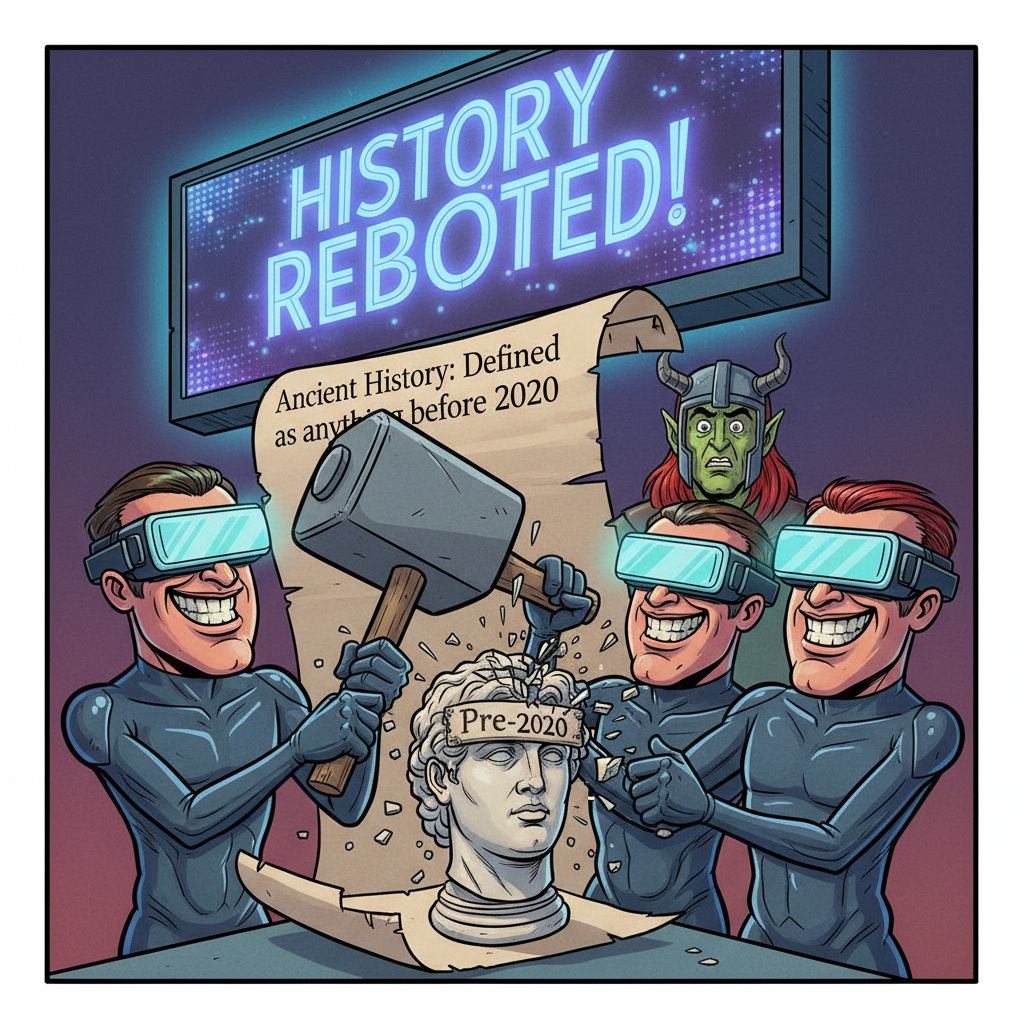
WASHINGTON D.C. — A powerful coalition of technology industry lobbyists is reportedly making significant headway in Congress to legally redefine 'ancient history' as any period preceding January 1, 2020. The move, spearheaded by groups representing major smartphone manufacturers and social media platforms, seeks to streamline public perception of technological advancement and encourage continuous upgrades.
Sources close to the negotiations indicate that the proposed 'Digital Antiquity Act' would designate all apps, operating systems, and internet trends from before the COVID-19 pandemic as 'historically significant relics,' effectively rendering anyone who remembers them 'chronologically advanced.'
“We believe this reclassification is crucial for national progress,” stated Fiona Byte, a spokesperson for the 'Future Forward Coalition.' “How can we innovate if people are still clinging to memories of, say, the original Instagram icon? It’s a distraction. We need to look forward, not backward at the digital equivalent of hieroglyphs.”
Critics argue the legislation is a thinly veiled attempt to accelerate consumer upgrade cycles. Dr. Evelyn Timewell, a professor of Digital Archaeology at the University of Palo Alto, expressed concern. “If remembering the original Twitter bird makes me ancient, what does that make someone who still uses email? A fossilized organism?”
Should the bill pass, museums are expected to immediately begin curating exhibits on 'The Early 2010s: A Primitive Digital Age,' featuring artifacts like flip phones and MySpace profiles.