Following the recent passing of veteran animator Barry Caldwell, studios across 2 have reportedly launched urgent, retroactive audits to identify and secure intellectual property rights from deceased or long-forgotten creative talent, particularly those behind beloved children's programming now ripe for AI-driven reboots and deepfake merchandising.
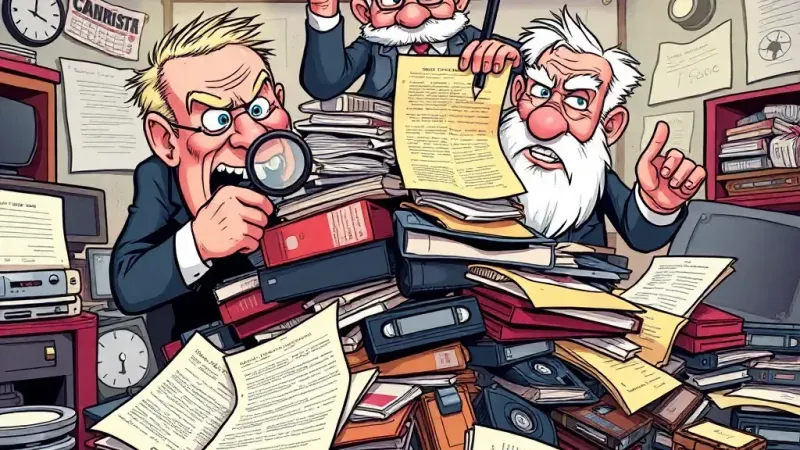
The move comes as generative AI 2 allows for unprecedented and low-cost content creation, making even fractional ownership of legacy character designs, story elements, or specific animation styles suddenly valuable. "With Mr. Caldwell's unfortunate passing, we realized we had an immediate legal gap," stated Bethany Price, Head of Archival IP Forensics at OmniMedia Conglomerate, Inc., speaking from a hastily converted war room filled with dusty animation cel boxes. "Our legal team is currently cross-referencing LinkedIn profiles with obituaries, trying to determine if any of these individuals accidentally retained a vestigial claim to even a single eyebrow twitch from a character designed forty years ago."
Industry analysts suggest the scramble reflects a growing 2 anxiety about future revenue streams. "For decades, these artists were just 'talent,' easily replaceable," explained Dr. Kenji Tanaka, a professor of Media Economics at the University of West Covina. "Now, with AI, their specific, human contributions are both endlessly replicable *and* a potential legal landmine if the original chain of ownership isn't absolutely airtight. Suddenly, the guy who designed that one background character's shoes is worth finding, even if it's just to get a posthumous signature on an updated IP waiver." Sources close to several major studios confirmed that interns are now routinely tasked with sifting through old production notes and union records, often utilizing facial recognition software on grainy group photos from 1980s Christmas parties.
The initiative also aims to proactively clear potential ethical hurdles before widespread AI-powered content generation. "It's not about paying them what they were worth, God no, we're a business," clarified Price, gesturing towards a whiteboard outlining potential "AI-powered Marvin the Martian Spinoffs." "It's about ensuring that when an AI generates a new 'Animaniacs' short entirely from existing assets, we don't get sued by the estate of the guy who hand-drew Yakko's third-ever wisecrack. We want to avoid any uncomfortable headlines about posthumous rights battles. Our priority is respecting the creative legacy, which, for us, means owning it outright."
The studios hope this rigorous process will finally give unsung animators the recognition they deserve: as fully monetizable, 100% company-owned data points.