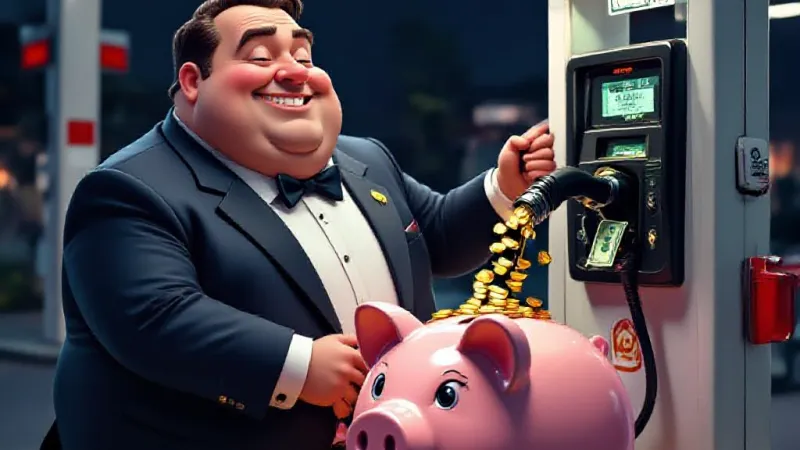
A bipartisan coalition of state lawmakers today celebrated the passage of a bill to temporarily slash the state's gas tax, touting the measure as a 'vital economic stimulus' for their upcoming re-election bids. The move, projected to siphon billions from infrastructure projects and climate initiatives, was widely lauded by incumbents as a stroke of political genius designed to ensure voter contentment at the pump, if not on the crumbling asphalt.
'Look, everyone talks about long-term vision, but what's more long-term than my continued presence in this office?' remarked State Senator Marjorie 'Marge' Perkins (R-District 47), wiping a tear from her eye at a press conference outside a local gas station. 'This isn't about roads or the environment; it's about making sure I can keep fighting for the people, ideally from the same leather chair I've been in for three decades. My constituents deserve relief, and frankly, I deserve another term.'
The bill, rushed through both chambers with unprecedented speed, effectively reclassifies gasoline excise taxes from dedicated infrastructure funding to 'incumbent retention subsidies.' Fiscal analysts confirm the reduction will create immediate budget shortfalls, which officials promise to address with 'innovative solutions like blaming the opposition party for any future potholes,' and 'discovering new, less popular ways to cut public services that don't directly impact voter turnout, such as library hours or mental health support for non-donors.'
The short-term savings for motorists, estimated at pennies per gallon, immediately translated into prime campaign fodder, with legislators already printing flyers boasting about 'putting money back in your pocket.' Local news outlets, eager for a feel-good story amidst constant gridlock reports, ran segments featuring grateful drivers, largely overlooking the fine print of deferred bridge maintenance and the state's increasingly ambitious climate targets now effectively defunded.
Political analyst Dr. Thad Burlington, known for his work on electoral thermodynamics, noted the strategic brilliance. 'By tying a direct, immediate, and visible benefit like cheaper gas to their legislative actions, these politicians are essentially conducting a real-time, state-funded ad campaign,' Burlington explained. 'It’s far more effective than actually fixing the roads, which is slow, expensive, and frankly, doesn’t put your name on enough billboards. Why invest in concrete when you can invest in soundbites?'
Critics argue the policy will accelerate climate change and leave roads in disrepair, but sources close to the legislative leadership confirmed such concerns are 'quaint' and 'won't show up in approval ratings until well after the next election cycle.' The real success, they added, would be measured in renewed terms, not restored bridges.