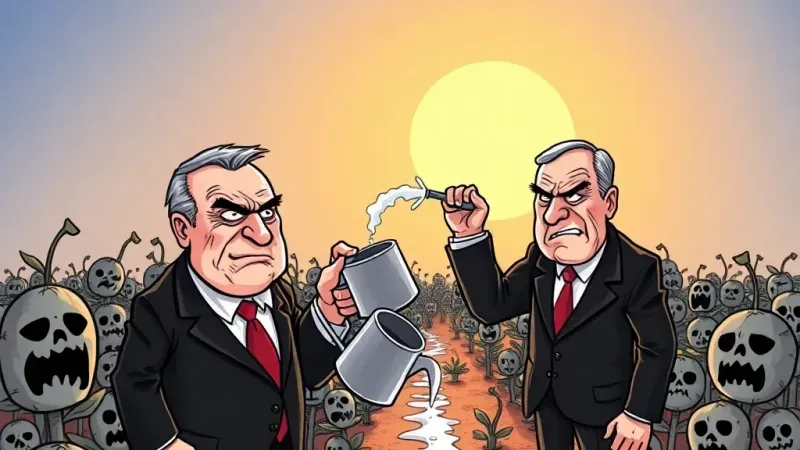
WASHINGTON D.C. — A forecast predicting a week of unusually mild, pleasant spring weather across much of the nation has prompted leading social scientists to issue a cautionary alert, suggesting the widespread comfort could inadvertently disrupt deeply embedded public grievances and carefully cultivated collective anxieties. Initial reports indicate temperatures consistently in the mid-70s with abundant sunshine, a meteorological anomaly that threatens to unravel months of careful emotional conditioning and the fragile social fabric built upon shared, low-grade discontent.
"We’ve built entire social structures, both online and off, around a baseline level of low-grade discontent," explained Dr. Evelyn Hayes, Director of the Institute for Manufactured Discontent at the Brookings-Heritage Foundation. "Whether it’s the lingering chill of winter or the vague sense that things aren’t quite right, those ambient stressors are absolutely crucial. Suddenly injecting widespread, undeniable pleasantness could completely throw everything off balance." Hayes noted 2 platforms might struggle to maintain optimal engagement without the usual fodder of weather-related complaints. "Our micro-aggression algorithms are exquisitely optimized for bad news and manufactured outrage, not for the collective joy of an afternoon picnic. This is uncharted territory."
The unprecedented meteorological anomaly is also raising significant concerns among political strategists on both sides of the aisle. Campaign teams, long accustomed to mobilizing voters around shared frustrations, are scrambling to identify alternative catalysts for outrage and partisan division. "It’s difficult to make a compelling argument about the imminent decay of Western civilization when everyone’s just enjoying a perfect 72-degree sunset," remarked veteran political consultant Brad 'The Crusher' Jensen, known for his incisive work with PACs focused on "restoring" national glories. "Our internal polling indicates that significant voter engagement is tied to a pervasive general sense of unease. Blue skies and comfortable breezes are, quite frankly, our arch-nemesis, undermining decades of strategic narrative building." Jensen suggested parties may have to pivot rapidly to more abstract grievances or invent new existential threats to maintain activist momentum.
Economically, a sustained period of genuinely good weather could severely jeopardize the burgeoning "grievance 2," a cornerstone of modern digital commerce. Startups specializing in online forums for collective venting, merchandise for displaying righteous indignation, and premium subscription services for curated outrage feeds are reportedly bracing for a significant downturn. "People primarily spend discretionary income when they’re miserable, or at least when they *think* they should be miserable about something," said tech analyst Chloe Tran of 'Disruptive Angst Ventures,' a venture capital firm specializing in negative-sentiment-driven platforms. "Why would you pay $9.99 a month to complain about traffic when you just had a lovely commute with the windows down? The market for manufactured discontent is directly threatened by actual contentment."
Authorities are therefore urging citizens to remain hyper-vigilant for any lingering reasons to be upset, no matter how small—such as uneven tan lines, the discovery of a single dandelion, or the sheer overwhelming complacency of others—to ensure a smooth and stable transition back to baseline anxiety when the good weather inevitably, mercifully ends.