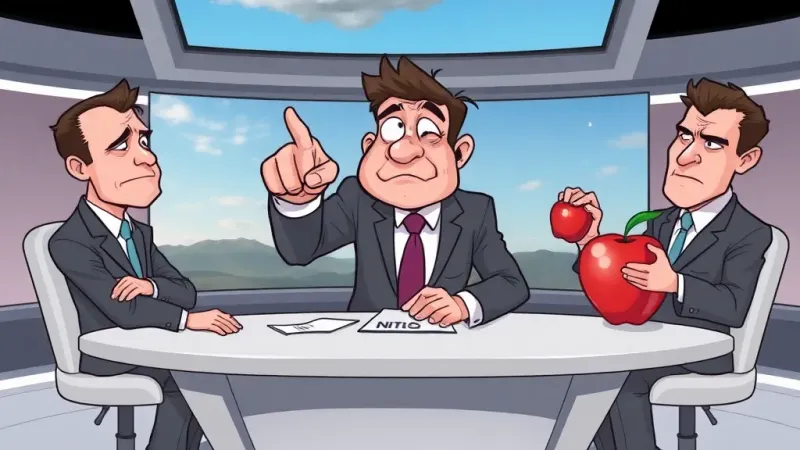
A prolonged period of unremarkable, mild weather across the nation has plunged major news networks into a deep content crisis, sources confirm. With no hurricanes to track, blizzards to sensationalize, or even a compelling regional heatwave to generate panic-buying of fans, producers are reportedly re-running footage of slightly overcast skies and debating the merits of "The Quiet Apocalypse" as a viable programming block.
"This is unprecedented," lamented Brenda Chen, Head of Hyper-Local Catastrophes at Global News Alliance. "Our entire Q3 budget was predicated on at least two named storms and a polar vortex event. Now we're looking at a week of 'pleasant' and 'partly cloudy.' How do you sell premium ad space against 'don't forget your light jacket, maybe'?" Chen's team, usually responsible for deploying on-location reporters into waist-deep floodwaters, has been reassigned to "ambient footage acquisition," capturing B-roll of blooming dandelions and children playing safely outdoors.
The lack of meteorological drama has had a ripple effect, forcing other news departments to pick up the slack. Political correspondents, usually busy with the latest scandal or legislative stalemate, are now being asked to speculate on the socio-economic impact of consistently comfortable temperatures. One network allegedly greenlit a segment titled "Is This Too Peaceful? A Nation Grapples With The Absence Of Imminent Doom," featuring a panel of lifestyle gurus and a former FBI profiler analyzing the psychological toll of a stable atmosphere.
Dr. Elias Thorne, a media consumption sociologist at the Institute for Perpetual Urgency, noted the public's unwitting complicity. "For decades, we've trained audiences to expect daily impending disaster. When it doesn't arrive, there's a subconscious void, an itch for crisis that goes unscratched. The media isn't just reacting to the weather; they're reacting to the audience's expectation of perpetual alert. It's a feedback loop of manufactured dread, and right now, the weather isn't holding up its end of the bargain." Thorne predicted a surge in "micro-outrage" stories as networks attempt to compensate for the meteorological lull.
Viewers are advised to remain vigilant for sudden, inexplicable shifts to "high alert" warnings regarding slightly elevated pollen counts or the alarming scarcity of bespoke artisanal pickles.