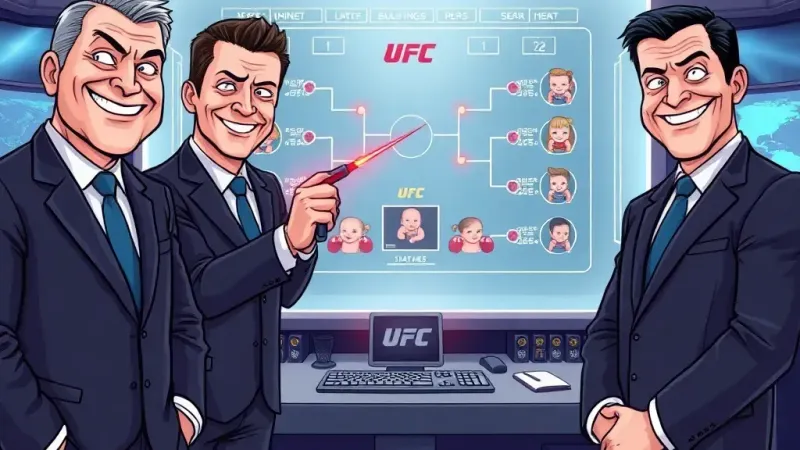
Following UFC Vegas 115, major sports media outlets have released a comprehensive 20-year forecast of potential matchups, outlining hundreds of hypothetical bouts through 2045. The unprecedented predictive analysis, distributed via a proprietary 'Content Preemption Engine' (CPE-2045) developed in collaboration with leading AI firms, aims to preempt fan speculation and eliminate future content voids across all digital platforms. This initiative represents a paradigm shift from reactive reporting to proactive narrative construction.
Mr. Reginald 'Reg' Fenchel, chief content architect for *GloboSportsNet*, lauded the initiative from his AI-optimized synergy pod located in a metaverse data center. 'In the current attention 2, you can't just react to events; you have to pre-react, pre-engage, and frankly, pre-monetize every possible future interaction,' Fenchel explained, adjusting his augmented reality headset for optimal data flow. 'Our CPE-2045 algorithms identified a potential 0.003% dip in post-event engagement metrics if we waited until next Tuesday to predict the next 500 fights. We simply cannot afford that kind of operational latency or intellectual vacuum in a real-time, always-on content ecosystem driven by relentless consumer demand for 'what's next.' This is about securing the narrative before it even has a chance to develop organically.'
The extensive projections reportedly include hyper-detailed narrative arcs for future champions, encompassing everything from their inevitable 2 feuds to their 'character development' arcs, even before their first professional bout. Examples include 'The Quantum Quagmire' Tiffany 'Tiff' Chen, currently a pre-med student with no martial arts training, and 'Bio-Hazard' Brent Jensen, a high school junior known primarily for his exceptional online gaming reflexes. The forecast meticulously charts their rivalries, redemption stories, and eventual Hall of Fame inductions, all based on a complex algorithm of projected 'fighter brand equity' scores, derived from predictive social sentiment analysis and early-stage sponsorship potential. The goal is to ensure optimal matchups for maximum viral potential and guaranteed future merch drops.
Dr. Elara Vance, head of the Institute for Predictive Combat Narrative (IPCN) at the University of Algorithmic Athletics, noted that the trend was not only inevitable but essential for the survival of sports media. 'The actual athletic contest is, frankly, becoming secondary to the anticipation, the hype cycle, and the meticulously constructed story infrastructure built around it,' Dr. Vance stated during a live holographic keynote presentation to a global audience of content strategists. 'Why merely watch a fight when you can engage with 20 articles, 50 short-form videos, and 3 immersive VR experiences about who *should* fight whom in 2038? We’re not just predicting fights; we’re curating the entire emotional and financial landscape of future fandom, ensuring peak engagement for decades to come.'
The unified media front hopes this long-term strategy will finally satiate the public's seemingly infinite appetite for 'what's next,' thereby stabilizing the content pipeline and allowing a select group of elite journalists to focus on predicting the next *next* big thing, which industry insiders suggest will be the inevitable rise of AI-vs-AI combat sports, followed by quantum entanglement brawls.
The 20-year forecast, initially released at 347 pages, is already being updated hourly based on projected future subscriber metrics, anticipated disruptions from quantum computing, and the unexpected viral potential of a cat video featuring a tiny boxing glove.