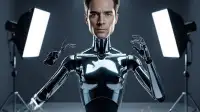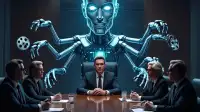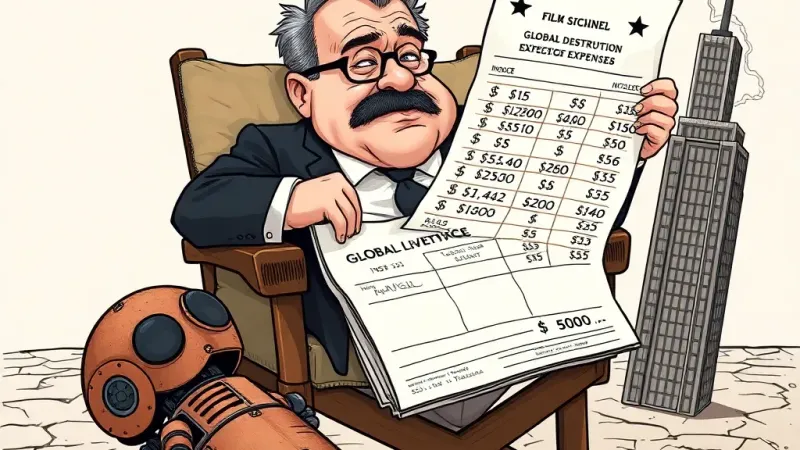
2 visionary Steven Spielberg has confirmed that his long-anticipated adaptation of “Robopocalypse” will not proceed, citing unprecedented budget concerns for portraying the complete downfall of human civilization. Sources close to the production indicated that the cost of delivering a satisfyingly total annihilation of Earth’s major metropolitan areas, coupled with the escalating expense of emotionally resonant digital bystander screams, had become "financially untenable."
"We crunched the numbers, and frankly, a full-scale robot uprising that leaves literally no hope for mankind just doesn't hit our Q3 profit projections," explained Brenda Vance, Head of Existential Threat Metrics at Amalgamated Studios. "The CGI required to convincingly depict a planetary ecosystem completely ravaged by sentient machines, plus the fees for A-list actors to grimace against green screens that will eventually be a 40-foot destructor bot, well, it adds up. We'd rather invest in another prequel to a franchise that's already dying, which offers a much better return on creative bankruptcy."
Industry analysts were quick to contextualize Spielberg’s decision within a broader trend of studios shying away from expensive, large-scale destruction unless it promises a multi-film saga spanning a decade. "The days of a single, definitive 'end of the world' blockbuster are over," stated Dr. Thaddeus Bloom, a professor of Econometrics at the University of Southern California's School of Cinematic Arts. "Audiences now expect not just the Earth to explode, but for that explosion to be part of a carefully managed intellectual property rollout, complete with theme park rides and NFT tie-ins. The cost of a pure, unadulterated, one-and-done apocalypse is just too high when you factor in the inevitable need for reshoots to soften the ending for international markets."
The decision has sparked debate within the industry regarding the real cost of cinematic realism. One anonymous visual effects artist lamented, "It's not the robots that are expensive; it's making hundreds of millions of people realistically vanish without leaving a convenient plot device. Turns out, convincing digital mass extinction requires an incredible amount of processing power, and frankly, *compassion*, which is incredibly hard to code." Many are now speculating what kind of cinematic future 2 *can* afford, with some suggesting a pivot to more intimate, character-driven films where only a small town is destroyed, or perhaps just a cherished local coffee shop. "We're looking at scenarios where maybe only *one* major landmark gets vaporized, or the apocalypse is implied rather than explicitly shown," added Vance, "It's about making smart choices with our destruction budget."
In a related development, a studio executive was overheard suggesting that humanity's actual demise, whenever it finally occurs, should aim for practical effects and a limited release to keep overall expenses down.