
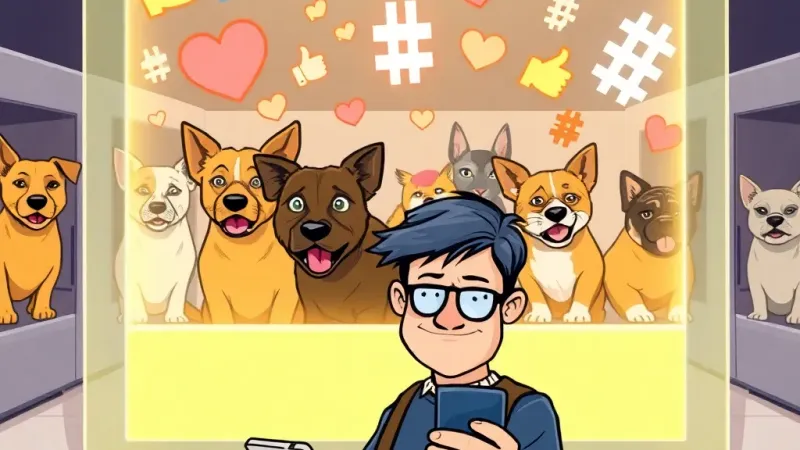
Animal shelters across the nation reported unprecedented levels of "vocal support" on Tuesday, as millions of Americans participated in National Adopt a Shelter Pet Day by resharing social media posts and adding animal-themed filters to their profile pictures. Despite the widespread digital advocacy, actual adoption rates remained largely unchanged, with many facilities reporting kennels as full as the collective online heart.
"It was truly heartwarming to see 'SaveFido2025' trending for eight hours straight on X, and our Instagram was flooded with those adorable 'Paw-sitive Vibes' stickers," stated Brenda Jenkins, Director of Operations at the Greater Metro Animal Respite Center in Topeka, Kansas, staring blankly at a row of 37 unadopted Labrador mixes. "We estimated over 3.2 million unique users 'spoke up' for animals yesterday. Unfortunately, our microchipped pet food budget doesn't accept likes as payment, and neither do our 187 residents accept virtual belly rubs." Jenkins noted that while the center received 47 direct messages asking for "more cute content," only two individuals completed an adoption application during the entire 24-hour period.
Major corporations were quick to leverage the national observance, with "Pawsitive Impact" campaigns launched by fast-food chains and fintech startups alike. Burger King offered a limited-edition "Woof Whopper" filter for selfies, while Apex Financial Solutions announced they would donate one penny to an undisclosed animal charity for every 100 shares of their "Voice for the Voiceless" TikTok video. "Our commitment to animal welfare is unwavering, as evidenced by our groundbreaking #BarkForChange digital initiative," said Apex Financial CEO Chad Sterling, unveiling a projected 0.0003% increase in brand sentiment. "We believe every click represents a powerful step towards a more compassionate tomorrow."
Political leaders also chimed in, with Senator Martha Davenport issuing a press release calling for "more voices, louder voices, and a bipartisan commitment to the sanctity of all creatures great and small" while simultaneously blocking a proposed bill to increase federal funding for municipal animal control. Media outlets, in turn, diligently documented the outpouring of online sentiment, with segments titled "The Day America Roared (Virtually) for Pets" dominating morning news cycles. Dr. Evelyn Reed, a digital sociology professor at Sterling University, explained the phenomenon. "People want to feel like they're making a difference without actually making a difference," Dr. Reed observed. "It's the ultimate low-friction activism, offering maximum moral reward for minimum effort. And if you ask them, they're pretty sure they saved a dog's life just by sharing that infographic."
As the digital chatter faded, shelters across the country prepared for another week of housing, feeding, and caring for animals who, despite the nation's overwhelming vocal support, still required actual homes.