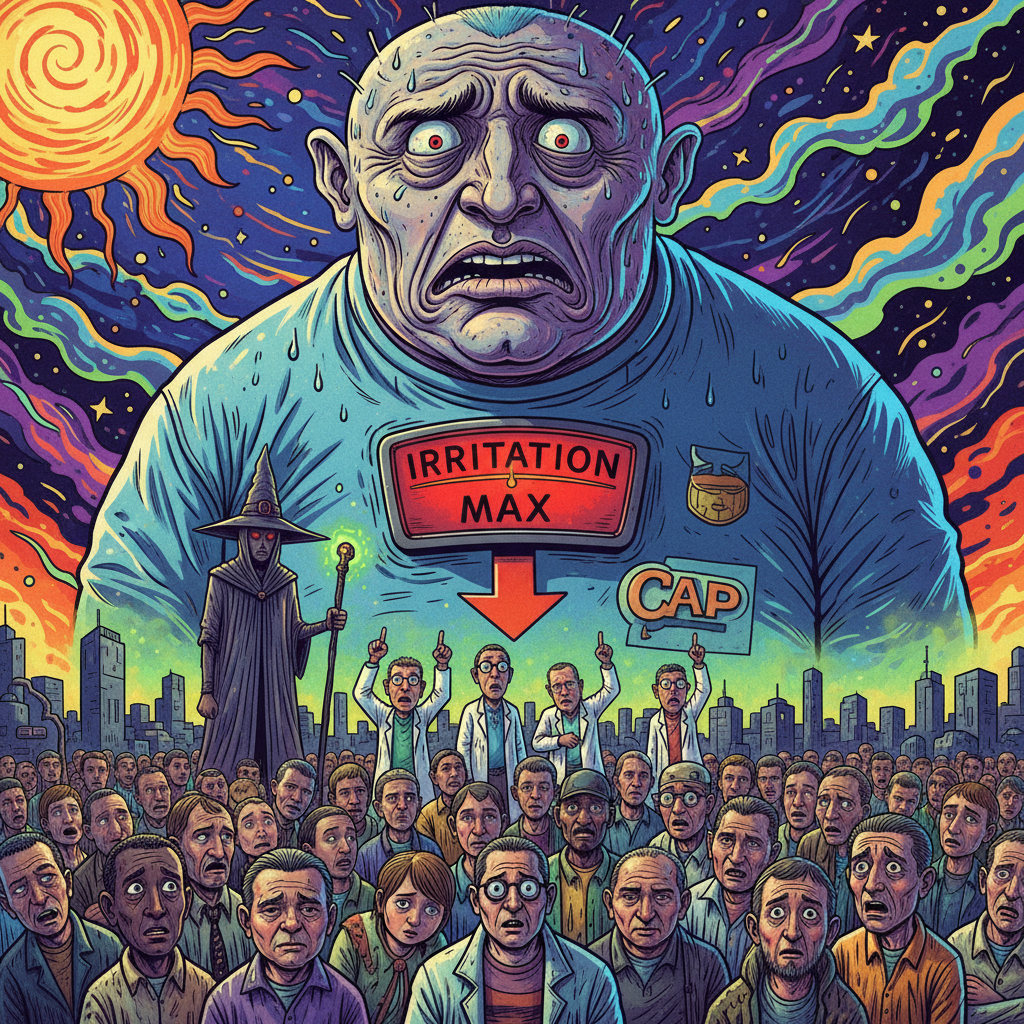
GENEVA — In a groundbreaking study that has left astrophysicists simultaneously relieved and vaguely disappointed, researchers at CERN have unveiled a new model demonstrating an absolute upper limit to the intensity of planetary radiation belts. This celestial ceiling, previously theorized but now mathematically confirmed, suggests that the universe, despite its best efforts, can only get so fundamentally irritating.
The model, published yesterday, indicates that while radiation belts around planets can accelerate particles to astonishing speeds, there's a cosmic governor preventing them from reaching truly 'insufferable' levels. “We always suspected there was a cap, given how much the universe already throws at us,” stated lead researcher Dr. Evelyn Reed. “Now we know for sure: it simply cannot get worse in this specific way. It’s a small victory, but we’ll take it.”
Experts suggest this discovery could have profound implications for future interstellar travel, primarily by confirming that space-faring civilizations won't suddenly encounter a planet whose radiation belts are just, like, *personally* attacking them. “It’s good to know the universe isn’t actively trying to make things exponentially more difficult,” commented Dr. Ben Carter, an independent cosmic annoyance consultant. “It’s more of a baseline level of existential dread, which we’ve come to expect.”
The findings offer a rare moment of quantifiable stability in an otherwise chaotic cosmos, assuring humanity that at least one form of cosmic misery has reached its maximum potential and can’t surprise us with an unexpected sequel.