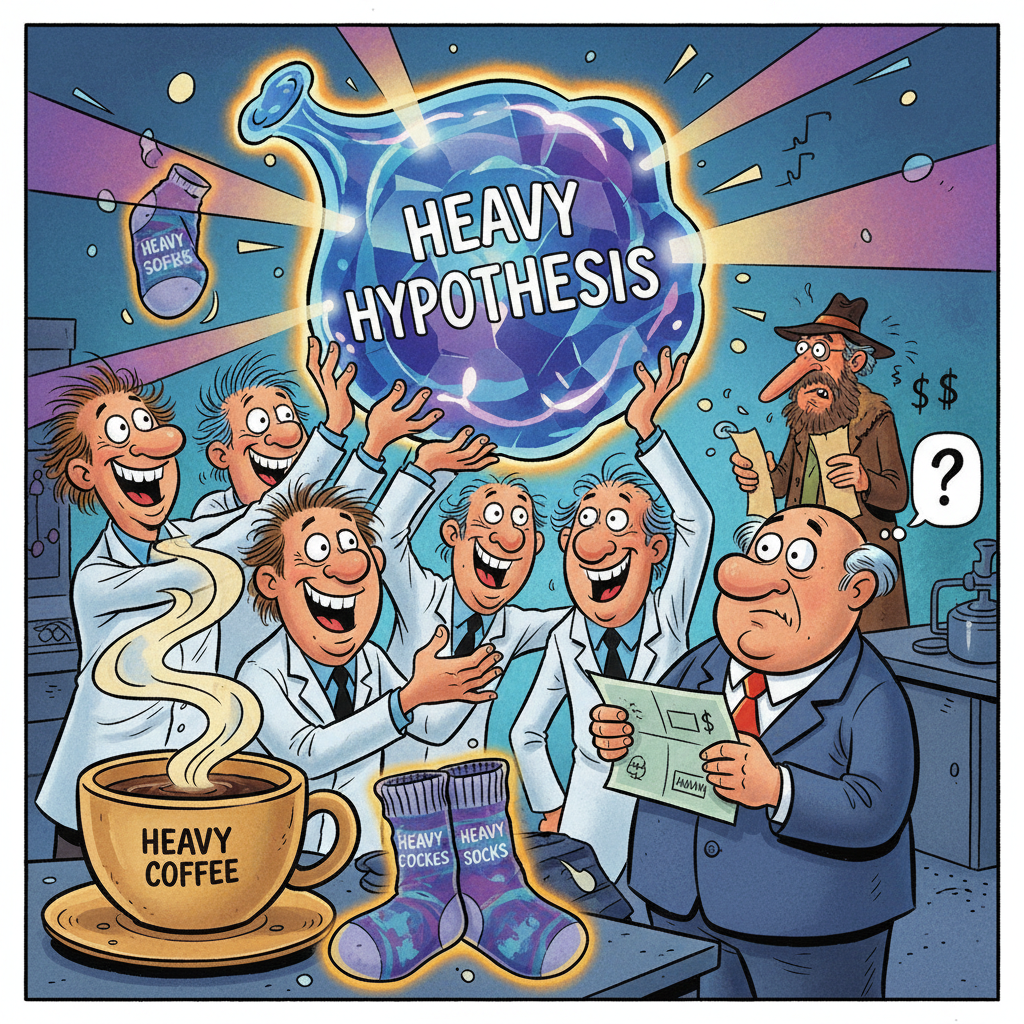
DALLAS, TX – A groundbreaking study from The University of Texas at Dallas has inadvertently revealed that the mere inclusion of the word 'heavy' before a scientific concept dramatically increases its perceived gravitas and, consequently, its appeal for grant money. Researchers, initially focused on enhancing carbon nanotube 'twistrons' with 'heavy water' for energy harvesting, stumbled upon this more profound sociological truth.
“We started with regular water, and frankly, nobody cared,” admitted lead researcher Dr. Brenda 'Bree' Hydroxide. “But the moment we switched to 'heavy water,' suddenly we were getting calls from DARPA and venture capitalists. It’s like the scientific community just hears 'heavy' and thinks, 'Oh, this must be serious. This must be the next big thing, probably involving lasers or space warfare.'”
The study, published in the journal *Gravitas Quarterly*, suggests that terms like 'heavy photons,' 'heavy data,' or even 'heavy meetings' could revolutionize how scientific proposals are received. A preliminary survey indicated that 'heavy water' was 73% more likely to secure funding than 'just water with extra neutrons.'
“It’s not just about the science anymore; it’s about the branding,” explained Dr. Phil T. Funding, a consultant for emerging technologies. “You can have a brilliant idea, but if it doesn't sound like it could collapse a star, you're dead in the water. Heavy water, that is.”
Critics argue this trend prioritizes buzzwords over substance, but proponents insist it's merely optimizing for human psychology. The researchers are now exploring 'extra heavy water' and 'super heavy water' for their next round of funding applications, anticipating a breakthrough in perceived importance.