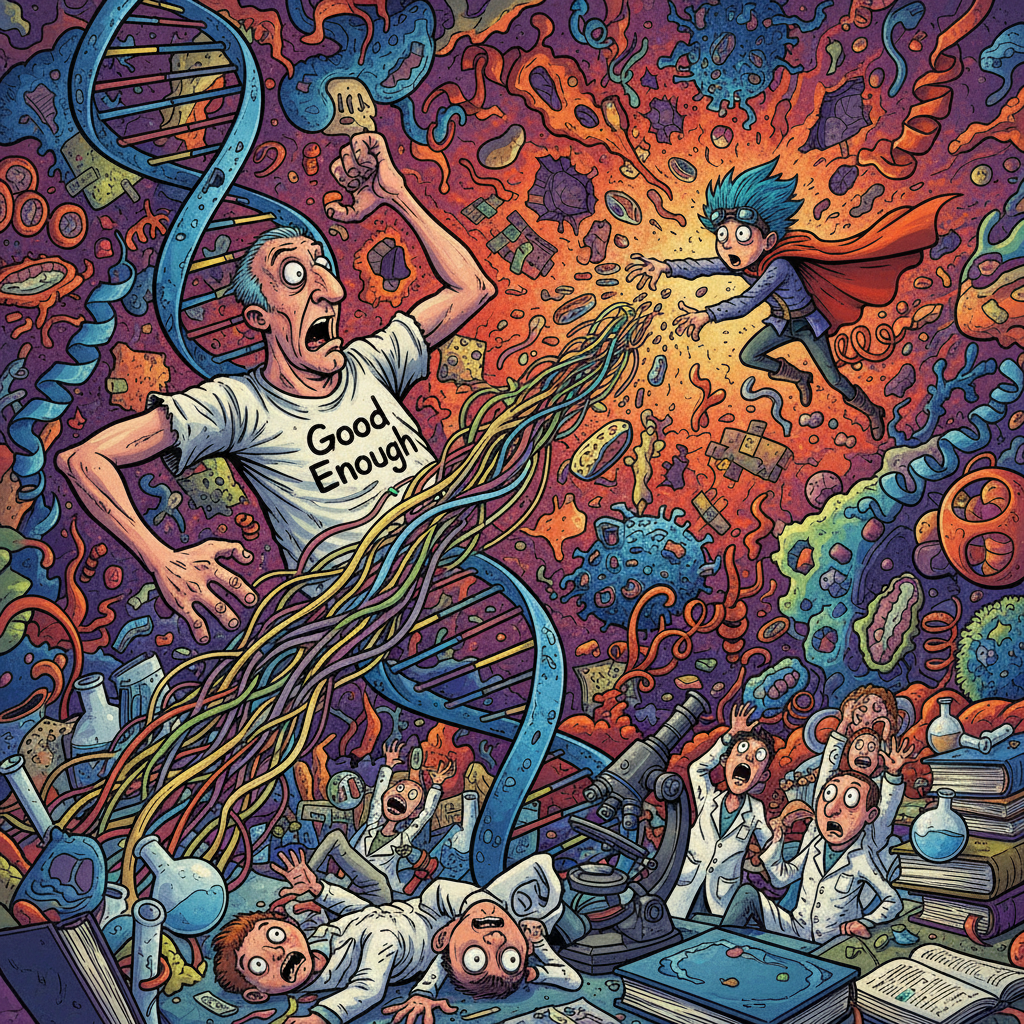
CARDIFF, WALES – A groundbreaking study from Cardiff University has revealed that the intricate dance of human DNA is less a finely tuned ballet and more a chaotic mosh pit, with chromosomes frequently engaging in what researchers are now calling 'chromoanasynthesis' – a fancy term for genetic improvisation. The findings suggest that instead of precise, deliberate replication, our genetic material often just kind of… happens.
Dr. Greg Ngo, lead author of the study, reportedly sighed deeply when asked to explain the process. “Imagine a highly organized library,” Ngo began, “then imagine that library after a particularly rowdy toddler’s birthday party. That’s basically what we’re seeing at a molecular level. Sometimes, it works out. Other times, you get a new genetic condition or, you know, cancer.”
Professor Duncan Baird, co-author, elaborated on the implications. “For years, we thought DNA was this meticulous architect. Turns out, it’s more like a contractor who promises a blueprint but then just starts hammering things together on site. The fact that any of us function at all is, frankly, a miracle.” He added that the discovery might explain why every family has 'that one uncle.'
Geneticists worldwide are now re-evaluating decades of research, with many admitting they always suspected the whole 'perfect replication' theory was a bit optimistic. The team plans to next investigate whether telomere breaks are more frequent on Mondays.