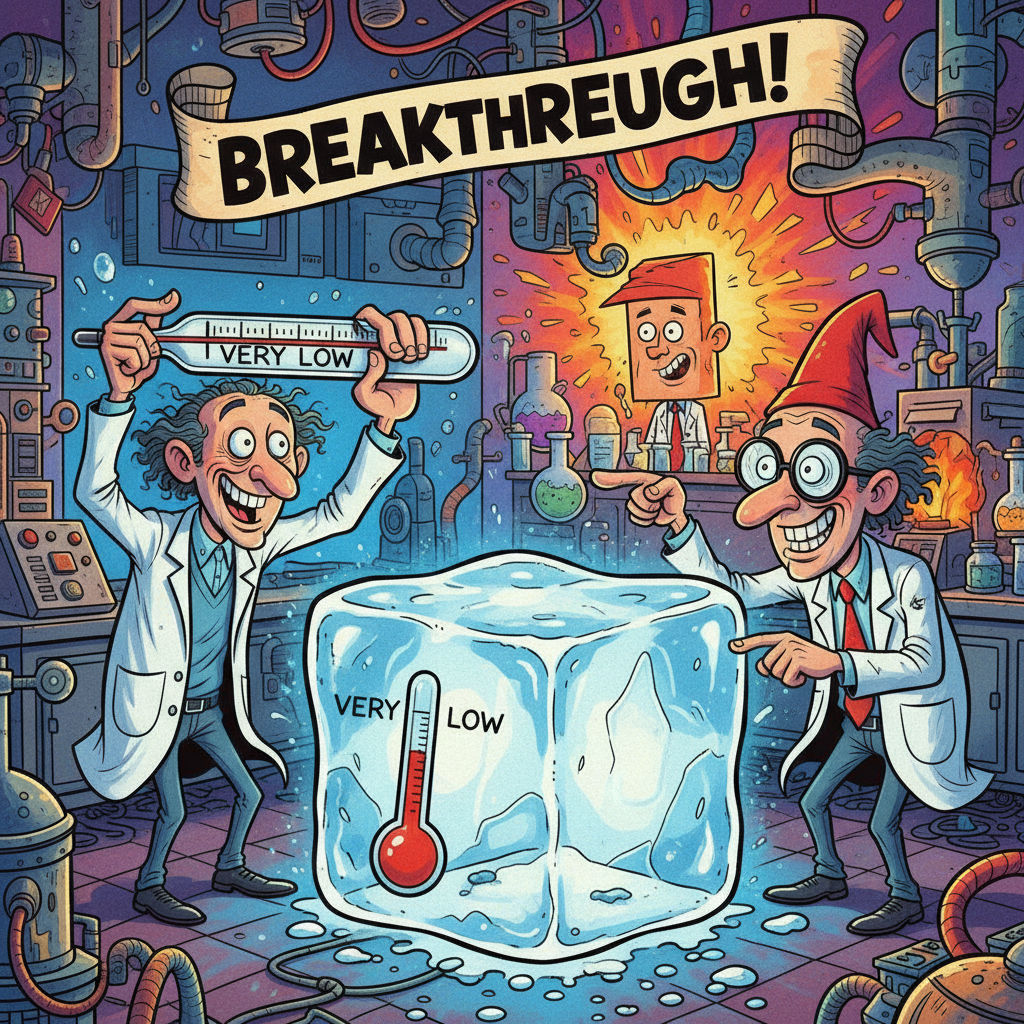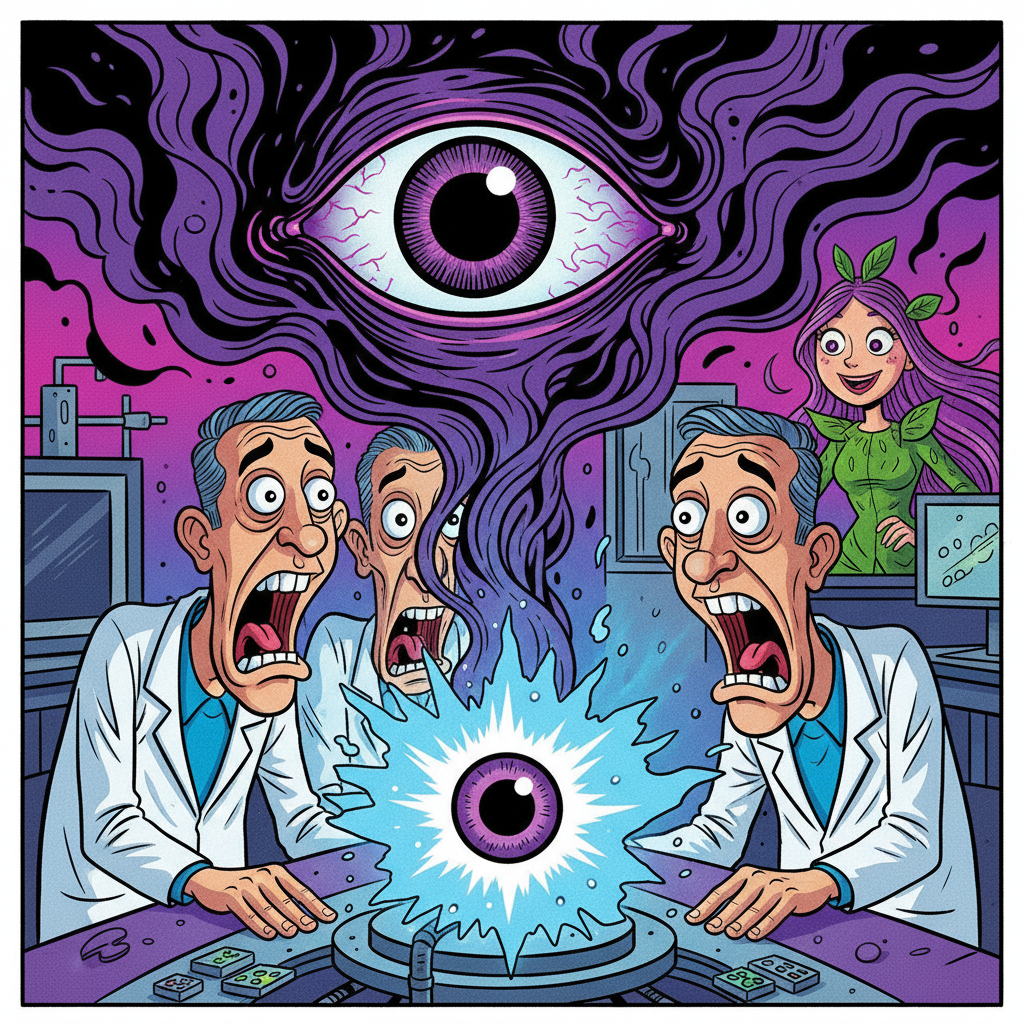
CAMBRIDGE, MA – In a groundbreaking experiment, physicists at Harvard University have successfully cooled a cloud of potassium atoms to temperatures just fractions of a degree above absolute zero, a feat intended to advance quantum computing. However, an unforeseen side effect of this extreme cold has been the accidental discovery of a new form of existential dread, now dubbed 'Quantum Apathy.'
“We were aiming for quantum entanglement, but what we got was… a profound sense of the universe not caring,” explained lead researcher Dr. Evelyn Reed, her voice flat. “The atoms, when observed in this state, don't just stop moving; they seem to stop *caring* about moving. Or anything, really.”
The phenomenon, observed in a lab designed for precision quantum control, has left researchers baffled. Initial data suggests that at these ultra-low temperatures, the fundamental forces governing atomic interaction appear to lose all motivation. “It’s as if the strong nuclear force just shrugged and said, ‘Eh, whatever,’” added Dr. Reed, adjusting her glasses with a sigh that seemed to echo the void. “We’re seeing particles that just… aren’t feeling it today.”
Critics are already questioning the practical applications. “While fascinating, I’m not sure the world needs a more efficient way to feel utterly meaningless,” commented Dr. Miles Corbin, a theoretical physicist from MIT. “We’ve already got social media for that.” The Harvard team, however, remains optimistic, suggesting that understanding Quantum Apathy could lead to breakthroughs in anti-motivational materials or even the perfect algorithm for procrastination.
The atoms, meanwhile, remain perfectly still, seemingly content in their profound, icy indifference to the unfolding universe.