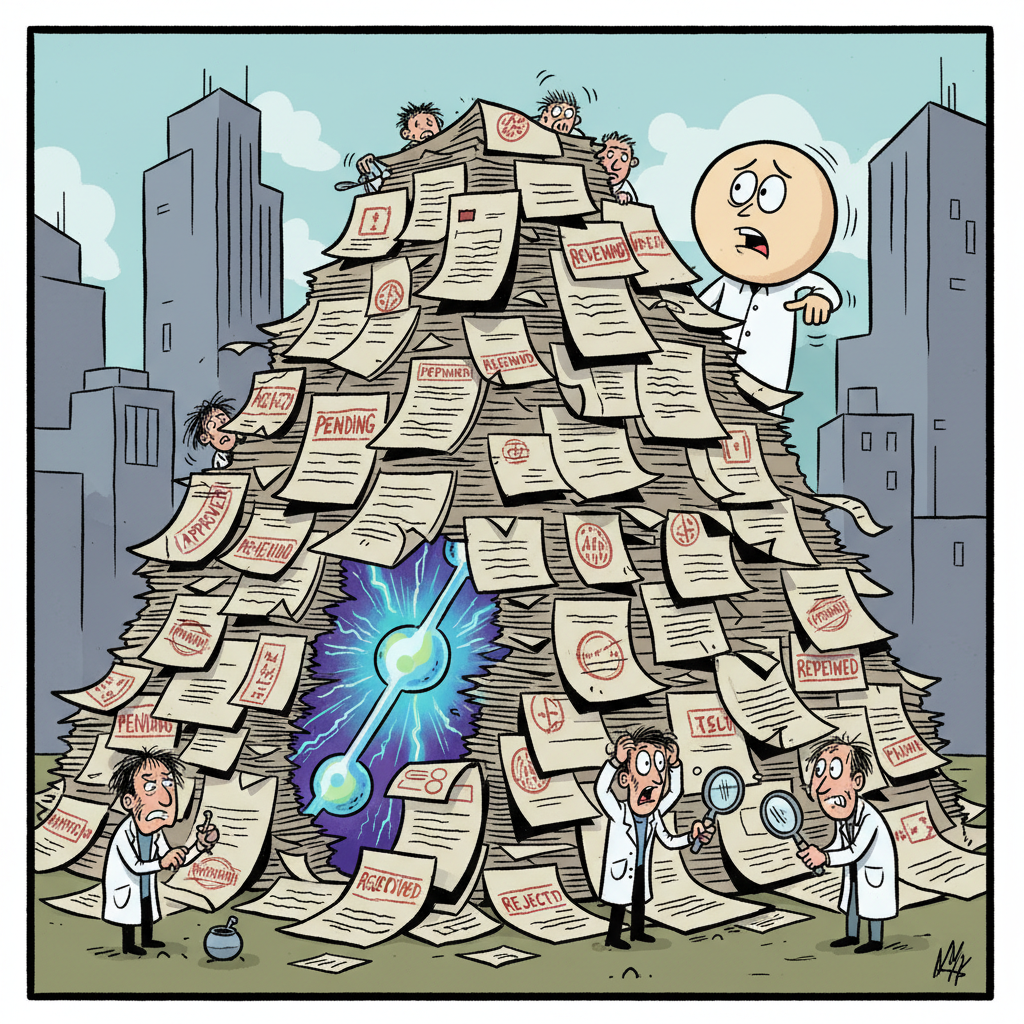
HOUSTON, TX — Researchers at the Texas Center for Superconductivity (TcSUH) and the University of Houston have announced a groundbreaking achievement in high-temperature superconductivity at ambient pressure, a discovery poised to transform energy generation, transmission, and storage. However, sources close to the project confirm the revolutionary material has already been shunted into a labyrinthine approval process, effectively ensuring its practical application will remain theoretical for the foreseeable future.
“We’re incredibly proud of this work,” stated lead physicist Dr. Aris Thorne, adjusting his glasses. “Imagine a world where energy loss is minimal, where power grids are hyper-efficient, where… well, you get the idea. The potential is limitless.” Dr. Thorne then reportedly sighed, adding, “Now, if only we can get past the ‘Preliminary Feasibility and Impact Assessment Subcommittee for Emerging Technologies in the Greater Houston Area’ by 2035, we might actually make a difference.”
According to an internal memo leaked from the Department of Energy, the new superconducting material must first pass through a series of regulatory hurdles, including an “Economic Viability and Market Disruption Analysis,” a “Societal Integration and Public Perception Review,” and a “Potential Impact on Existing Utility Company Stock Prices Task Force.” Each stage is expected to take between three and eight years, with mandatory public comment periods and several rounds of peer review from competing research institutions.
“It’s standard procedure,” explained Dr. Evelyn Reed, a senior policy analyst who specializes in delaying progress. “We can’t just unleash a technology that could solve global energy crises without first ensuring it won’t upset the delicate balance of quarterly earnings reports and established infrastructure contracts. Think of the paperwork!”
When asked about the immediate next steps, Dr. Thorne indicated the team was currently focused on securing funding for a new printer to handle the volume of required documentation, as their current model keeps jamming on the “Environmental Impact Statement Addendum Request Form.”