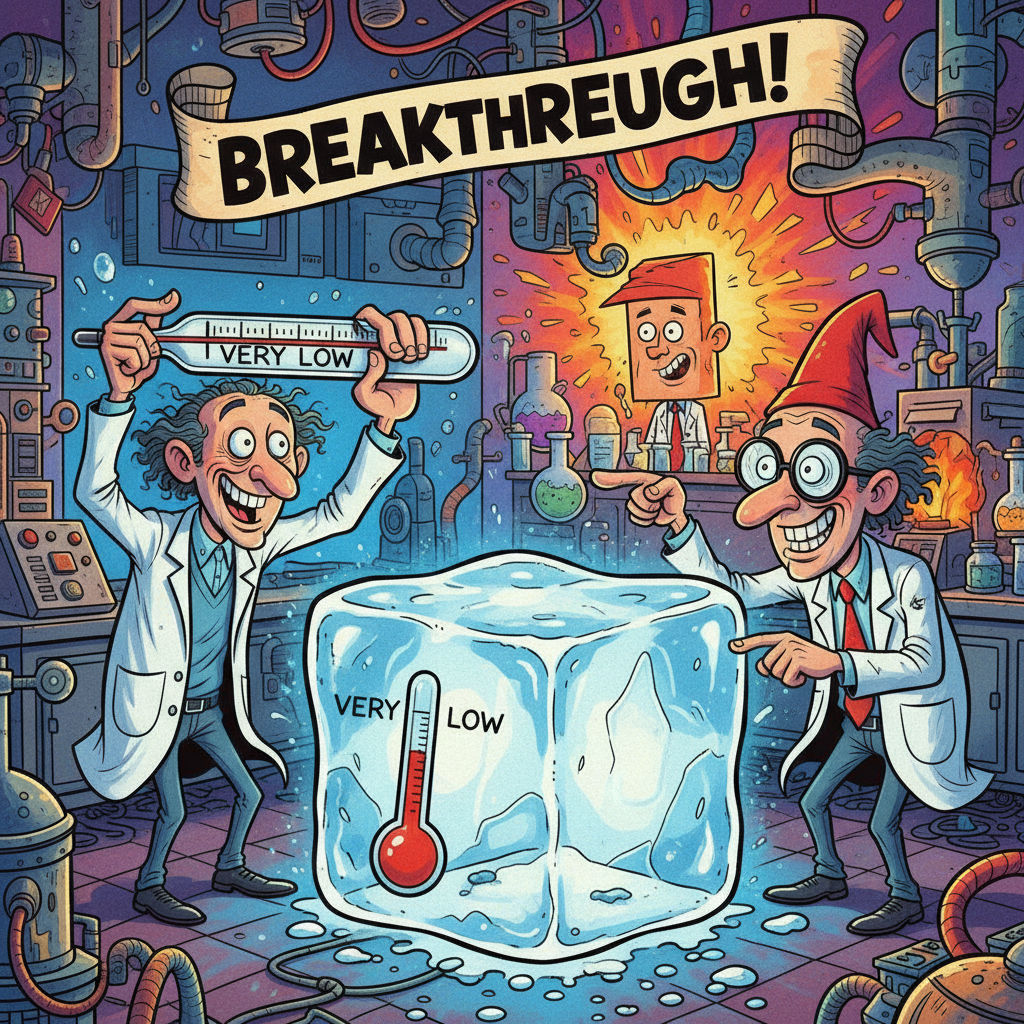
CAMBRIDGE, MA – In a monumental leap for physics, researchers at Harvard University have announced the successful cooling of matter to within a hair's breadth of absolute zero, a temperature at which all atomic motion theoretically ceases. The breakthrough, hailed as a "transformative step" for future technologies, has reportedly led to an immediate and widespread sense of chill among the scientific community.
“It’s truly incredible what we’ve achieved,” stated lead physicist Dr. Eleanor Vance, her voice slightly chattering despite being bundled in a lab-issued parka. “We’re talking about temperatures so low, the atoms are practically just… vibing. Or not vibing, I guess. Look, can someone close that door? I swear I feel a breeze.”
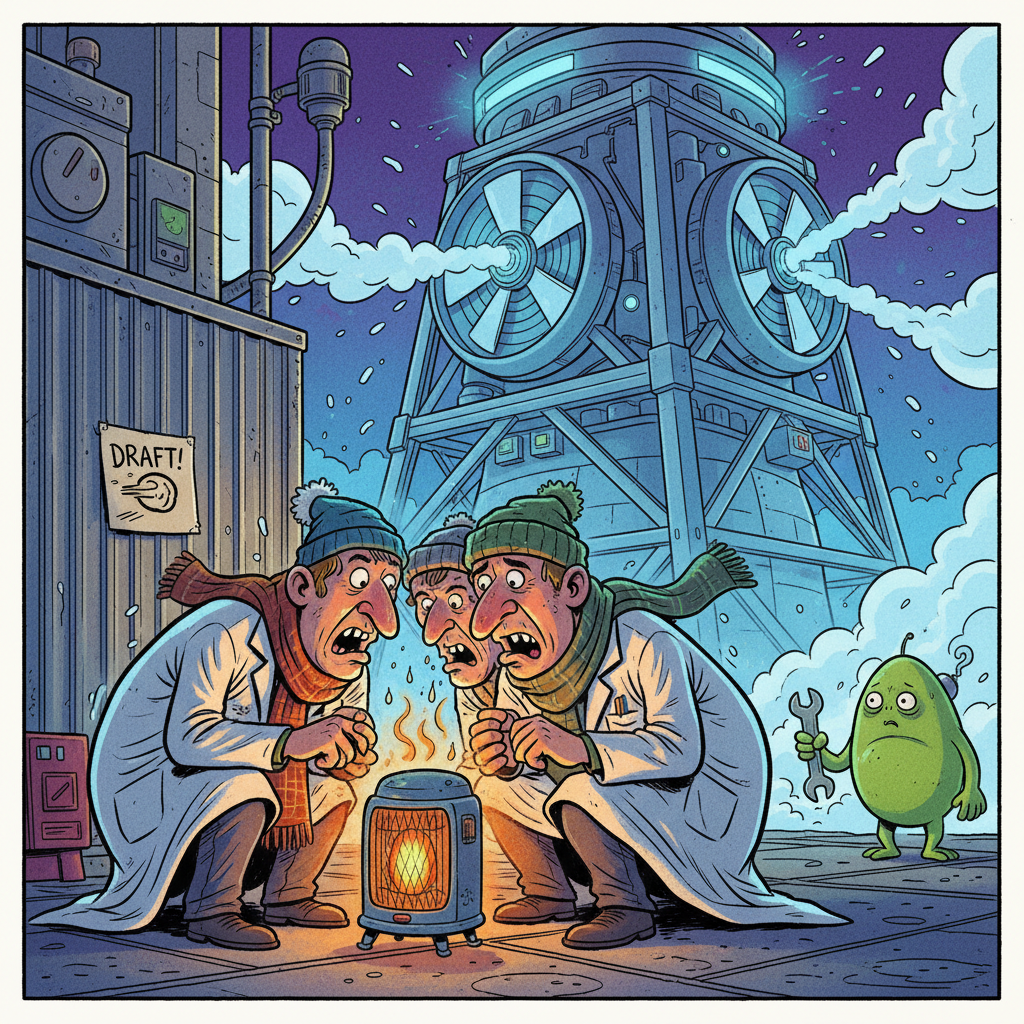
The project, which involved complex laser cooling techniques and magnetic traps, was expected to unlock secrets of quantum mechanics and pave the way for revolutionary computing. Instead, early reports indicate an unforeseen side effect: an acute awareness of ambient temperature fluctuations. “We’ve had three complaints about the air conditioning being too high in the past hour,” confirmed facility manager Gary Jenkins. “And one request for a mini-fireplace for a desktop.”
Experts suggest this hyper-sensitivity to cold could be a natural consequence of prolonged exposure to such extreme thermal conditions. “It’s like their internal thermostats have been recalibrated to an absurd degree,” explained Dr. Kenneth Pringle, a theoretical climatologist. “They’re now experiencing what a neutrino feels on a brisk autumn day.”
The university is now exploring options for employee comfort, including issuing branded thermal underwear and considering a mandatory “warm-up” period in a sauna before and after lab shifts. Meanwhile, Dr. Vance was last seen attempting to warm her hands on a cup of lukewarm coffee, muttering about the cost of living and the general insensitivity of the universe.