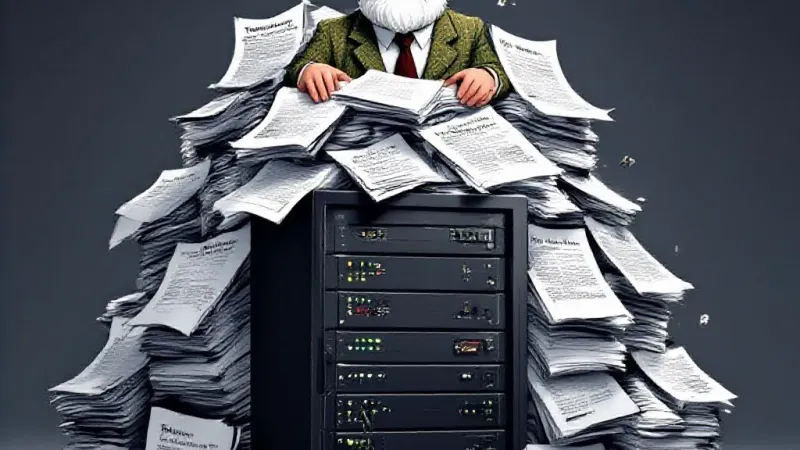
SAN FRANCISCO—After three decades of pioneering the digital media landscape, internet veteran Salon announced its permanent closure Thursday, citing a sudden, shocking realization that publishing 10,000-word essays analyzing the patriarchal undertones of a local soup kitchen to an audience entirely running ad-blockers is not a sustainable business model.
Founded in 1995 during the idealistic dawn of the web, Salon carved out a deeply specific space in modern journalism by ensuring that every single cultural artifact—from a high-stakes presidential election to a mediocre Pixar sequel to a slightly burnt piece of sourdough toast—could be aggressively reframed as an existential threat to the republic by an adjunct professor with an axe to grind. For thirty-one years, the publication stood as a proud beacon of intellectual rigor, bravely asking questions that literally no living human being was wondering, such as whether a fictional cartoon ogre represents late-stage capitalism or just a really large green guy.
"We are incredibly proud of the vital work we’ve done here," said an outgoing editor-in-chief, staring blankly at an Excel spreadsheet displaying three decades of uninterrupted red ink and a total lifetime revenue stream consisting mostly of fourteen dollars and thirty-two cents collected from accidental clicks by confused senior citizens trying to check the local weather. "For years, industry experts told us that if we just kept publishing dense, unreadable screeds about political minutiae while refusing to allow ads larger than a postage stamp, the free market would eventually reward our patience. It turns out the market was too busy watching teenagers lip-sync on TikTok."
Industry analysts noted that Salon’s unique monetization strategy—which relied heavily on righteous indignation and the lingering guilt of people who felt mildly bad about never paying for digital content—finally hit a hard wall when the collective human attention span dropped below four seconds in the late 2010s. Without a steady stream of vanity funding from bored billionaires or venture capitalists desperately trying to launder their reputations, the publication was finally forced to confront the grim mathematical reality that shouting moral lectures into an empty digital void for three decades does not pay for office rent or high-speed internet.
Following the unexpected announcement, the site's loyal readership expressed profound mourning for the digital institution, noting with complete sincerity that while they hadn't actually visited the homepage since the first Obama administration, the comforting presence of Salon’s aggressively beige web design made them feel like smart, deeply informed citizens who cared intensely about things. Cultural critics pointed out that the site's departure leaves a massive, gaping void in the internet's ecosystem for overly earnest opinion pieces written by people who clearly despise writing and hate reading even more.
At press time, the entire digital archive of Salon’s thirty-one-year history was being quietly downloaded onto a single, dusty flash drive and tossed directly into the San Francisco Bay, bringing a definitive and entirely predictable end to an era when you could pretend to read a five-part series on the semiotics of the 1998 midterm elections just to look sophisticated in front of your college roommate.