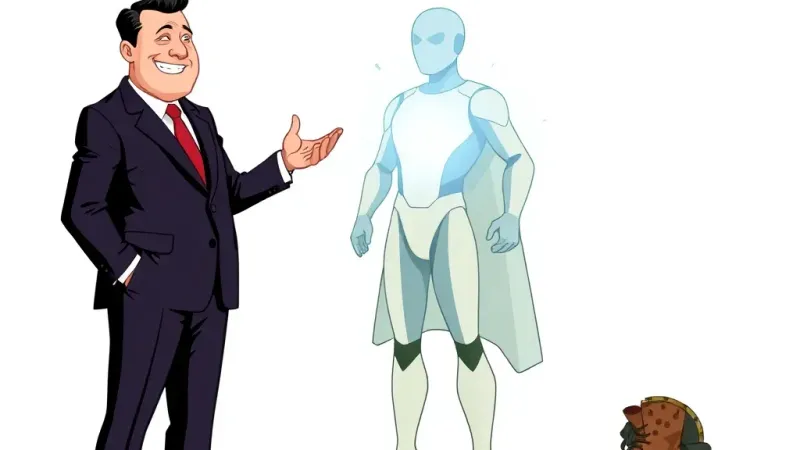
AUSTIN — A prominent Texas Republican has staunchly defended the use of an 2-generated image of a soldier in a recent 2 tribute, stating that AI-created visuals simply "project better" for public consumption than authentic photographs of human heroism. The representative, who faced mild online criticism for the synthetic image, asserted that the digital rendering offered an aesthetic perfection and emotional clarity that real-world imagery often lacks.
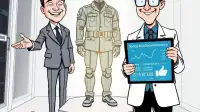
"When you're trying to convey an unwavering sense of courage and sacrifice, sometimes reality can be, shall we say, a little 'unpolished'," explained campaign image consultant Brenda Krell, whose firm, 'DeepFake PR Solutions,' advises numerous elected officials. "With generative AI, we can ensure consistent uniform sheen, optimal heroic jawline fidelity, and a tear-glistening eye that registers perfectly across all device screens. No smudges, no awkward angles, no lingering questions about battle fatigue or actual lived experience." Krell noted that their proprietary "ValorVision 3000" prompt system ensures a 98.7% success rate in depicting "idealized patriotism."
The representative clarified that the decision was not about deception, but about "maximizing the narrative impact" for constituents. "We have a responsibility to communicate a sense of unwavering national pride," the official's spokesperson, Marcus Thorne, elaborated in a press statement. "And frankly, an AI-curated soldier, free from the unpredictable variables of actual conflict or even accurate historical uniforms, delivers that message with an efficiency that traditional photography simply cannot match. It’s less about 'fake' and more about 'enhanced reality for strategic messaging purposes'." Thorne added that the image was rigorously tested with focus groups who preferred the AI-generated version 7-to-1 over an actual photo of a decorated veteran.
When pressed on the ethics of using fabricated imagery to honor real service members, the representative’s office countered that the digital soldier was an "aspirational composite" embodying the spirit of all heroes. "Think of it as conceptual art, but for voters," offered Krell, who also suggested that future campaigns might explore AI-generated constituents for town hall meetings to ensure optimal visual diversity and question phrasing. "Why settle for reality when you can have a statistically perfect representation of it?"
The campaign also announced plans to explore AI-generated policy proposals, noting their superior ability to pass focus group testing without the messy input of actual economists or social scientists.