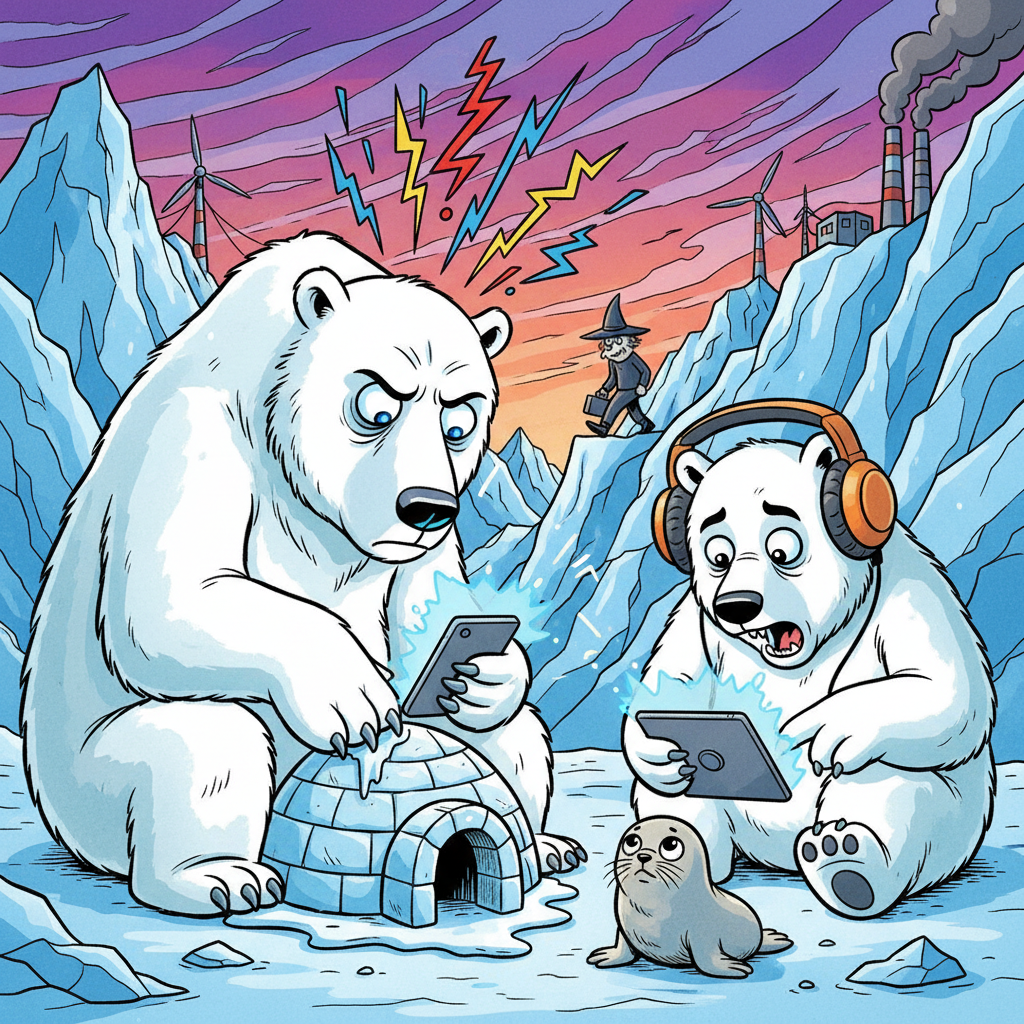
ARCTIC CIRCLE — A groundbreaking new study from the Institute for Arctic Behavioral Studies (IABS) reveals that polar bears are increasingly venturing into human settlements not for food, but for reliable internet connectivity. Researchers initially hypothesized that climate change-induced hunger was driving the bears closer, but data now suggests a more existential, and decidedly modern, crisis.
“We’ve observed a significant uptick in bears attempting to access unsecured networks, often congregating near satellite dishes or known Wi-Fi hotspots,” stated Dr. Bjorn Jorgensen, lead researcher at IABS. “Their primary motivation appears to be a desperate need to download the latest season of 'The Crown' or upload a particularly photogenic seal kill to their private Instagram accounts.” Dr. Jorgensen added that several bears have even been observed attempting to troubleshoot router issues by batting at them with their paws.
Local residents, while initially concerned for their safety, are now reportedly more annoyed by the bears’ data demands. “It’s bad enough they’re rummaging through our trash, but now they’re hogging all the bandwidth,” complained Inukshuk elder, Anya Nansen, whose village recently experienced a severe internet slowdown after a particularly large male bear was seen attempting to FaceTime his cubs from her porch.
Conservationists are now grappling with the ethical implications of providing high-speed internet to a species that could, theoretically, maul you after a buffering incident. The study concludes that if current trends continue, future polar bear-human interactions may involve less hunting and more complaints about latency.