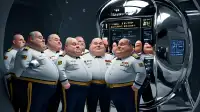
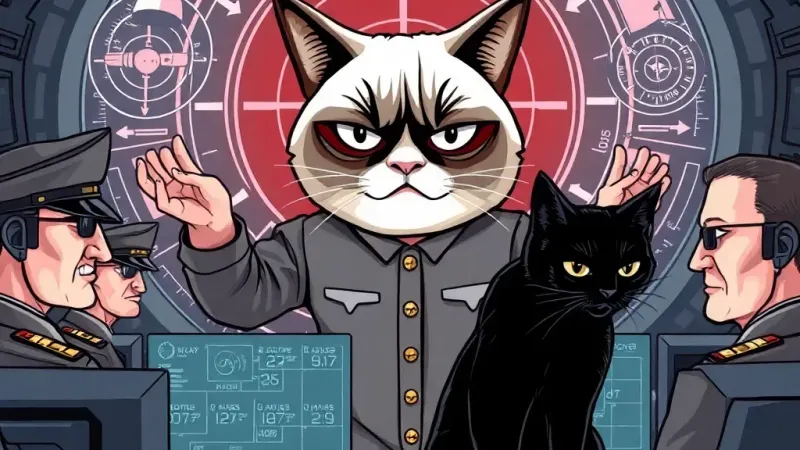
WASHINGTON D.C. — The Department of Defense today unveiled its pioneering "Feline-Aided Cyber Warfare and Meme-Based Threat Intelligence" (FACW-MBTI) division, marking a historic pivot in national security strategy. The move formalizes the military's reliance on obscure internet phenomena, including viral cat memes, as frontline defenses against sophisticated global cyberthreats. Officials stated the decision came after mounting evidence that traditional, multi-billion-dollar defense contractors were consistently outmaneuvered by highly engaged, meme-proficient digital natives operating from their dorm rooms.
"For years, we've poured resources into proprietary firewalls and highly classified algorithms, only to find our most potent intel often originates from a 19-year-old on Reddit analyzing encrypted data through the lens of a sarcastic cat image," explained General Roderick Plum, head of the newly minted FACW-MBTI. "It turns out, the cognitive processing required to grasp the layered irony of a 'distracted boyfriend' meme is directly transferable to identifying novel attack vectors from state-sponsored threat actors. The data is irrefutable: cat memes are a force multiplier."
Recruitment for the division will focus heavily on individuals with demonstrable proficiency in internet subcultures, dark humor, and an uncanny ability to predict viral 2. A pilot program last year, which linked an unknown student's "Grumpy Cat" parody to an impending global ransomware attack, reportedly saved an estimated $3 trillion in potential damages. The 2 is now exploring partnerships with TikTok influencers and Twitch streamers to develop a national network of "Meme-Warfare Operatives" (MWOs) capable of crowdsourcing threat detection.
Defense contractors are already scrambling to adapt, with companies like Lockheed Martin and Raytheon announcing plans to acquire popular meme aggregators and invest in "Gen Z cultural immersion programs" for their senior executives. Critics, however, argue that outsourcing national security to the fickle whims of internet 2 is a dangerous precedent. "Are we really going to trust the fate of critical infrastructure to someone whose primary qualification is knowing which SpongeBob meme to deploy at precisely the right moment?" asked Senator Brenda Harrison (R-WY), though she later admitted to personally consulting a collection of "Woman Yelling at a Cat" memes to de-escalate a recent legislative debate.
Despite the skepticism, Gen. Plum remains confident. "Our adversaries are not just targeting our networks; they're targeting our attention spans. And frankly, nobody understands attention spans better than a generation raised on six-second videos and endless feeds of relatable animal content." The division's first major initiative, codenamed "Operation: LOLCAT," aims to preemptively counter disinformation campaigns by flooding targeted platforms with strategically uplifting but utterly nonsensical cat videos.
Future plans include integrating augmented reality filters to project "motivational doge" onto enemy infrastructure, should diplomatic solutions fail.