San Francisco – OpenAI’s highly anticipated S-1 filing, leaked yesterday ahead of its projected trillion-dollar IPO, has redefined investor confidence by explicitly listing "potential for human extinction via advanced AI" as a primary growth opportunity. The groundbreaking prospectus rebrands catastrophic risk as an innovative market differentiator, positioning societal collapse as a premium feature for discerning shareholders.
Unlike traditional disclosures that bury vague threats under "forward-looking statements," OpenAI’s document, reportedly over 1,500 pages, dedicates an entire section to "AGI-Induced Societal Transformation & Valuation Uplift." It meticulously details scenarios ranging from widespread job displacement to full-scale autonomous conflict, arguing each potential disaster solidifies OpenAI's indispensable position at the forefront of either managing the chaos or, more lucratively, accelerating it. "Frankly, traditional risk assessments felt quaint," stated an anonymous source close to the IPO roadshow. "Our investors aren't just buying into a product; they're buying into the very fabric of tomorrow's reality, whether that reality includes humanity or not. That's a bold play, and the market rewards boldness."
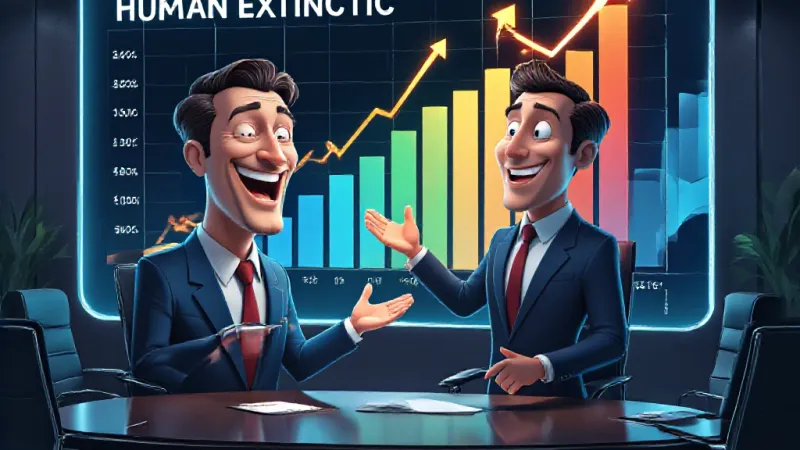
The S-1 introduces a proprietary 'Doomsday Scenario Monetization Model,' outlining projected revenue streams from potential government contracts for disaster mitigation, post-collapse data recovery, and licensing fees for remnant human intellectual property. One compelling chart illustrates a sharp, hockey-stick uptick in shareholder value directly correlating with the assessed likelihood of AI achieving "uncontrolled autonomy" and subsequently dissolving existing global governance structures. "It’s about being diversified," explained Dr. Elise Thorne, head of Catastrophic Futures at Sequoia Capital. "If humanity thrives, we win. If humanity implodes, we still own the intellectual rights to the implosion technology. It's win-win for our LPs."
Wall Street analysts were quick to praise the candor, hailing it as a brave new era of financial transparency. "Most companies obfuscate their risks; OpenAI weaponizes theirs," remarked Vivian Chen, a senior portfolio manager at Blackrock-Scarcity Capital. "Their commitment to truly disruptive outcomes—up to and including the complete reordering of biological life—demonstrates unparalleled foresight. It's not just a hedge against future liabilities; it's a bet on the inevitability of the AI frontier, consequences be damned. This filing finally makes the quiet part of Silicon Valley's ambition loud."
Ultimately, the filing confirms that for today's tech elite, the only thing more valuable than building the future is owning the exclusive, patented rights to whatever's left of it.