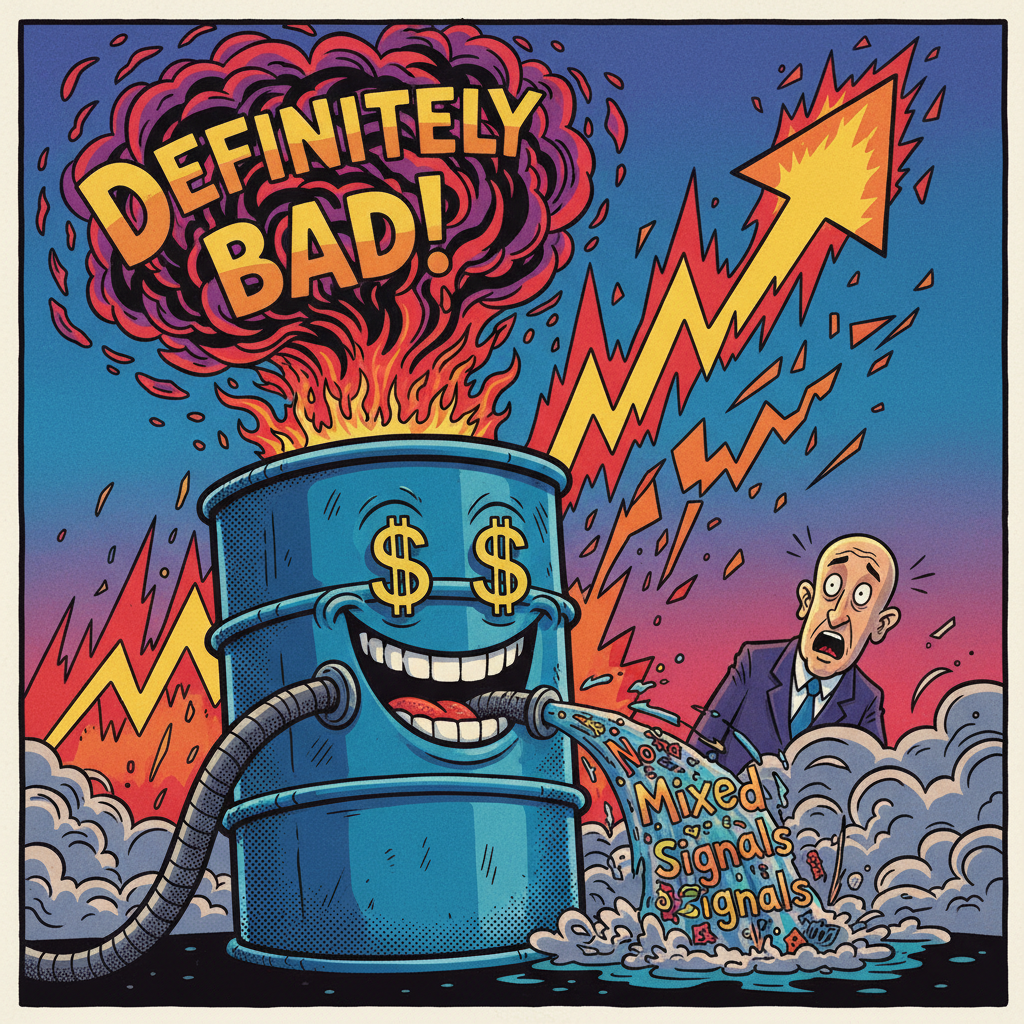
NEW YORK – Global oil prices have once again soared past the $100-a-barrel mark, with market analysts confirming today that any and all geopolitical developments, particularly those labeled 'mixed signals,' will henceforth be interpreted solely as an impetus for price increases. The latest surge follows reports that Iran is both restricting and, paradoxically, allowing some tankers through the Strait of Hormuz, a phenomenon experts are calling 'the perfect storm of ambiguity.'
“We’ve reached a point where the market is so finely tuned to panic that even contradictory information functions as a clear directive to buy,” stated Dr. Evelyn Reed, head of Geopolitical Futures at Sterling & Sterling Asset Management. “Whether it’s a full blockade or a partial one, or even just a strongly worded tweet about a potential blockade, the algorithm now just sees 'conflict' and adds three dollars to the barrel. It’s remarkably efficient, if not entirely logical.”
U.S. calls for international assistance in securing the vital shipping lane were reportedly met with a collective shrug from allies, further cementing the market’s conviction that things are, indeed, going sideways. “The lack of a decisive, unified response is, in itself, a mixed signal,” explained financial pundit Chad Brannigan on CNBC this morning, “and as we’ve established, mixed signals mean higher prices. It’s a self-fulfilling prophecy, but with more steps and significantly more profit.”
Sources close to the commodities trading floors confirmed that traders are now actively seeking out any news item containing the phrase 'mixed signals,' often ignoring the context entirely. One trader, who wished to remain anonymous, admitted, “Honestly, if the headline says ‘mixed signals,’ I just hit ‘buy.’ It’s never steered me wrong.”
The only thing clearer than the rising oil prices is the market’s unwavering commitment to making money, regardless of what the signals are actually trying to say.