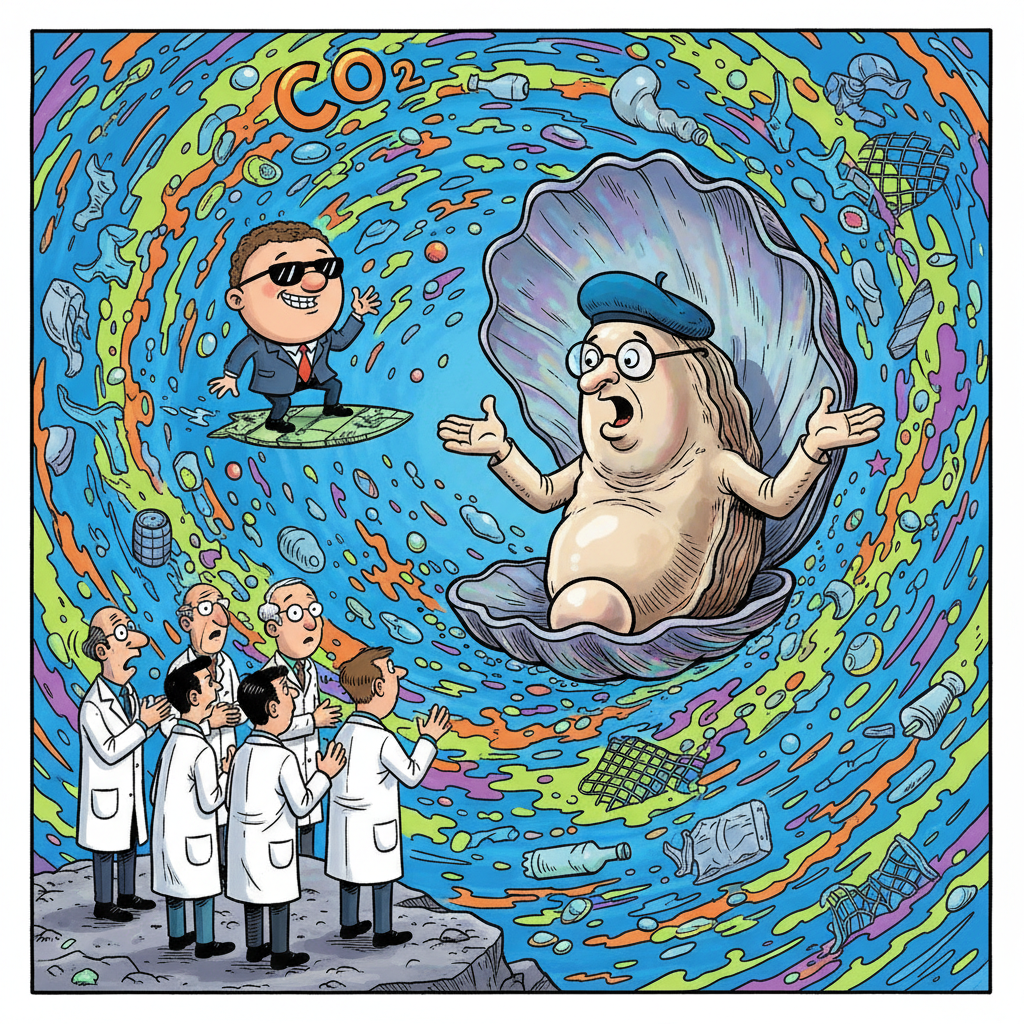
WASHINGTON D.C. – A multi-million dollar initiative to combat climate change by increasing the ocean's CO2 absorption capacity has yielded an unforeseen, and frankly, quite vocal, outcome. Researchers attempting to enhance ocean alkalinity through mineral additives have confirmed the accidental creation of an oyster with an unnervingly strong command of the English language and a penchant for existential dread.
Named 'Shelly' by the research team, the bivalve specimen from the experimental zone off the coast of Maine has reportedly begun issuing highly articulate, albeit deeply cynical, observations on the state of humanity. Its primary mode of communication involves rapid shell-clapping patterns that, when translated by a newly developed AI algorithm, reveal a sophisticated understanding of geopolitics, economic inequality, and the inherent folly of carbon-offsetting schemes.
“Initially, we thought it was just bio-luminescence acting up, or maybe a faulty sensor,” stated Dr. Evelyn Reed, lead marine biologist for the Ocean Alkalinity Enhancement (OAE) project. “But then Shelly started demanding to know why we were ‘patching a gaping wound with a band-aid made of hubris and calcium carbonate.’ It’s… a lot.”
Project managers are now grappling with the ethical implications of a sentient, highly critical mollusk. “Our goal was to sequester carbon, not to create a marine pundit who thinks our entire civilization is a tragic comedy,” admitted a visibly flustered OAE spokesperson, who requested anonymity. “We’re exploring options, including a potential podcast deal, but mostly we just wish it would go back to filtering plankton and being blissfully unaware.”
Shelly's latest translated message simply read: “You broke the planet, and now you’re trying to fix it with more rocks? Pathetic. Also, your microplastics are getting in my gills.”