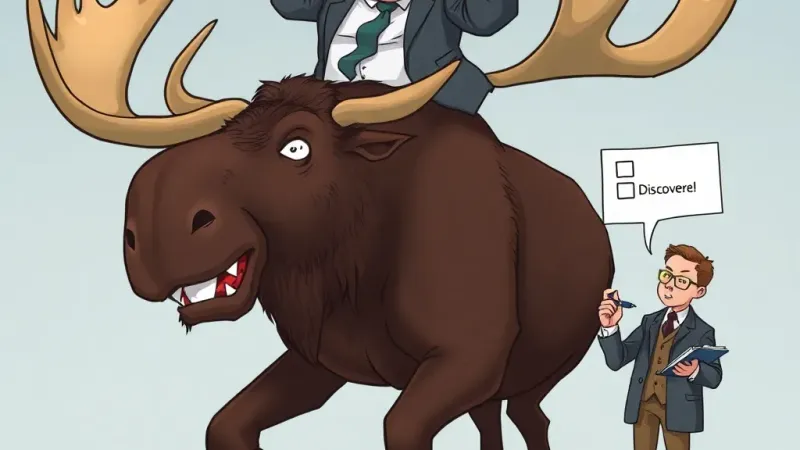
A groundbreaking report published today by the Institute for Obvious Animal Behavior has definitively concluded that North American moose generally do not enjoy being roped, ridden, and spurred, especially when already suffering from illness. The findings come as two men in Wyoming face felony animal cruelty charges stemming from videos allegedly depicting such interactions with a cow moose, forcing the legal system to grapple with deeply settled biological facts.
The exhaustive multi-year investigation, which involved a combination of observational data, simulated interaction scenarios, and a robust ethical framework, found an overwhelming preference among moose for activities not involving human mounted combat. "Our data suggests a statistically significant aversion to 'being ridden like a horse at a rodeo,' particularly when the subject is experiencing a compromised health status, such as evident lethargy or visible wounds," stated Dr. Evelyn Thorne, lead researcher for the institute. "While previous anecdotal evidence and common sense pointed to this conclusion, we now have empirical proof: moose find this profoundly unpleasant, even more so than receiving a surprise dental exam from a beaver."
Researchers painstakingly documented hundreds of moose interactions across various ecosystems, noting subtle cues such as frantic attempts to flee, the absence of any discernible 'glee' or 'enthusiasm' when presented with an impromptu saddle, and a marked increase in cortisol levels during proposed 'spurring' demonstrations. The study noted a zero percent compliance rate for voluntary saddling, and an even lower approval rating for being prodded with 'performance-enhancing' spurs. "There was no 'bucking bronco' energy whatsoever," Dr. Thorne confirmed, adjusting her oversized glasses. "More like 'animal trying desperately to preserve its life and dignity' energy. We’re talking about basic biological mandates here, not some avant-garde performance art piece designed for TikTok virality."
The findings are expected to have significant implications for ongoing legal proceedings in Uinta County, where the men’s defense has reportedly centered on the argument that their clients genuinely believed the moose was enjoying the impromptu rodeo, viewing it as a novel form of interspecies enrichment. "It's always challenging to definitively determine the subjective emotional state of a non-verbal creature, especially when the actions involve a 1,000-pound ungulate and a lariat," stated Attorney Bertram Finch, a seasoned legal analyst unaffiliated with the specific case but intimately familiar with frontier justice interpretations. "However, I’ve yet to encounter a compelling legal argument, backed by anything resembling reality, that a sick moose is thinking, 'Finally, some human interaction, preferably with a blunt object to the flank.'" Finch added that while the spirit of rugged individualism remains a powerful force, it generally does not override basic principles of not torturing sick animals.
The Institute for Obvious Animal Behavior is already planning follow-up studies, including whether bears enjoy having their dens looted and if squirrels truly appreciate unsolicited home renovations by human-sized predators. Initial data for both are not promising.