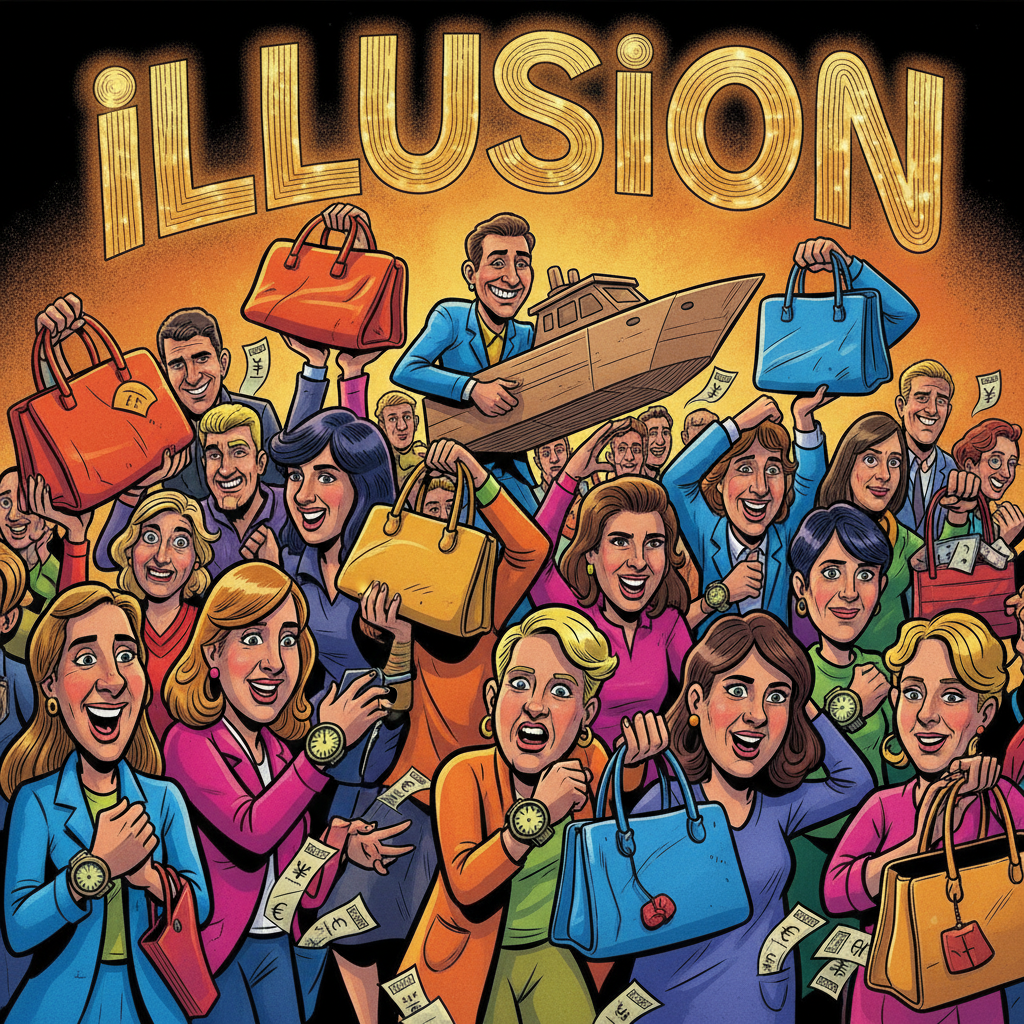
WASHINGTON D.C. — A comprehensive new study released today by the Institute for Advanced Social Metrics confirms what many have long suspected: human beings are now overwhelmingly driven by the desire to project an image of wealth and sophistication, even when operating on a shoestring budget. The report, titled 'The Decadent Deception: How We Learned to Stop Worrying and Love the Lookalike,' posits that genuine affluence has been largely supplanted by the 'illusion of affluence' as the primary motivator for purchasing decisions.
“For centuries, people strived for actual wealth. Now, it’s about the performative aspects,” stated lead researcher Dr. Evelyn Thorne, a behavioral economist. “Why buy a genuine antique when a meticulously distressed, mass-produced replica from a big box store can fool your guests into thinking you inherited it from a discerning aunt? The emotional return on investment is far greater.”
The study meticulously details the rise of 'budget decadence,' a consumer trend characterized by the strategic acquisition of items that appear expensive but are, in fact, remarkably cheap. This includes everything from 'Anthropologie-esque' throw blankets to 'artisanal-looking' hand soaps that cost less than a fancy coffee. The research indicates that the thrill comes not from the product itself, but from the potential for others to misinterpret its value.
“It’s a sophisticated game of social one-upmanship played with surprisingly low stakes,” added Dr. Thorne. “The ultimate victory is when someone compliments your 'designer' item, and you can smugly, yet subtly, imply its exorbitant cost, knowing full well it was a clearance rack find.”
The report concludes that this shift represents a fundamental redefinition of success, where perceived status now trumps actual financial standing, leaving economists scrambling to update their models for a world where everyone is secretly just trying to look richer than their neighbor.