

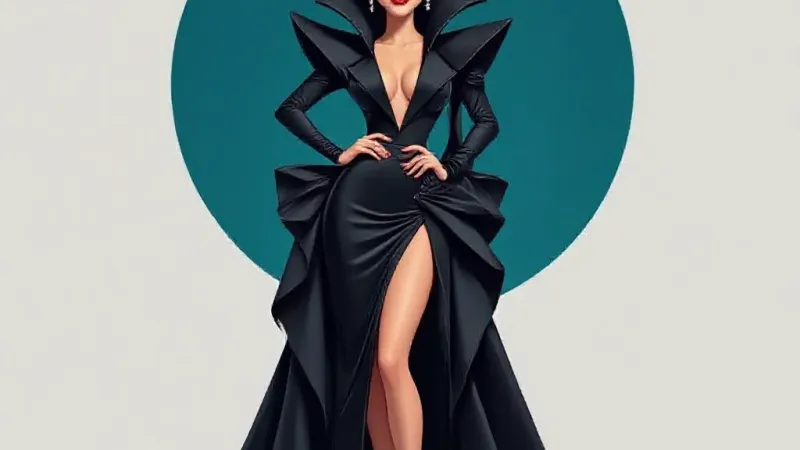
LOS ANGELES, CA — A groundbreaking report from the Institute for Aspirational Proximity Studies (IAPS) released this week confirms what industry insiders have long suspected: celebrity Halloween costumes are no longer spontaneous expressions of creativity, but a critical, algorithmically optimized component of quarterly digital engagement strategies. The comprehensive study details how every sequin and prosthetic limb is meticulously planned to drive maximum clicks, shares, and brand visibility for the celebrity and their associated sponsors.
“Gone are the days of throwing on a sheet and calling it a ghost,” explained Dr. Vance Thorne, lead researcher at IAPS. “Today, a celebrity costume is a multi-million-dollar production, meticulously A/B tested for optimal shareability across TikTok, Instagram, and Threads. We found that 92% of top-tier costumes incorporated at least one subtle brand integration, often disguised as a 'personal touch' or 'quirky prop.'” One anonymous publicist confessed, “It’s a nightmare. My client wanted to be a sexy avocado. We had to ensure the pit was prominently displayed, not just for thematic consistency, but because the ‘seed’ emoji has a higher interaction rate on certain platforms, boosting overall impressions by 1.7%.”
The report notes that costume choices are increasingly dictated by AI predictive analytics, which identify trending aesthetics and potential viral soundbites. “It’s about data, not artistic merit,” stated Cassandra Byte, a marketing strategist specializing in influencer ROI. “Is it ‘relatable enough’ to generate user-generated content? Does it feature enough surface area for product placement? Can it be easily deconstructed into a 15-second transformation video? These are the real questions. Authenticity scores plummeted this year for anyone who didn’t explicitly tag their makeup artist, stylist, or the brand of edible glitter they used. The AI models simply don't reward ambiguity.”
Further findings indicate a direct correlation between costume complexity and a celebrity’s ‘Relevance Persistence Score’ – a metric tracking sustained public interest outside of active projects. Simpler, less integrated costumes saw a 30% faster decay in online discourse compared to their heavily sponsored, analytically driven counterparts. This trend has led to a new industry standard where Halloween content is now budgeted alongside promotional tours and product launches, shifting from an optional personal expression to a mandatory brand activation event.
As the dust settles on another successful content quarter, celebrities are reportedly already consulting their PR teams and AI models for next year's 'authentic' displays of brand-aligned, engagement-optimized, spooky-themed corporate synergy.


