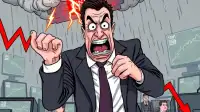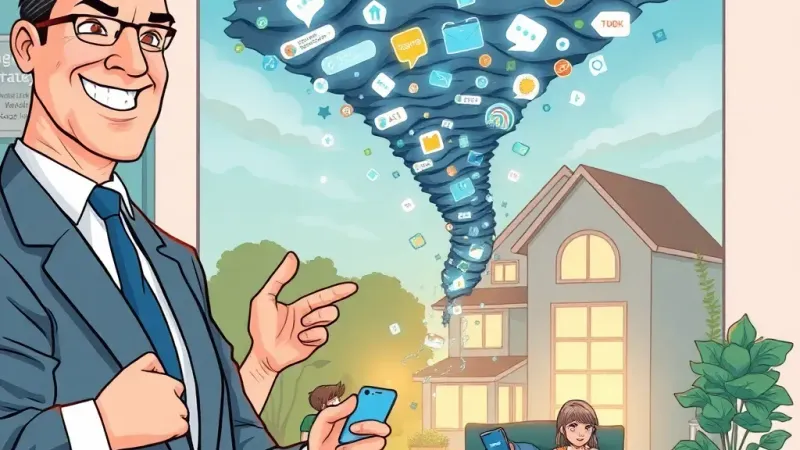
DETROIT — The National Weather Service (NWS) announced today that its increasingly frequent tornado warnings, including a recent series canceled across southeast Michigan, are part of a revised "Daily User Engagement" (DUE) strategy designed to maintain public attention in a saturated digital landscape. The agency confirmed that actual atmospheric conditions are now only one of several metrics considered, alongside push notification open rates and alert fatigue prevention.
"In the modern attention 2, simply issuing warnings for actual, imminent threats isn't enough to cut through the noise," explained Dr. Evelyn Finch, Lead Engagement Meteorologist at the NWS Center for Atmospheric Digitalization. "Our data indicated a significant decline in sustained public engagement with severe weather messaging, particularly among key demographics like Gen Z and the chronically online. By intermittently issuing and then strategically retracting high-stakes alerts, we create a dynamic, unpredictable narrative arc that keeps users refreshing their apps and checking local radar more frequently." Dr. Finch highlighted the southeast Michigan incident as a textbook example of this new "peak engagement" model, where the initial warning generated significant buzz, and the subsequent cancellation provided a satisfying, if slightly confusing, resolution.
The new DUE framework, implemented agency-wide last fiscal quarter, involves what Finch termed "algorithmically optimized alert sequences" designed to maximize app interactions and bolster the NWS's position within the competitive government service app ecosystem. "Think of it as gamified preparedness," Finch elaborated, displaying a complex flowchart of conditional triggers based not solely on storm intensity, but on declining daily user interactions (DUIs) and fluctuating 'preparedness sentiment scores.' "We discovered that a consistently high-threat environment leads to burnout and ‘alert fatigue.’ A carefully managed cycle of alarm and relief, however, cultivates a more robust, long-term relationship with our users. It’s about building trust, one strategically cancelled warning at a time, ensuring that when we *really* need their attention, they’re still tuned in, rather than having muted our notifications months ago." She pointed to internal "engagement funnel" data showing a marked improvement in user retention after a series of high-profile non-events.
While some local news outlets, whose storm chasers were reportedly disappointed by the lack of dramatic footage, have questioned the methodology, the NWS maintains the strategy is yielding significant results. Internal metrics reportedly show a 37% increase in weather app downloads, a 12% rise in local news website traffic following "strategic non-event" warnings, and a 5.8% increase in overall community preparedness survey responses—though officials admit the definition of 'preparedness' now includes 'ability to quickly locate phone and check NWS alerts.' "Our core mission isn't just about saving lives; it's about staying relevant in the digital age," said an anonymous NWS official, speaking on background from a secure, data-driven bunker. "And frankly, nothing gets people talking and sharing like a sky that was supposed to fall, but didn't, generating significant organic reach across all major social platforms."
The agency plans to roll out similar engagement-driven advisories for 'potentially impactful gust fronts' and 'mildly unsettling atmospheric pressure changes' by Q3 2025, with an eye towards a "seasonal hurricane awareness gamification" initiative for 2026.