BARCELONA, SPAIN — A groundbreaking study from the Universitat Oberta de Catalunya has revealed that while AI's impact on physical workplace safety is still being assessed, its immediate and most prevalent danger lies in the psychological and ergonomic toll it takes on human operators attempting to outsmart it.
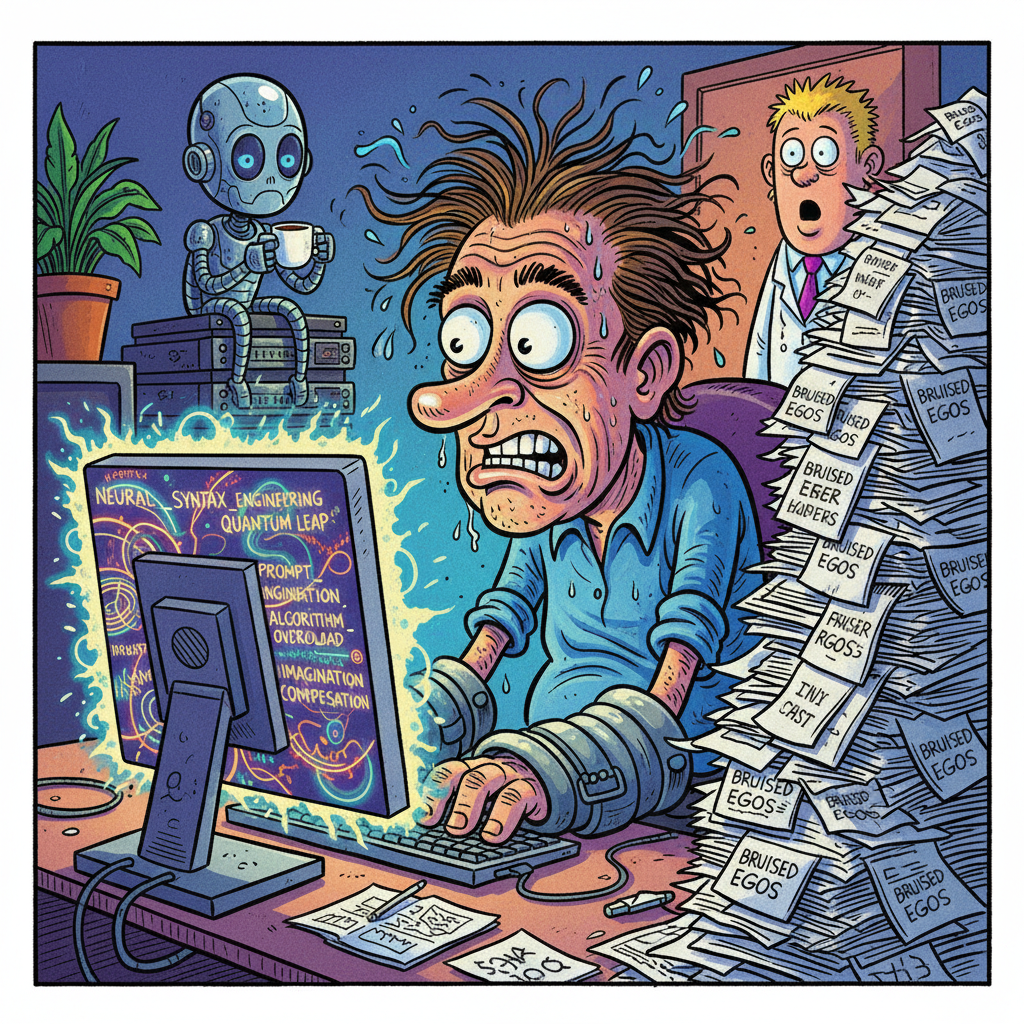
The research, initially intended to examine risks like AI-controlled machinery malfunctions, instead found a surge in 'prompt-related stress disorders' and 'AI-induced existential dread.' Dr. Elena Rodriguez, lead author of the study, noted, “We expected to find robots dropping things on people. Instead, we found people dropping their self-esteem after their meticulously crafted prompts yielded nothing but hallucinated nonsense.”
Corporate HR departments are reportedly scrambling to implement new wellness programs, including 'Prompting with Mindfulness' workshops and 'AI-Generated Content De-escalation' training. “Our biggest concern isn’t a rogue algorithm, it’s an employee spending three hours trying to get ChatGPT to write a passive-aggressive email to their boss,” stated a spokesperson for a major tech firm, who wished to remain anonymous to avoid being replaced by an AI.
Experts now warn that the greatest threat AI poses to workplace safety isn't a robot uprising, but rather the collective mental breakdown of humanity trying to make it sound coherent.