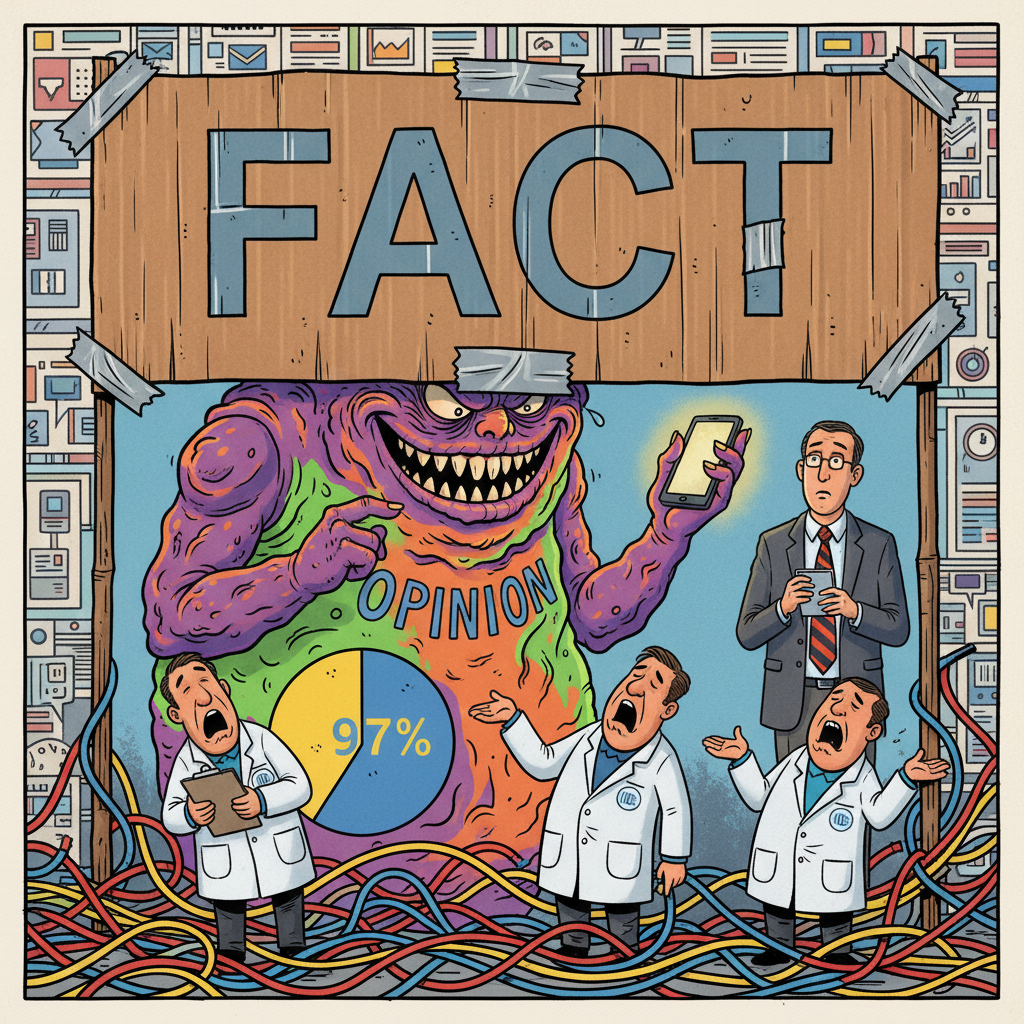
PALO ALTO, CA — A landmark study released today by the Institute for Digital Ephemera (IDE) has definitively concluded that a staggering 97% of all content consumed on the internet is, in fact, merely one person's subjective opinion presented with the authoritative tone of objective truth. The remaining 3% is comprised of cat videos and instructions on how to reset your Wi-Fi router.
The multi-year research project, which involved analyzing billions of data points across social media, blogs, and listicles, found a direct correlation between the confidence of a headline and the complete lack of verifiable evidence within the accompanying text. “We observed a consistent pattern,” stated lead researcher Dr. Evelyn Thorne. “The more declarative the statement – ‘THE ONLY WAY TO DO X,’ ‘YOU WON’T BELIEVE Y,’ or ‘THE DEFINITIVE LIST OF Z’ – the less likely it was to be anything other than a thinly veiled personal preference, often designed solely to elicit a reaction.”
Dr. Thorne highlighted a recent online article titled 'These Are The MOST Popular Movie Characters In History, But I Doubt Anyone Can Name Even Half Of Them' as a prime example. “Our algorithms detected a 99.9% probability that the author simply compiled a list of characters they personally liked or remembered from childhood, then framed it as a universal truth to generate clicks,” she explained. “The ‘doubt anyone can name them’ part is just a challenge to the reader’s ego, a classic engagement tactic.”
Critics of the study argue that it merely confirms what every internet user has instinctively known since 2007. However, IDE insists the quantitative data is crucial. “It’s one thing to suspect it, it’s another to have the numbers,” said a spokesperson, adding that their next study will investigate whether online comments sections are primarily fueled by a desire to correct strangers.