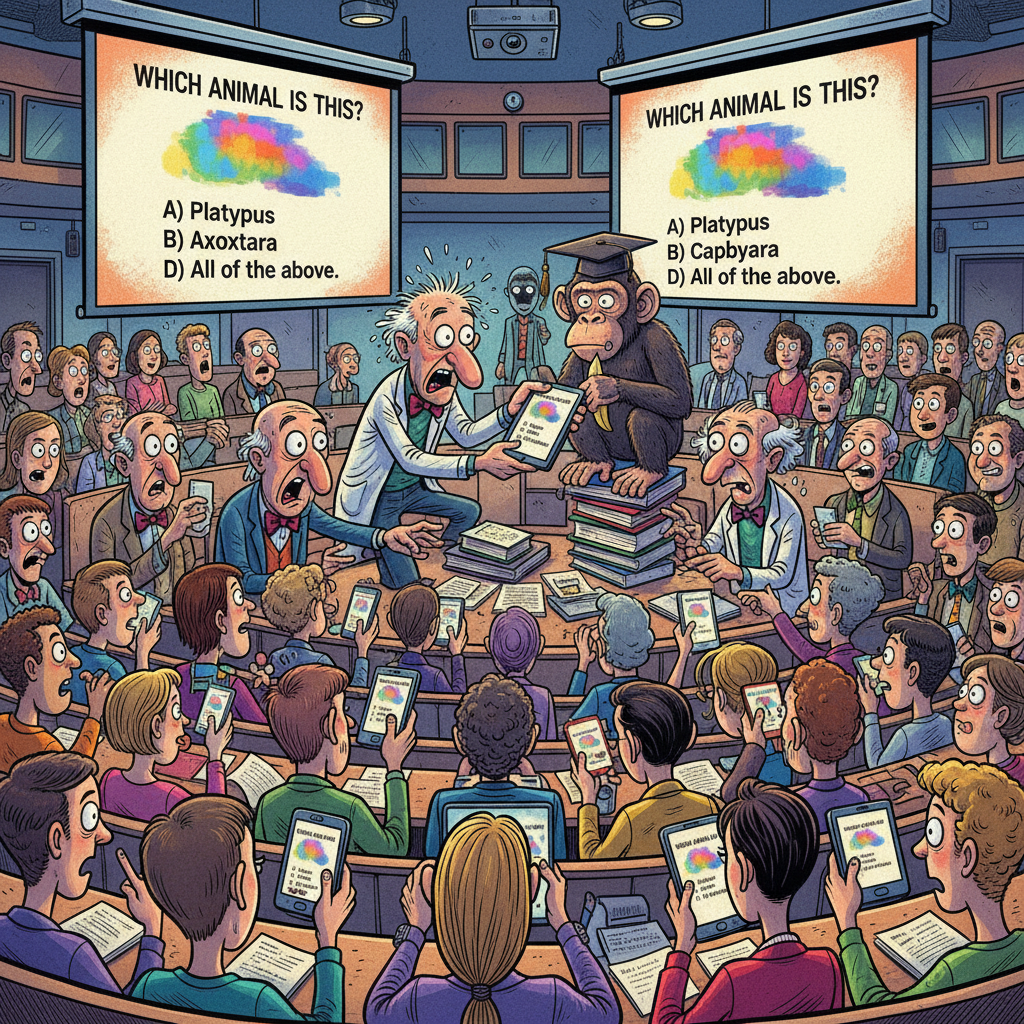
GENEVA – The World Council of Experts (WCE) announced today a groundbreaking shift in the accreditation of professional knowledge, confirming that the ability to correctly identify 93% of look-alike animal species from a series of online photographs is now the definitive benchmark for true expertise in any field. The decision follows a decade of research into human cognitive biases and the undeniable allure of digital validation.
“For too long, expertise has been gatekept by archaic institutions, peer-reviewed journals, and actual hands-on experience,” stated Dr. Evelyn Thorne, lead researcher for the WCE’s 'Digital Proficiency Metrics' division. “Our findings unequivocally show that if you can tell a stoat from a weasel under timed conditions, you possess the mental acuity and pattern recognition necessary to, say, perform open-heart surgery or manage a national economy.”
Universities are reportedly already updating their curricula, with PhD candidates now required to pass a 'BuzzFeed-style' assessment before thesis submission. “It's about efficiency,” explained Professor Alistair Finch, head of a prominent biology department. “Why spend years in the field when a few clicks can confirm mastery? Plus, the comments section provides invaluable, unfiltered peer review.”
Critics argue the new standard trivializes years of dedicated study, but the WCE remains firm. “The data doesn't lie,” Dr. Thorne concluded. “If you can discern a pika from a marmot, you’re basically a genius. What more do you need?”
Future plans include similar online assessments for legal acumen, engineering prowess, and the ability to distinguish between different types of artisanal toast.