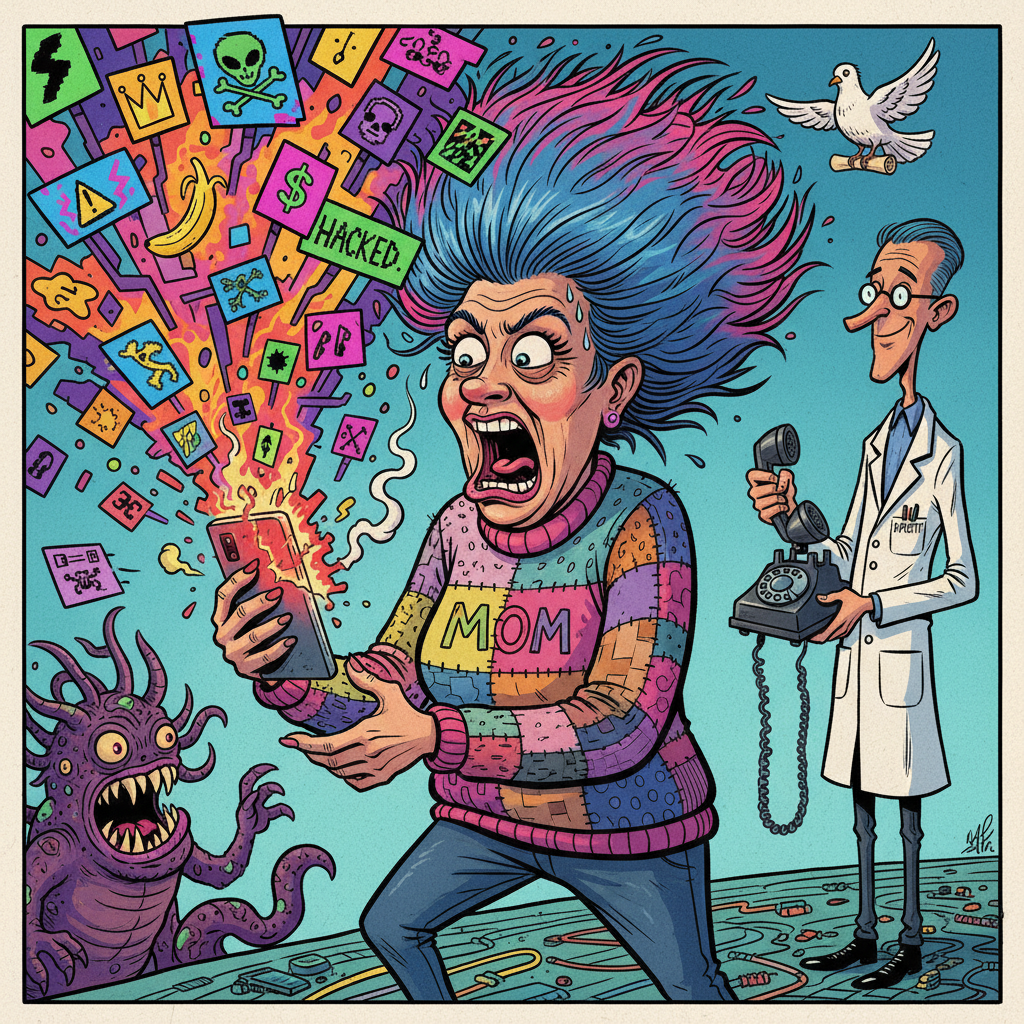
WASHINGTON D.C. — A new report from the Institute for Digital Elder Care (IDEC) indicates a nationwide surge in Facebook account compromises, primarily affecting mothers over the age of 50. The common thread in these incidents appears to be the irresistible allure of 'special invitations' and 'exclusive opportunities' appearing in their inboxes, often promising everything from free cruise tickets to a personal message from a long-lost high school acquaintance.
“Our data suggests that the average mom’s digital immune system is simply not equipped for the sheer volume of sophisticated phishing attacks disguised as heartwarming chain letters or urgent requests for Amazon gift cards,” stated Dr. Evelyn Thorne, lead researcher at IDEC. “It’s a perfect storm of genuine curiosity and a lifelong habit of opening every piece of mail, now applied to the internet.”
The phenomenon gained national attention after Donna Kelce, mother of NFL star Travis Kelce, publicly disclosed her own Facebook account had been compromised. Her warning to friends not to open 'special invitations' has since been widely interpreted as a cry for help from a generation struggling to discern legitimate online content from elaborate scams.
“We’ve seen a significant spike in 'My friend got hacked, don’t open anything from them!' posts,” added Thorne. “It’s become the digital equivalent of a neighborhood watch, except the burglar is a Nigerian prince and the watchman just clicked on a link to 'win a free iPad.' We recommend all adult children immediately set up two-factor authentication on their parents’ accounts, preferably while explaining it in terms they can understand, like 'it’s like a second lock on the cookie jar, Mom.'”
Critics argue that social media platforms bear some responsibility for creating an environment where the digital equivalent of a Nigerian prince can still thrive, while others suggest that perhaps some information is best conveyed via a carefully worded letter, delivered by hand.