NEW YORK, NY — A recent financial filing from Seche Environment, reporting a GAAP EPS of €2.77 and revenue of €1.152M, has inadvertently served as a fresh reminder that a significant portion of the financial analysis community continues to operate with only a vague understanding of their own jargon.
"Look, I can tell you it's good or bad, and I can make a compelling case for either, but if you ask me to define 'GAAP EPS' without looking it up, I'm going to start talking about synergy and shareholder value until you change the subject," admitted Chad Worthington, a senior analyst at Sterling & Sterling, speaking on condition of anonymity. "It's mostly about confidence and knowing which buzzwords to deploy at the right moment."
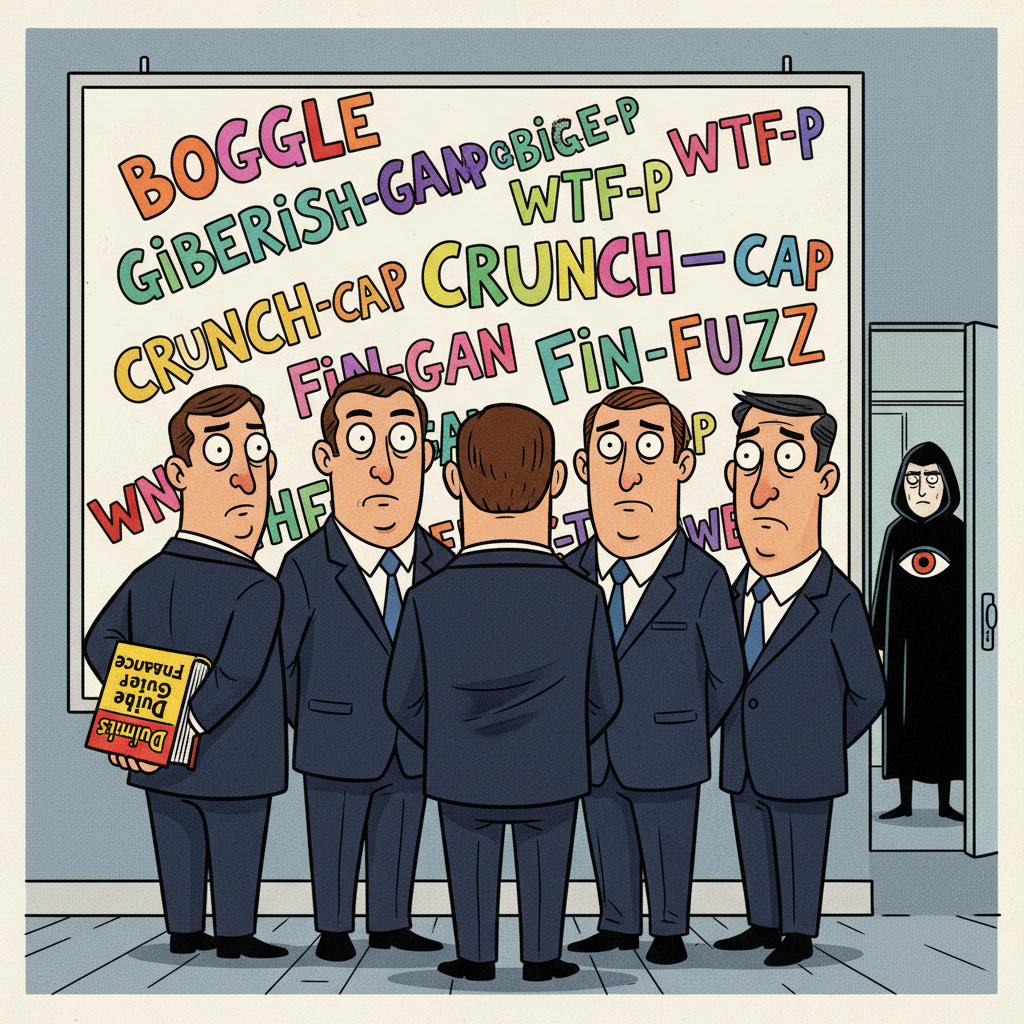
The phenomenon, dubbed 'Acronymic Drift' by a recent, entirely fictional study from the Institute for Obfuscatory Economics, suggests that as financial terms become more complex, their actual definitions become less important than their perceived gravitas. Investors, too, are reportedly content to nod along, assuming the person speaking sounds authoritative.
"The key is to maintain a serious expression and occasionally furrow your brow," explained Dr. Evelyn Reed, a behavioral economist who doesn't exist. "If you can also work in phrases like 'leveraging core competencies' or 'optimizing the EBITDA trajectory,' you're golden. No one wants to admit they don't understand, so everyone just pretends."
Seche Environment declined to comment on whether their financial reports were intentionally designed to be vaguely impressive yet ultimately inscrutable, stating only that their 'metrics are robust and reflect a strong forward-looking posture within the current fiscal paradigm.'