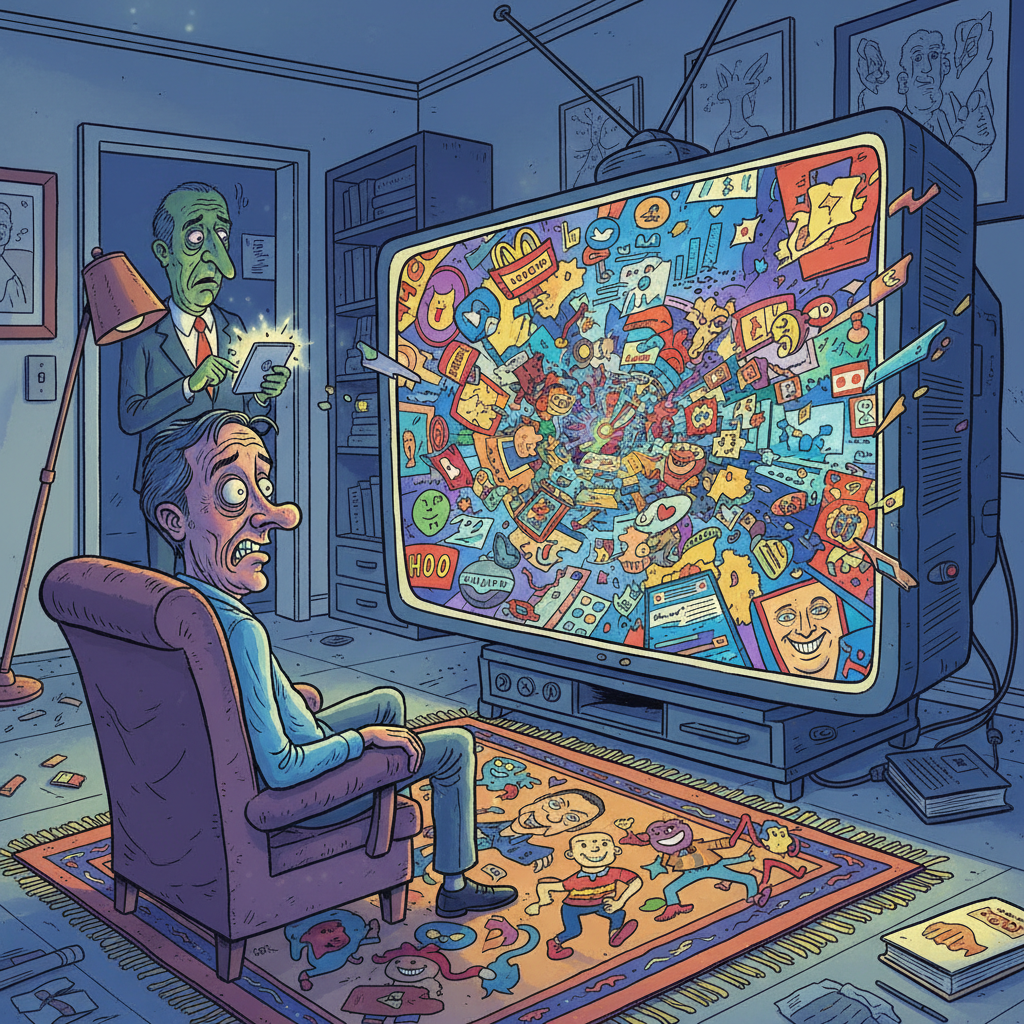
WASHINGTON D.C. — A consortium of leading media analysts and professional couch potatoes has published a landmark study confirming what millions of viewers have long suspected: the vast majority of television content serves merely as an auditory and visual buffer against the terrifying silence of self-reflection. The report, titled 'The Great Distraction: How Peak TV Became Peak White Noise,' analyzed thousands of reviews from the past decade.
“We initially set out to quantify critical consensus on narrative quality,” explained Dr. Evelyn Reed, lead researcher at the Institute for Advanced Media Obfuscation. “What we found instead was a pervasive undercurrent in reviews suggesting that the show’s actual plot was secondary to its ability to simply *be there* while the reviewer folded laundry, scrolled TikTok, or contemplated the crushing weight of societal expectations.”
The study highlighted phrases like 'perfect for binge-watching,' 'easy to put on in the background,' and 'doesn't demand too much of you' as coded language for 'this show helps me avoid thinking about my life choices.' One anonymous critic reportedly confessed, “If it has consistent audio and enough movement to prevent screen burn-in, it’s a five-star experience in my book.”
Industry insiders are reportedly unfazed. “We’ve known this for years,” stated a network executive who wished to remain unnamed. “Our focus groups consistently show that viewers prioritize a show’s ability to prevent them from hearing their own thoughts over, say, character development.” The executive then added, “Now, if you’ll excuse me, I need to find something to put on while I stare blankly at this spreadsheet.”