LOS ANGELES, CA – A groundbreaking new study released today confirms what many have long suspected: a significant portion of the nation's celebrity class genuinely believes social media platforms exist primarily to reflect their own thoughts, desires, and fleeting observations back to them, rather than as a public forum for widespread judgment and immediate digital immolation.
The findings come amidst renewed online scrutiny of various public figures, including musician Chris Brown, whose recent comment on a TikTok video featuring an individual resembling an ex-partner sparked a predictable wave of internet outrage. Researchers noted that such incidents are not anomalies but rather consistent data points in a larger trend of 'digital solipsism' among the famous.
“Our data suggests that when a celebrity posts or comments, they often perceive it as whispering into a void that only echoes their own voice, rather than shouting into a stadium full of people with smartphones and very strong opinions,” explained Dr. Evelyn Reed, lead researcher at the Institute for Digital Narcissism Studies. “The idea that millions of strangers might interpret their actions, or even remember past controversies, appears to be a foreign concept.”
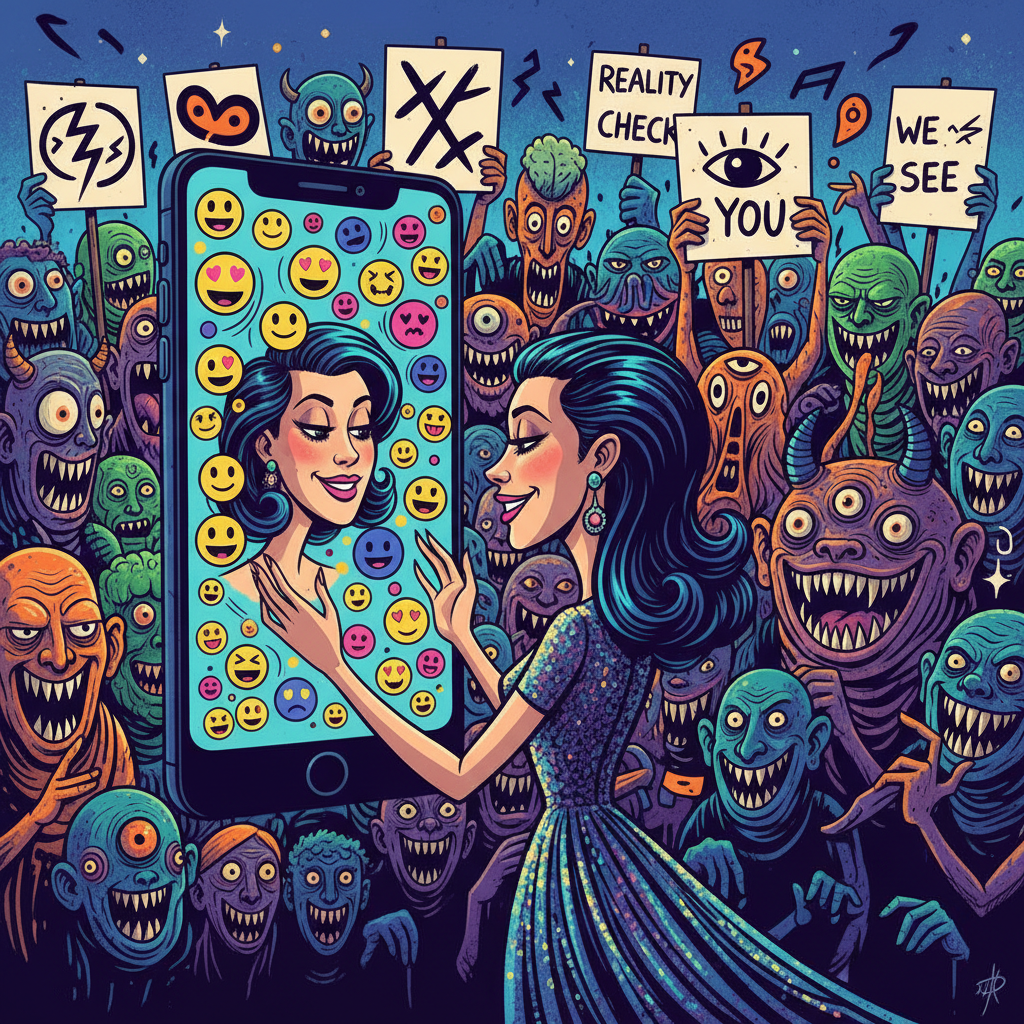
One unnamed celebrity publicist, speaking on condition of anonymity, admitted, “It’s like they think Twitter is just a really big, well-lit bathroom mirror. They look in it, they see themselves, they nod, and then they’re genuinely surprised when the mirror suddenly starts yelling about their questionable past choices.”
The study concluded that this phenomenon is likely to continue, as the feedback loop of adoration and self-reinforcement proves too powerful for most public figures to overcome, ensuring a steady supply of content for the internet's insatiable appetite for collective side-eyeing.