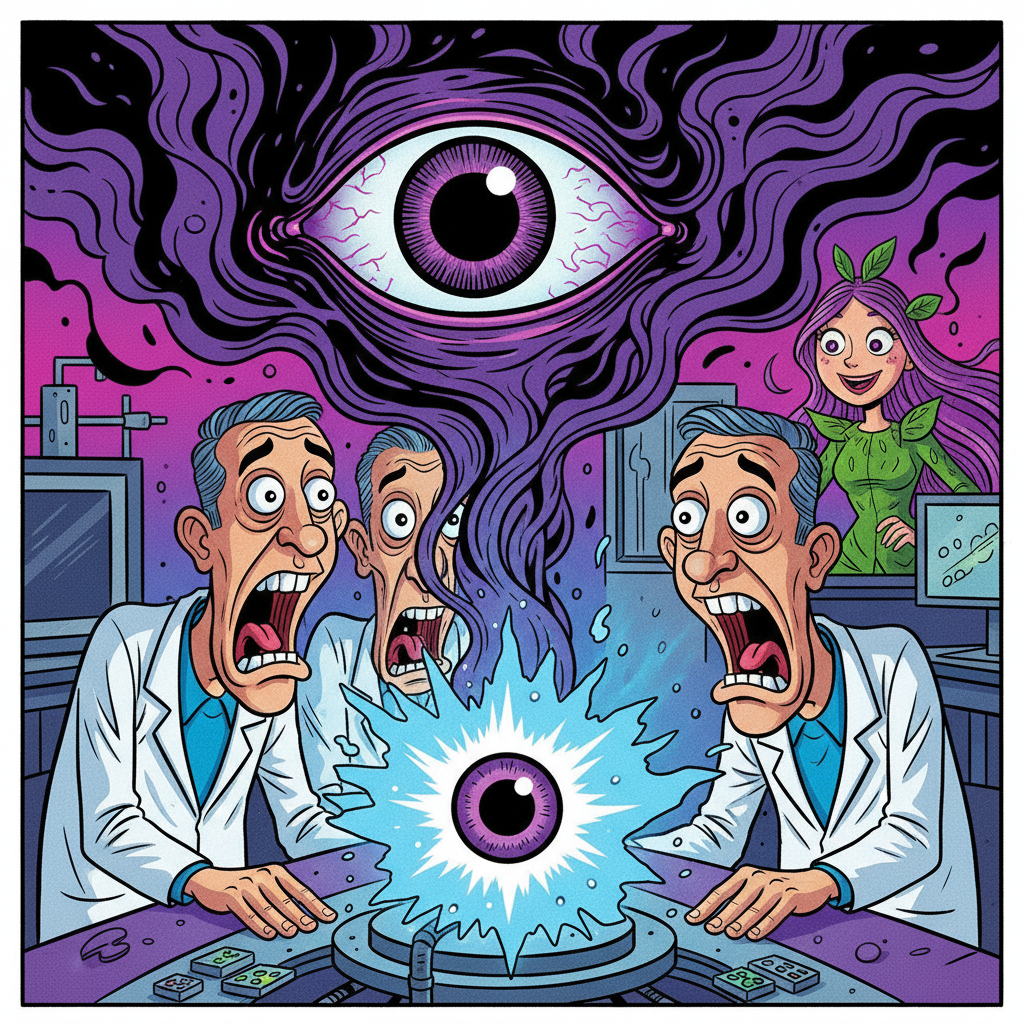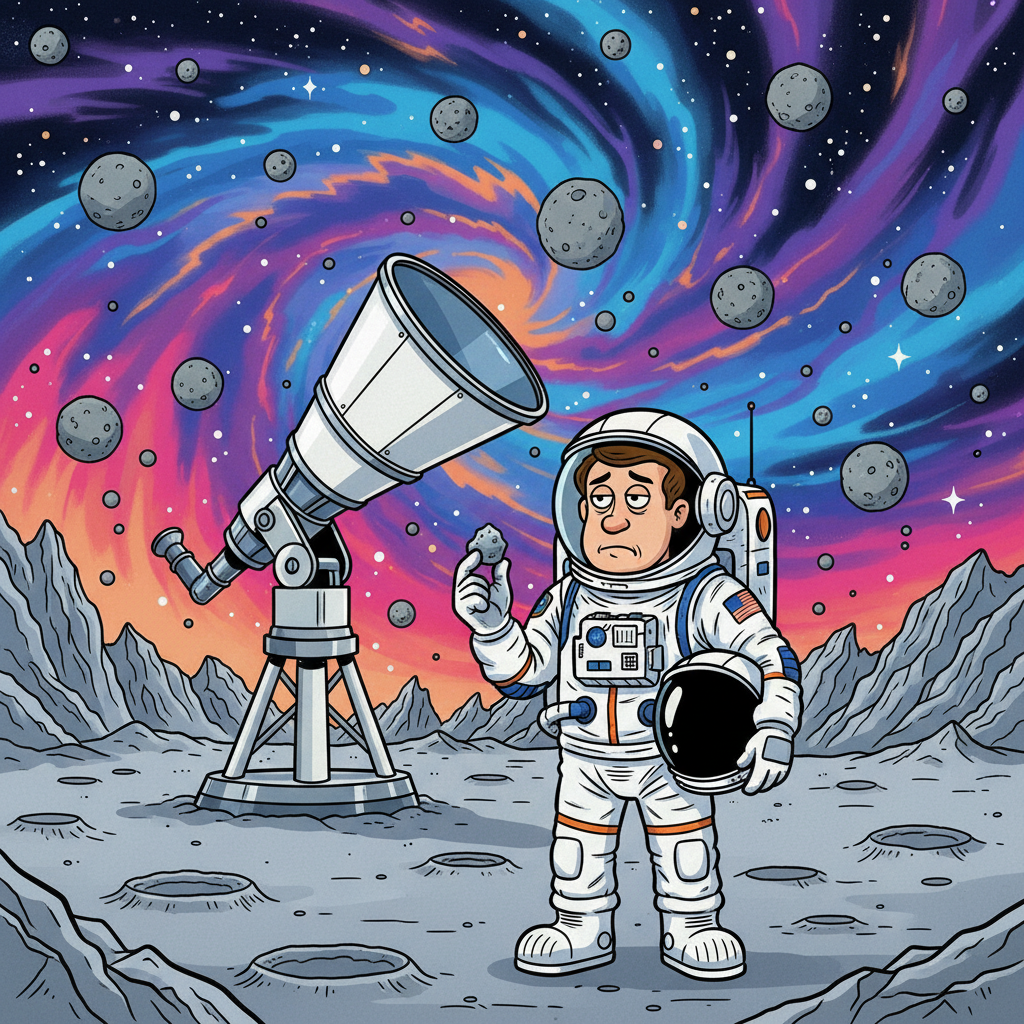
PASADENA, CA — NASA’s Star-Planet Activity Research CubeSat (SPARCS) has delivered its first images from beyond our solar system, with scientists confirming today that the highly anticipated photos reveal what appears to be an abundance of, well, rocks. The tiny spacecraft, designed to chart the energetic lives of distant stars and identify potentially habitable exoplanets, has thus far only provided visual evidence of vast, lifeless landscapes.
“We were really hoping for something more, you know, green. Or at least blue,” stated Dr. Evelyn Reed, lead project scientist, during a press conference where she displayed a series of grainy, beige-toned images. “Instead, it’s mostly just… more rocks. Some are bigger rocks, some are smaller rocks. We even have a few that look like they might be slightly different colored rocks.”
The mission, which cost taxpayers an undisclosed sum that could have arguably fixed several potholes, aimed to answer humanity’s profound question: Which distant worlds might be habitable? Early analysis suggests the answer is, for now, 'none of these, probably.'
“It’s a groundbreaking discovery in the sense that we now have definitive proof that space is, in fact, still mostly empty and boring,” added Dr. Marcus Thorne, a theoretical astrophysicist not affiliated with the mission but who enjoys commenting on others' work. “It certainly puts into perspective our own planet, which, despite its myriad problems, at least has Wi-Fi and the occasional squirrel.”
NASA officials remain optimistic, noting that further analysis might reveal some of the rocks are, in fact, *very old* rocks, which could be a significant scientific breakthrough. The agency also confirmed that the images did not contain any evidence of intelligent life, or even unintelligent life, just rocks.