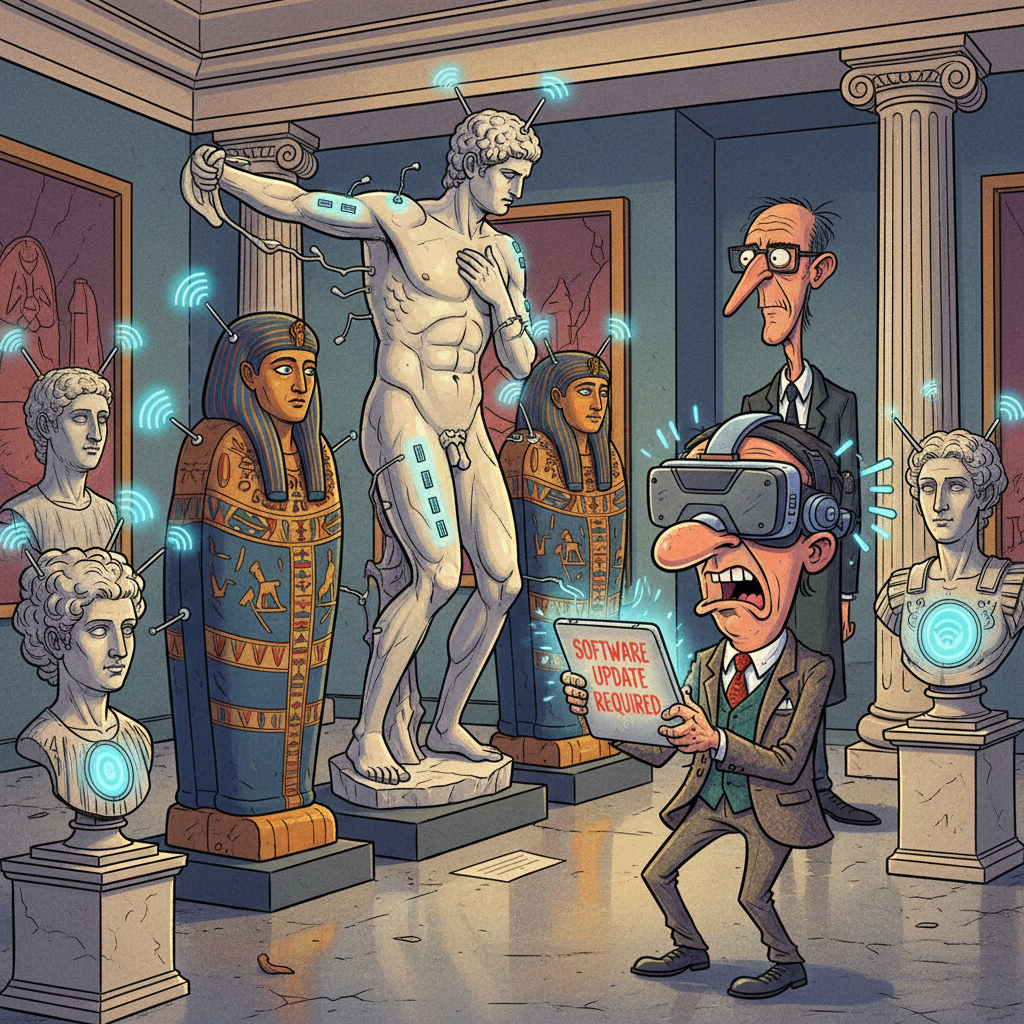
BOSTON, MA – Citing a pressing need to keep up with modern engagement metrics, a consortium of the nation's most prestigious museums has announced a new initiative to equip all historical artifacts with contemporary digital features. The 'Digital Heritage Upgrade' program aims to integrate Wi-Fi, Bluetooth, and even rudimentary AI into items ranging from ancient pottery to medieval tapestries.
“Our visitors expect seamless connectivity,” stated Dr. Evelyn Thorne, Head of Digital Transformation at the National Museum of Antiquities. “Why should a 3,000-year-old sarcophagus be any different from their smart fridge? We envision interactive exhibits where you can ask a Roman bust about its day, or have a Viking longship livestream its journey on TikTok.”
Critics of the plan, primarily historians and conservators, have raised concerns about the structural integrity of priceless objects and the ethical implications of 'upgrading' history. “We’re talking about drilling USB ports into Ming vases and embedding microchips into illuminated manuscripts,” warned Professor Alistair Finch of the Historical Preservation Society. “This isn't preservation; it’s an extreme form of planned obsolescence.”
Despite the backlash, museum leadership remains committed, with prototypes already featuring a Rosetta Stone that can translate into emoji and a Declaration of Independence capable of sending push notifications about civic duties. The program’s ultimate goal is to generate enough data to personalize each visitor’s historical experience, ensuring no one ever has to simply *look* at an artifact again.