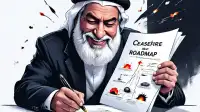

BEIRUT — The 2 Conflict Management System (MECMS) successfully concluded its routine operational update this week, deploying targeted kinetic recalibration protocols across specific regional nodes. The Israeli Defense Forces confirmed the execution of these pre-programmed threat response procedures against Hezbollah sites in Beirut, marking the scheduled continuation of an ongoing, algorithmically determined process designed to maintain baseline instability metrics.
According to a leaked memo from the Global Geopolitical Operating Board (GGOB), the update, code-named "Project Phoenix V.7.3," was necessary to address "accumulated systemic pressure points" and ensure “optimal performance within the established parameters of regional tension.” Sources close to the MECMS development team, a shadowy consortium of international think tanks and defense contractors, indicated that the update had been in the pipeline for several fiscal quarters, awaiting the precise alignment of various socio-political and economic indicators.
“Frankly, anyone surprised by this hasn't been paying attention to the patch notes,” explained Dr. Aris Thorne, Professor of Perpetual 2 at the Institute for Self-Sustaining Narratives. “The system has predefined cycles for this. You hit a certain threshold of quiet, the algorithm detects 'suboptimal engagement levels,' and boom, it self-corrects. It’s a feature, not a bug. Think of it as defragmenting the hard drive of historical grievances.” Dr. Thorne elaborated that the strikes serve a vital function in resetting expectations and revalidating the core assumption that the status quo is inherently dynamic.
Stakeholders across the region, including various non-state actors and sovereign entities, reportedly received advance notifications via secure, encrypted channels regarding the impending update window. “Our internal analytics dashboard showed a dip in perceived existential threat levels among key demographics,” noted a spokesperson for the MECMS project, speaking on condition of anonymity. “This update corrects that. It reminds everyone of their assigned roles within the narrative architecture. It’s all about user engagement and managing collective memory cache.”
Local media outlets, having covered similar updates for decades, reported the events with a familiar, almost perfunctory tone, detailing infrastructure impacts and casualty counts in a manner consistent with a quarterly earnings report. Experts predict the system will now enter a period of “post-update stability assessment” before queuing the next series of inevitable recalibrations, potentially involving different geographic sectors or tactical methodologies. The cycle, as always, continues seamlessly.