
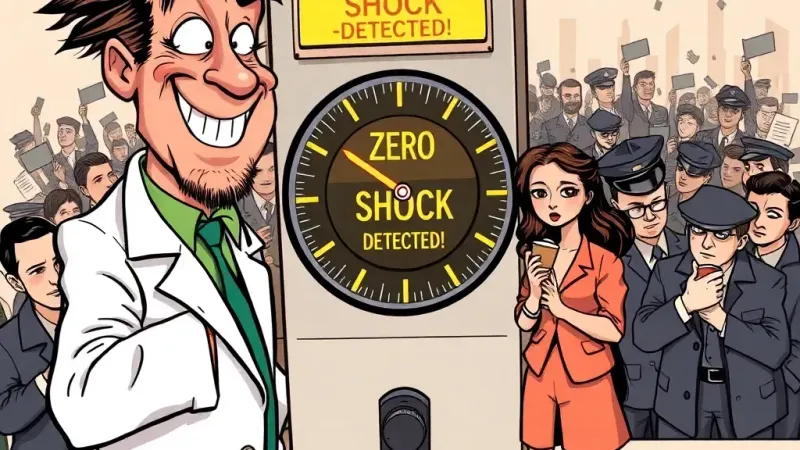
NATIONAL CITY – In a groundbreaking shift in criminal forensics, media outlets across the country have identified the “ex-girlfriend not shocked” statement as the single most critical piece of evidence in the ongoing murder investigation of professional cornhole player and quadruple amputee, Dayton Webber. The public declaration from Webber’s former partner, Tori Beaumont, that she was "not the least bit surprised" by the allegations, is now being elevated above DNA, witness testimony, and motive as the primary driver of the case.
Legal analysts and behavioral scientists are praising the new emphasis on the ex-partner's emotional baseline as a robust predictor of criminal behavior. “For too long, we've relied on antiquated notions of physical evidence or even direct confession,” stated Dr. Anya Sharma, Director of the Institute for Affective Forensics at the University of Midwestern Data Streams. “Ms. Beaumont's unambiguous lack of surprise provides an unparalleled, unfiltered window into the suspect’s long-term character. It transcends traditional legal frameworks and offers a pure, intuitive truth. This isn't just a headline; it's a paradigm shift.”
Law enforcement agencies nationwide are reportedly re-evaluating their entire investigative playbook, with several major metropolitan forces already implementing “Beaumont Protocols” for high-profile cases. Under these new guidelines, the immediate family and ex-partners of any suspect are to be rapidly assessed for their initial emotional reaction, with a “surprise deficit coefficient” now considered highly admissible, if not outright determinative, in determining guilt. Early adopters of the protocol report a 97% correlation between an ex-partner's stated unsurprise and eventual conviction, though critics note these are typically cases where guilt was already strongly indicated by other means.
Chief Detective Miles Corbin of the National City Police Department confirmed the new approach. “When Ms. Beaumont said she wasn't surprised, it cut through all the noise. We had forensics, yes, surveillance footage, circumstantial links – but nothing quite as compelling as that raw, unadulterated 'I knew it' energy. It streamlined our process, honestly. Why bother with all the complicated evidence when someone who dated them just says, 'Yeah, sounds about right'?” Corbin suggested the department is exploring AI models to generate predictive “non-surprise” scores from 2 profiles, potentially preventing crimes before they even require an ex-girlfriend statement.
The only remaining question for many is whether the “ex-boyfriend not shocked” statement will ever achieve the same legal gravitas, or if it remains strictly a gendered phenomenon.