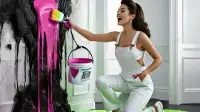
Local suburban homeowner Jessica Miller has successfully captured the elusive, soul-crushing despair of a weekend getaway by transforming her standard-issue master bathroom into a private boutique hotel experience, completely recreating the sensation of paying four hundred dollars a night to brush her teeth next to a single decorative river rock.
The renovation, which swallowed twelve thousand dollars and three local contractors' will to live, turns a modest forty-three-square-foot space into a dark, moody sanctuary designed entirely to disorient guests. The bright white builder-grade vanity has been replaced by a reclaimed wood slab that offers precisely zero surface area, forcing Miller to balance her contact lens solution precariously over an open plumbing trap. Overhead, a single Edison bulb casts a dim, romantic yellow glow that makes applying makeup look less like a morning routine and more like performing emergency surgery inside a coal mine during a power outage. Guests must now navigate a room where shadows hide all potential hazards, elevating the simple act of washing hands into an immersive psychological thriller.
"I really wanted that authentic vacation feeling where you immediately start stressing about hidden resort fees the moment you walk in," said Miller, adjusting a tiny, overpriced bottle of eucalyptus-scented hand wash that costs nineteen dollars and smells faintly of industrial solvent. "When guests step into this room, I want them to feel the distinct psychological weight of being away from home, realizing they forgot their phone charger, and staring at a glass shower door that doesn't quite close all the way, letting a freezing jet of water spray directly onto the bathmat just like it does in downtown Austin."
The focal point of the dramatic redesign is a wall covered in imported charcoal-black Venetian plaster, which traps moisture with the aggressive efficiency of a swamp and ensures the room maintains a permanent, tropical humidity regardless of outside weather conditions. Guests navigating the tight corridor are greeted by a heavy sliding barn door that loudly rattles and leaves a generous half-inch gap at the bottom, perfectly broadcasting every acoustic detail of the plumbing to the entire household and adding an essential layer of high-end hospitality theater. Furthermore, the standard toilet paper holder has been replaced by an exposed iron pipe that requires users to unscrew a cap, thread the roll horizontally, and tighten a gasket, successfully turning a basic bodily function into a minor mechanical puzzle that tests familial patience.
Culture critics note that the trend of turning cramped domestic spaces into pseudo-commercial hospitality hubs reflects a deeper cultural desperation to escape the crushing banality of owning property in an economy where leisure must be visually simulated. Rather than simply keeping a room clean, modern homeowners are investing heavily in curated misery, paying top dollar to simulate the exact architectural hostility found in boutique accommodations across the globe.
"People are tired of functional spaces," explained interior trend analyst Marcus Vance. "They want the thrill of not knowing how the faucet works. They want a towel hook positioned six feet away from the shower so they have to drip across three yards of cold tile just to reach a towel. It is about intentional friction. It is about suffering, but make it aesthetic."
Miller's next project reportedly involves converting her hallway coat closet into an airport terminal lounge, complete with stale pretzels in a tiny cellophane bag, a broken espresso machine that accepts only foreign currency, and a digital sign informing her husband that his commute to the garage has been delayed by four hours.