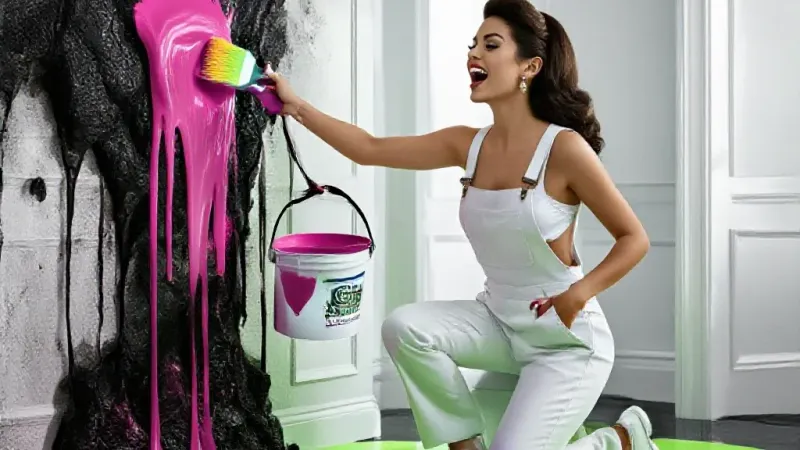
Local homeowners Laura and Mark Trexler have successfully proven that any structural failure can be forgiven if you just slap enough pastel glaze on it, completing a courageous renovation of their 1915 historic property that bravely ignored the laws of physics and civil engineering.
The centerpiece of the ambitious overhaul is a guest bathroom originally constructed inside a bedroom closet—a brilliant space-saving architectural choice by an Edwardian builder who presumably hated his family and wished them a slow death by Legionnaires' disease. When the couple purchased the home, the space functioned less as a lavatory and more as an archaeological dig site, housing a leaking vanity and a subfloor that had achieved a permanent, spongy state of aquatic decomposition thanks to a leak of indeterminate historical origin.
While standard municipal codes would classify a rotting timber skeleton as an active hazard demanding immediate condemnation, the Trexlers recognized the damp catastrophe for what it truly was: an opportunity to curate a mood board.
"When you pull up the linoleum and realize the floor joists have been successfully digested by black mold since the Carter administration, you have a choice," said Laura, adjusting a brass sconce while standing precariously over a two-foot drop into the dirt crawlspace below. "You can either spend twenty thousand dollars on structural remediation, or you can lean into the vintage charm of walking on a literal waterbed. We chose color."
The resulting "pink paradise" features original ceramic tiles painstakingly salvaged from an era when indoor plumbing was treated as a dangerous medical experiment. The bathroom now boasts a striking monochromatic palette of flamingo pink, accented delicately by the faint, persistent scent of dry rot and lingering municipal despair. Guests reported that the experience of washing their hands while standing at a severe fourteen-degree downward angle adds an adventurous, nautical flair to the morning routine.
The renovation industry has increasingly praised such projects, noting a growing cultural hunger among millennials to pay half a million dollars for properties that actively try to kill them. Real estate experts point out that while a functioning foundation is nice, it lacks the raw, emotional storytelling power of load-bearing mildew.
"People want authenticity," explained local contractor Dave Vance, who spent three weeks weeping quietly behind a drywall partition while trying to reroute cast-iron pipes installed during the Taft administration. "They don't just want a room. They want a space that reminds them of the fragility of human existence every time they brush their teeth. When you flush the toilet and the entire northern wall sighs like a dying Victorian child, that’s value-add."
The Trexlers remain unfazed by the critics who point out that their guest bedroom is technically a wet-room prison cell. They plan to tackle the kitchen next, confident that beneath three layers of laminate flooring lies a portal to the underworld and plenty of natural light.
As housing markets continue to price out anyone without a trust fund or a high tolerance for airborne spores, brave pioneers continue to prove that with enough limewash, sheer denial, and a complete disregard for building codes, any collapsing deathtrap can be turned into an absolute aesthetic vibe. After all, a home isn't just an investment—it's a multi-year psychological thriller you share with your spouse.