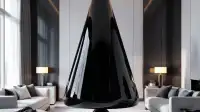
For families looking to capture the true, heartwarming spirit of extreme wealth disparity and preventable childhood diseases, lifestyle publications are confirming that "Victoriana" holiday decor is officially back. Nothing says peace on earth and goodwill toward men quite like decorating your mantlepiece to evoke a period of unbridled industrial exploitation, robber barons, and an average life expectancy of thirty-four years.
According to top home-styling trends, the secret to nailing the look is moving away from modern minimalism and fully embracing heavy velvet, suffocating drapery, and the distinct visual warmth of a coal-fired economy built on the backs of nine-year-olds in textile mills. Designers suggest that if your living room does not currently look like a dimly lit parlor where a wealthy industrialist is slowly dying of consumption while ignoring his illegitimate children, you are simply doing the holidays wrong.
"There is something so deeply comforting about the Gilded Age aesthetic," explained lifestyle curator Chloe Davenport, speaking from a home completely insulated by imported tapestries and historic denial. "When you pull back the heavy brocade curtains and look out at the modern world, you realize how much we have lost. Sure, people didn't have antibiotics, labor laws, or indoor plumbing that didn't occasionally explode, but the table settings? Absolutely unmatched. You cannot put a price on the authentic ambiance of a society teetering on the brink of violent proletarian revolution."
To achieve the look at home, design experts recommend replacing all LED lighting with flickering tallow candles that emit a steady stream of toxic soot, coating every surface in a rich, historical layer of coal dust, and displaying a centerpiece made entirely of preserved ostrich feathers and quiet desperation. For an authentic holiday touch, hosts are encouraged to lock their domestic staff in the cellar and serve a Christmas pudding that has been heavily adulterated with chalk and plaster of Paris to save on flour costs, exactly as our Victorian ancestors intended.
Critics of the trend have pointed out that romanticizing an era defined by rampant poverty, horrific factory conditions, and the systematic destruction of the working class might be slightly tone-deaf. However, trend forecasters have quickly dismissed these concerns, noting that human suffering always looks exceptionally chic when filtered through a warm, sepia-toned camera lens.
"People get too caught up in the boring technicalities of history, like how the wealthy elite treated human beings like replaceable machinery," said interior trends analyst Bradley Vance. "We prefer to focus on the textures. The heavy wools. The polished brass. The way a dimly lit room completely obscures the haunting realization that modern late-stage capitalism is just a sleek, digital reboot of the exact same nightmare. That is cozy. That is festive. That is holiday magic."
Retailers are already capitalizing on the movement, rolling out exclusive lines of decorative tin cups for soup kitchens and distressed mourning wreaths designed to make guests feel as though a beloved uncle has recently perished in a preventable railway disaster. Early consumer response has been overwhelmingly positive, particularly among tech executives and venture capitalists who feel a deep, instinctive kinship with nineteenth-century monopolists who crushed unions with private security forces.
As families gather this season around dining tables groaning under the weight of decorative excess and historical illiteracy, experts remind everyone that the true meaning of the holidays isn't about spending time with loved ones or practicing basic empathy. It is about committing so completely to an aesthetic that you actively ignore the collapsing societal infrastructure right outside your heavily draped window, secure in the knowledge that at least your velvet throw pillows look devastatingly expensive.