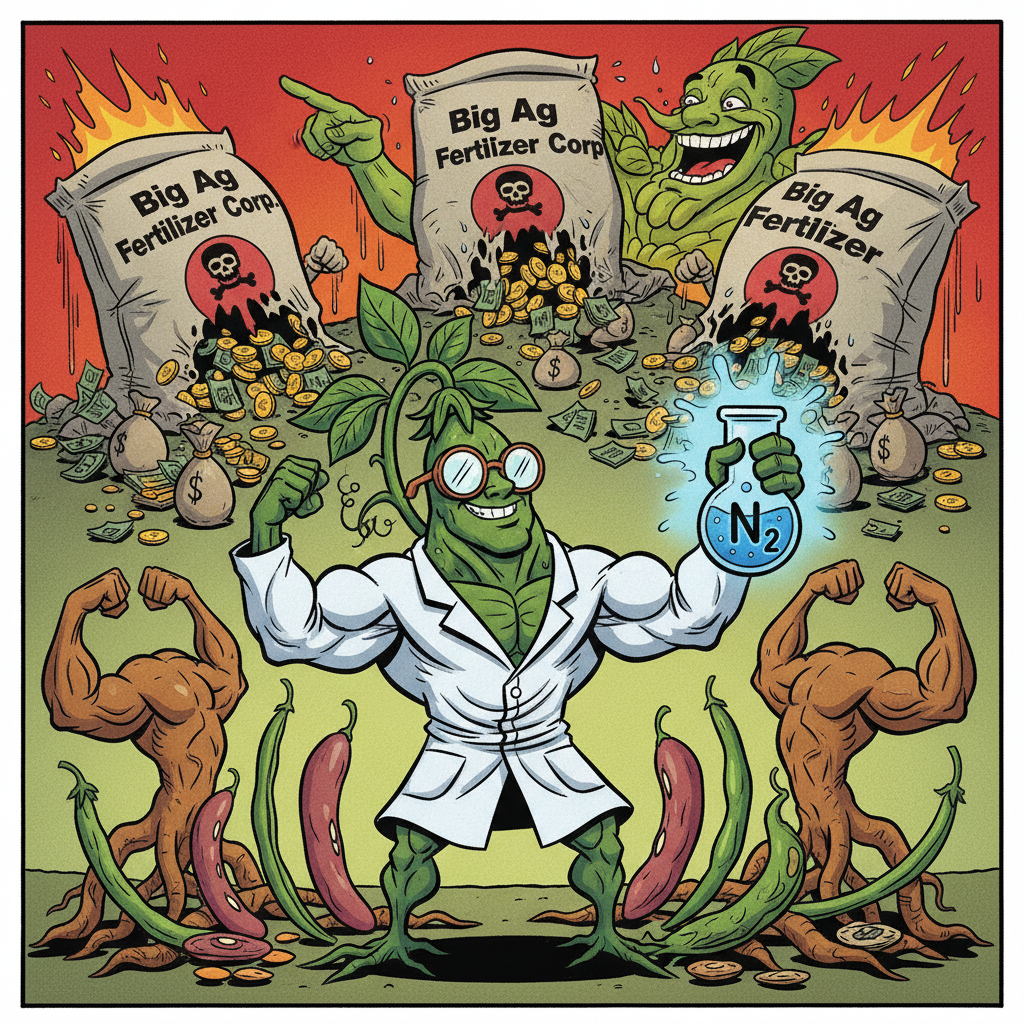
BERLIN – In a development poised to disrupt millennia of agricultural economics, scientists have identified a key protein, SYFO2, that enables leguminous plants to effectively 'self-fertilize' by fixing their own nitrogen. The groundbreaking discovery means plants like peas, beans, and clover can now bypass traditional fertilizer inputs, a move experts are calling 'deeply inconsiderate' to the multi-billion-dollar agrochemical industry.
“This is a nightmare scenario,” stated Dr. Reginald Phosfate, a spokesperson for GlobalAgriCorp, speaking from an undisclosed bunker. “For centuries, plants understood their role: grow, consume our products, and don't ask too many questions. Now they’re just… making their own nitrogen? It’s anarchy. What’s next, photosynthesis without our proprietary sunlight-enhancing supplements?”
The protein, SYFO2, facilitates a unique symbiotic relationship with nitrogen-fixing bacteria, allowing legumes to extract essential nutrients directly from the atmosphere. This newfound botanical autonomy has sent shockwaves through boardrooms, with analysts predicting a massive downturn in the demand for synthetic fertilizers.
“We’ve always prided ourselves on providing plants with what they need, whether they asked for it or not,” added Phosfate, wiping a bead of sweat from his brow. “This 'self-reliance' trend is frankly un-American. We need to remind these plants who’s boss before they start unionizing.”
Meanwhile, several venture capital firms have reportedly begun funding startups focused on developing 'anti-SYFO2' sprays, aiming to re-establish plants’ dependence on external nutrient sources and, more importantly, quarterly profit reports.